
Every year, as May blossoms, the city of Cagliari, Sardinia, explodes into a vibrant spectacle of faith, folklore, and profound historical gratitude: the Sagra di Sant’Efisio (Feast of Saint Ephysius). This isn’t just a local celebration; it’s considered the most important religious procession in Sardinia, and indeed, one of the longest and most spectacular in all of Italy. For four days, the island’s capital transforms into a living tableau, drawing thousands of participants and spectators into a deeply moving and visually stunning tribute to its patron saint.
A Vow Fulfilled: The Genesis of the Sagra
The roots of the Sagra di Sant’Efisio delve deep into a period of immense suffering and unwavering faith. In the mid-17th century, a devastating plague ravaged Cagliari and much of Sardinia between 1652 and 1656, decimating a significant portion of the population. In their desperation, the city’s administration and its people made a solemn vow to Saint Ephysius (Sant’Efisio), a Roman martyr who had converted to Christianity and was beheaded on the beach of Nora (south of Cagliari) in 303 AD.
The vow pledged that if the city were spared from the plague, they would carry the saint’s effigy in a grand procession every year from his church in Cagliari to the site of his martyrdom in Nora, as an act of eternal gratitude.
Miraculously, the plague subsided. True to their word, the first grand procession took place on May 1, 1657, and has been faithfully repeated every year since, without interruption. This unbroken tradition for over 360 years underscores the deep devotion and historical significance of the Sagra.
The Grand Procession: Day One and Beyond
The focal point of the Sagra di Sant’Efisio is the magnificent procession that commences on May 1st. The event is a meticulously orchestrated display of Sardinian culture and devotion, beginning from the small Church of Sant’Efisio in Cagliari’s historic Stampace district.
The Sagra di Sant’Efisio procession unfolds in a truly spectacular fashion:
- The Traccas: Leading the parade are dozens of “traccas,” traditional ox-drawn wagons, elaborately decorated with flowers, fruits, and traditional handicrafts. These “mobile homes” often carry Sardinian families dressed in traditional costumes, symbolizing the rural communities participating in the pilgrimage.
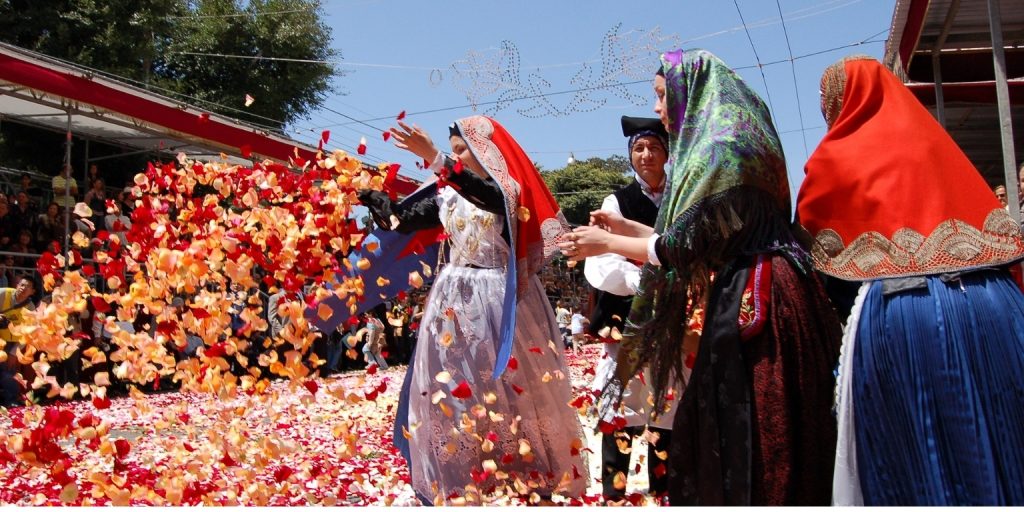
- Folkloric Groups: Following the traccas are thousands of people from nearly every village across Sardinia, dressed in their incredibly diverse and often centuries-old traditional costumes. These vibrant, often hand-embroidered garments, rich with regional variations and precious jewelry, are a breathtaking display of Sardinian ethnographic heritage. Participants sing traditional devotional songs (is goccius) and play the ancient Sardinian triple-pipe woodwind instrument, the launeddas.
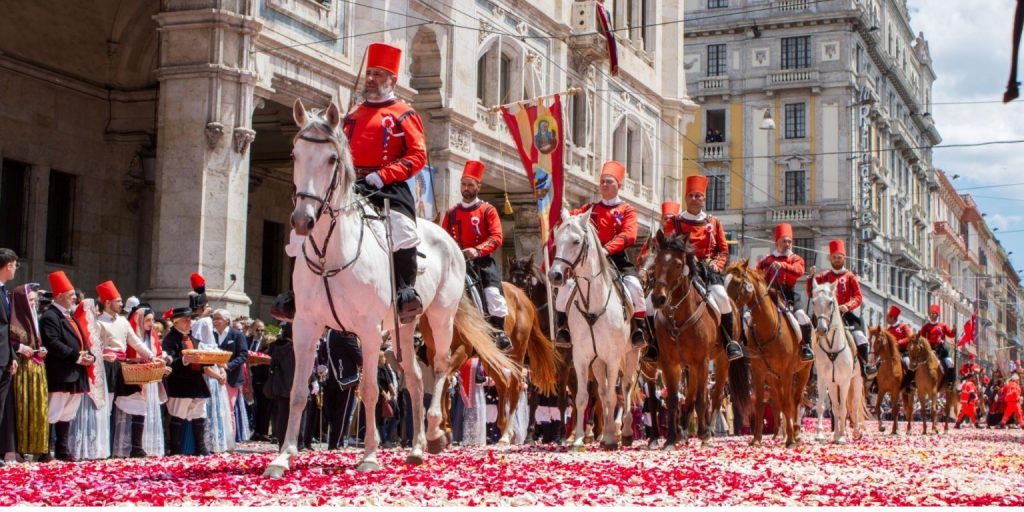
- Knights and Militiamen: A contingent of horsemen, including the “Cavalieri del Campidano” and the “Miliziani” (militiamen in historical uniforms), follow, adding a chivalric and ceremonial element to the procession.
- The Alter Nos: A key civil figure is the Alter Nos, the Mayor’s official representative, who rides on horseback, symbolizing the civic vow made centuries ago.
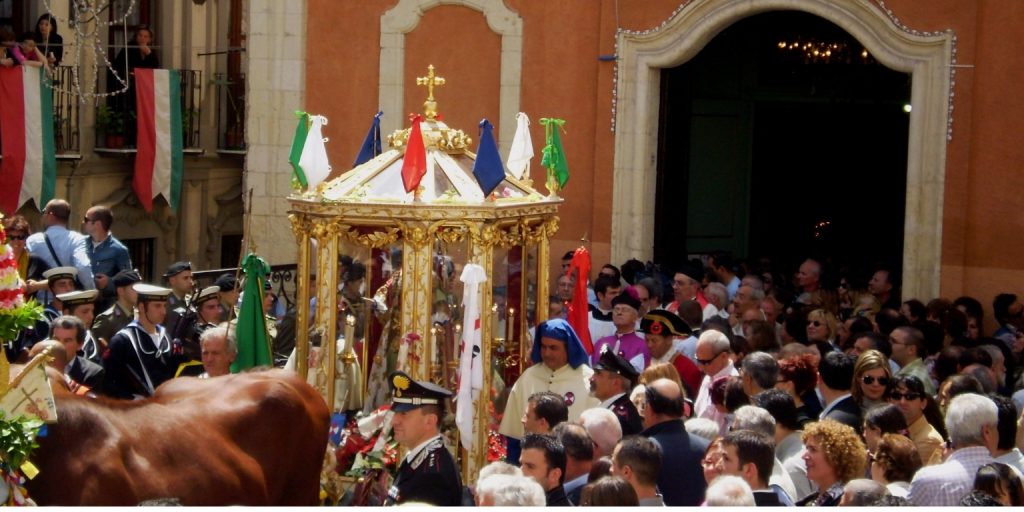
- The Golden Carriage: The climax of the procession is the statue of Sant’Efisio itself, adorned with precious clothes and jewels, placed within a magnificent golden carriage pulled by oxen. As the carriage passes through the streets, particularly along Via Roma by the port, ships sound their sirens in homage, and the streets are carpeted with rose petals (ramadura) strewn by devotees.
After leaving Cagliari, the procession continues for four days, stopping at various churches and chapels in towns like Giorgino, Capoterra, Sarroch, Villa San Pietro, and Pula, before reaching Nora, the site of the saint’s martyrdom. Here, the statue is briefly stripped of its formal attire and adorned in humbler “travel clothes” for the remainder of its journey.
The Return and Enduring Legacy
Days two and three are dedicated to ceremonies and devotions in Nora. On May 3rd, a procession often takes place along the very beach where Sant’Efisio was martyred. Finally, on May 4th, the solemn return journey to Cagliari begins, tracing the same route in reverse. The arrival of the saint back in the Stampace church in the evening, often under torchlight, marks the emotional fulfillment of the ancient vow.
The Sagra di Sant’Efisio in Cagliari, with its origins in the 1652-1656 plague and its continuous celebration since May 1, 1657, is more than just a religious festival. It’s a profound expression of Sardinian identity, a living historical document, and a vibrant cultural heritage event that has been recognized as a candidate for UNESCO Intangible Cultural Heritage status. It celebrates not only a saint but also the resilience, faith, and unique traditions of the Sardinian people, drawing visitors into an unforgettable experience of devotion and communal pride.
Further reading on Wikipedia: Ephysius