
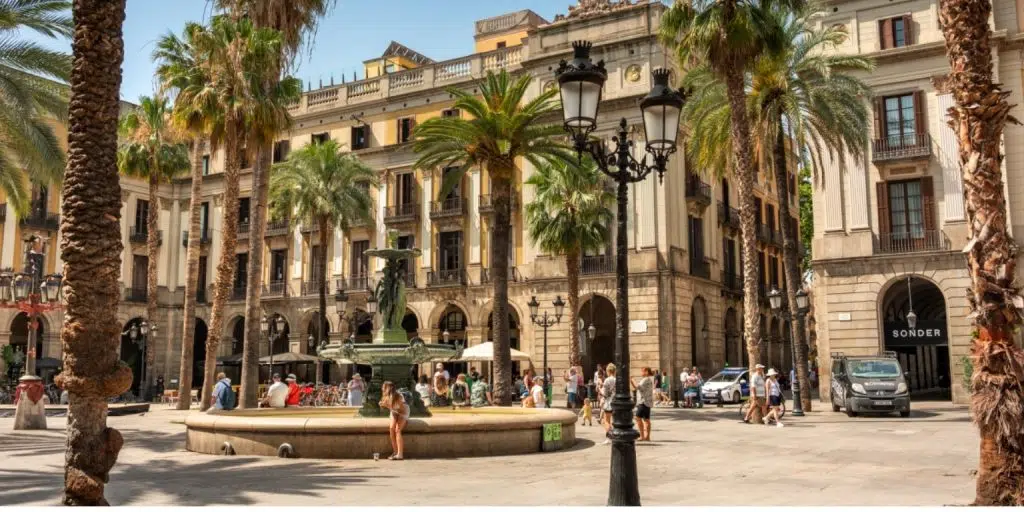
Nestled just off La Rambla, in the bustling heart of Barcelona’s Gothic Quarter, lies Plaça Reial (Royal Square), one of the city’s most emblematic and vibrant public spaces. This magnificent 19th-century square, with its graceful arcades, towering palm trees, and iconic lampposts, offers a captivating blend of architectural grandeur, historical intrigue, and a lively atmosphere that draws both locals and tourists day and night. The Plaça Reial in Barcelona stands as a sophisticated open-air salon, a testament to the city’s urban planning ambitions and a constant hub of social activity.
A Neoclassical Vision from the 19th Century
The creation of Plaça Reial was part of a broader urban renewal plan for Barcelona in the mid-19th century. Prior to its construction, the site was occupied by the Capuchin Convent of Santa Madrona, which was expropriated and demolished in 1835 following the dissolution of monastic orders. The city sought to replace the former monastic complex with a grand public square, reflecting the emerging bourgeois aspirations and a desire for more open, elegant spaces.
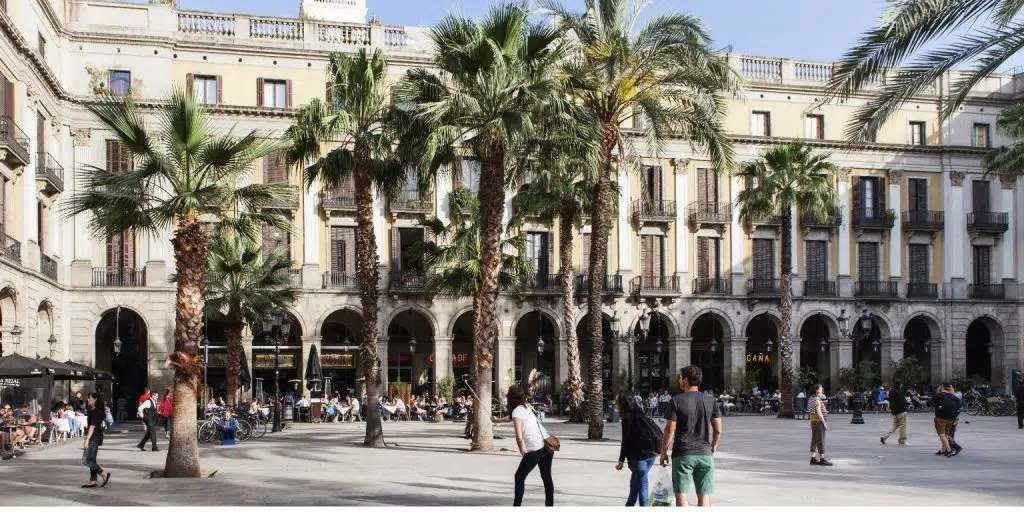
The square was designed by the Catalan architect Francesc Daniel Molina i Casamajó (who also participated in the design of the famous Gran Teatre del Liceu) and its construction took place between 1848 and 1859. Molina’s vision was distinctly Neoclassical, characterized by a harmonious and symmetrical design. The square is enclosed by uniform, three-story buildings with arcaded walkways at ground level, creating a cohesive and stately perimeter. The repetition of the classical elements, such as columns and arches, evokes a sense of order and classical beauty, reminiscent of grand European plazas.
Iconic Features: Gaudí’s Lampposts and the Three Graces
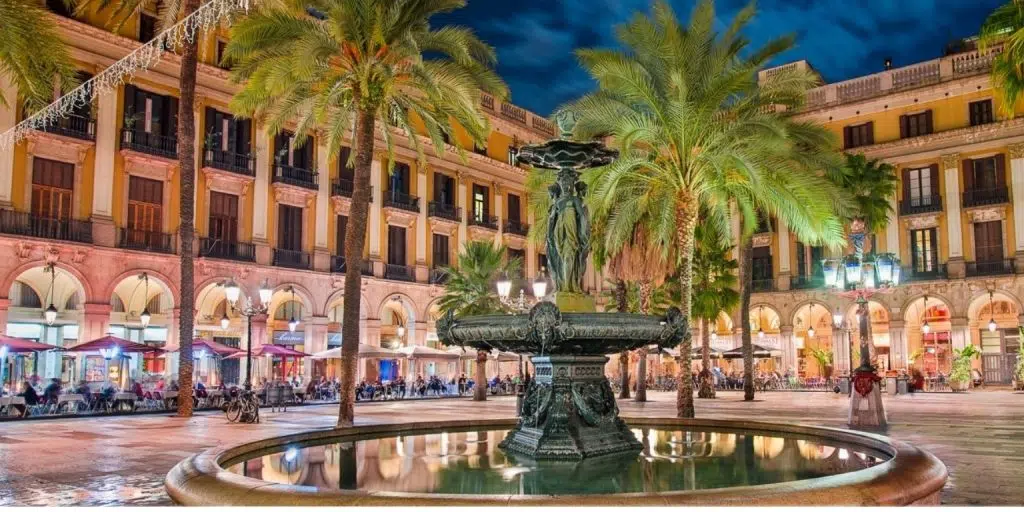
At the center of Plaça Reial lies its most iconic feature: the Font de les Tres Gràcies (Fountain of the Three Graces), depicting the mythological figures of Aglaea, Euphrosyne, and Thalia. This neoclassical fountain, installed in 1868, provides a serene focal point for the square.
Flanking the fountain are two of Barcelona’s most recognizable pieces of public art: the elaborate cast-iron streetlights designed by a young Antoni Gaudí in 1879. These early works of the renowned Modernista architect feature a unique six-branched design, topped with winged helmets and serpents, symbolizing trade and wisdom. They were Gaudí’s first commission from the city of Barcelona, and their distinctive organic forms hinted at the groundbreaking architectural style he would later develop. These lampposts are a constant source of fascination for visitors, providing a direct link to the genesis of Gaudí’s genius.
Adding to the square’s allure are its towering palm trees, which were introduced to Barcelona in the 19th century and lend Plaça Reial a distinctive, almost tropical, Mediterranean flair, distinguishing it from other European squares.
A Bustling Hub: From Market to Nightlife
Throughout its history, Plaça Reial has served as a vital public space. In its early days, it hosted flower markets and other outdoor events. Today, while its grand architecture remains, the square has gained a reputation as one of Barcelona’s most lively and animated spots, particularly after dark.
The arcades lining the square are home to a vibrant array of restaurants, bars, and nightclubs. During the day, diners enjoy al fresco meals and drinks, soaking in the square’s elegant ambiance. As evening descends, Plaça Reial truly comes alive, becoming a bustling center for nightlife. The square is also a popular spot for street performers, especially during warmer months, with magicians, musicians, and mime artists adding to the festive atmosphere. Occasionally, it still hosts various events, including stamp and coin collecting fairs on Sundays.
The Plaça Reial in Barcelona, designed by Francesc Daniel Molina i Casamajó and completed in 1859, with Gaudí’s famous lampposts added in 1879, is an enduring symbol of Barcelona’s urban elegance. It encapsulates centuries of history within its Neoclassical framework, offering a dynamic and unforgettable experience that blends architectural beauty with the city’s vibrant social life, making it a must-visit landmark in the Gothic Quarter.