
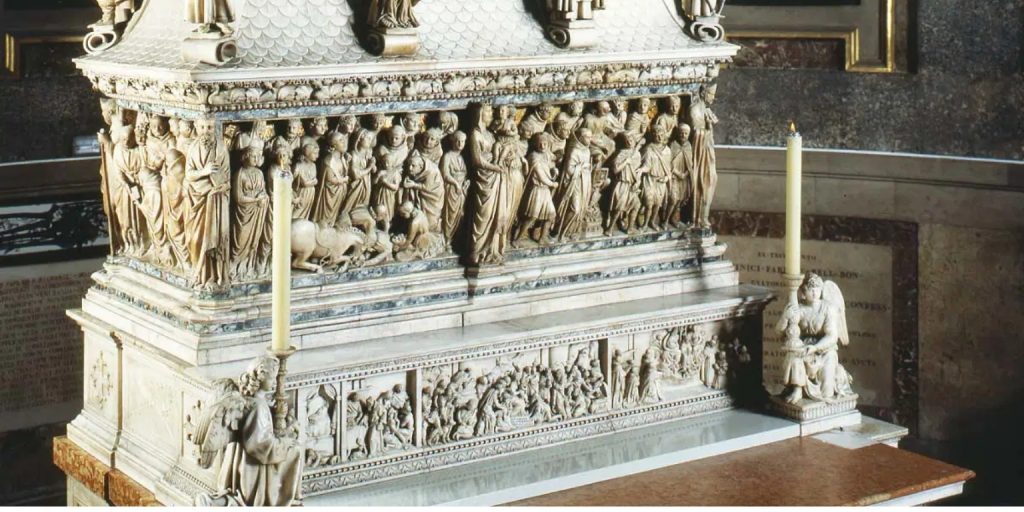
In the tranquil depths of the Basilica of San Domenico in Bologna, one of Italy’s most important churches, lies a monumental work of art and a profound spiritual shrine: the Arca di San Domenico (Tomb of Saint Dominic). This elaborate marble sarcophagus houses the remains of Saint Dominic (Dominic de Guzmán, 1170-1221), the founder of the Dominican Order. More than just a tomb, the Arca is a magnificent synthesis of medieval and Renaissance sculpture, showcasing the genius of some of Italy’s most celebrated artists, including the young Michelangelo. The Arca di San Domenico in Bologna is a testament to artistic evolution, religious devotion, and the enduring legacy of a transformative saint.
A Saint’s Legacy and a Holy Resting Place
Saint Dominic, a Castilian priest, founded the Order of Preachers (Dominicans) in 1216 in Toulouse, France, dedicated to preaching and combating heresy. He spent his final years in Bologna, where the Dominican Order rapidly expanded, and he died there in 1221. Initially buried simply, the growing veneration for the saint led to a desire for a more fitting and artistic resting place.
The creation of the Arca di San Domenico was a complex, multi-generational undertaking, spanning several centuries and involving numerous prominent artists. It reflects the changing artistic styles and patronage over the medieval and Renaissance periods.
A Collaboration of Masters: From Pisano to Michelangelo
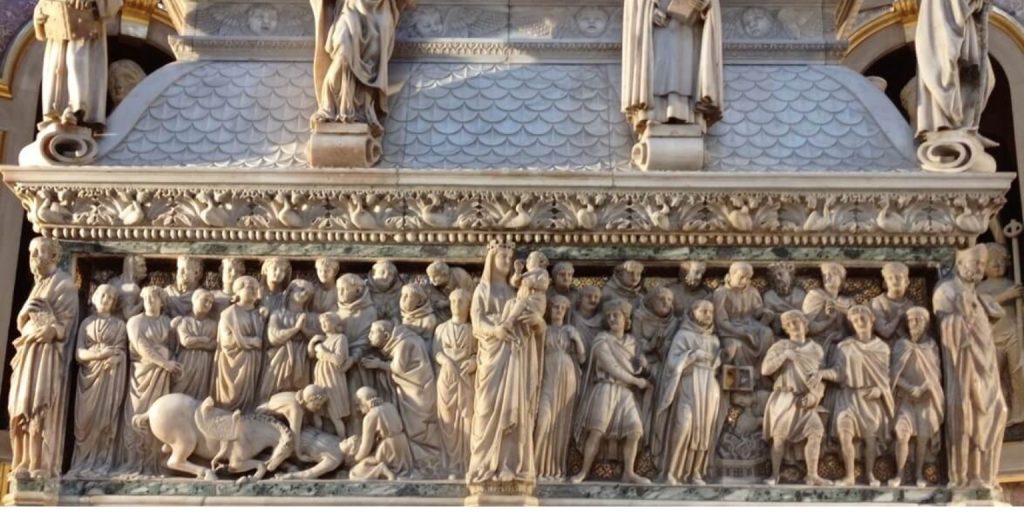
The earliest and foundational work on the Arca began in 1264. The initial design and the main body of the sarcophagus were carved by Nicola Pisano, one of the most influential sculptors of the 13th century, often credited with ushering in the revival of classical sculpture in Italy. His contribution includes the sarcophagus itself, featuring intricate reliefs depicting scenes from the life and miracles of Saint Dominic. Pisano’s work, though still retaining elements of the Romanesque, shows a clear move towards a more naturalistic and classical style that would define the Italian Renaissance.
Following Pisano’s death, his pupil Arnolfo di Cambio continued the work around 1267, contributing further figures and elements, particularly to the elaborate top of the sarcophagus.
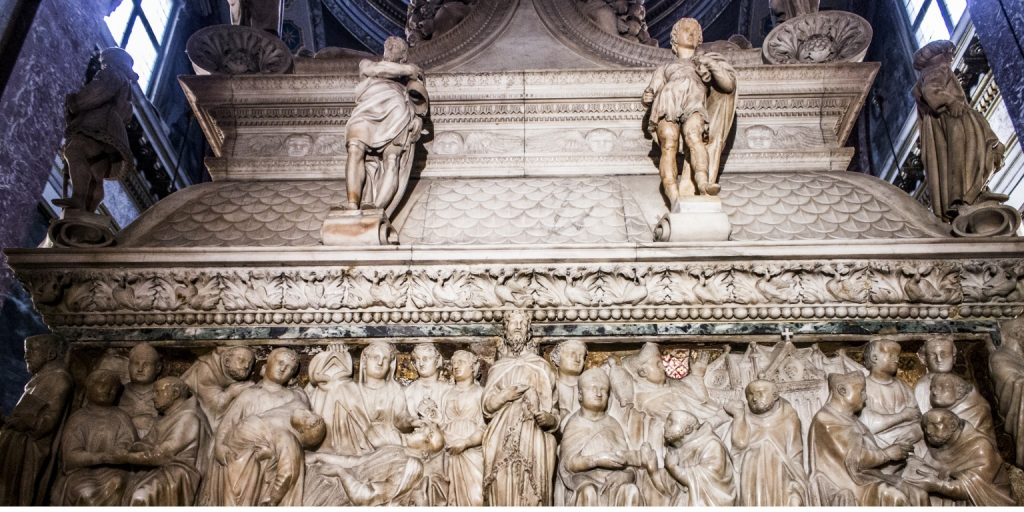
However, the most significant additions to the Arca’s overall grandeur came much later, with Niccolò dell’Arca (c. 1435-1494), a sculptor whose distinctive style earned him his moniker, “Niccolò of the Arca.” From 1469 until his death in 1494, Niccolò was responsible for the magnificent crown-like lid of the Arca, an incredibly intricate and dramatic piece featuring candelabra, putti (cherubs), and a beautiful, dynamic figure of God the Father, among other saints. His work blends late Gothic fluidity with burgeoning Renaissance naturalism.
Crucially, some of the most famous figures on the Arca were carved by a young Michelangelo Buonarroti. Between 1494 and 1495, having fled Florence due to the political turmoil following the death of Lorenzo de’ Medici, Michelangelo found refuge in Bologna. Here, he was commissioned to complete three missing figures for the Arca:
- Saint Petronius: Patron saint of Bologna, holding a model of the city.
- Saint Proclus: A Roman soldier saint.
- An Angel (with candlestick): One of two angels flanking the altar. (The other angel and the figure of Saint Agricola were carved by Niccolò dell’Arca).
Michelangelo’s figures, even at this early stage of his career, display a remarkable sense of terribilità and powerful anatomical understanding, foreshadowing his later monumental works.
A Pilgrimage Site and Artistic Marvel
Today, the Arca di San Domenico in Bologna remains a focal point of the Basilica, revered by Dominicans worldwide and drawing countless art historians, pilgrims, and tourists. It stands as a powerful testament to the collaborative nature of artistic creation over centuries and the enduring influence of religious patronage on the development of sculpture.
Located in a dedicated chapel within the Basilica of San Domenico, the Arca is beautifully illuminated, allowing visitors to admire the intricate details of each artist’s contribution. It offers a tangible connection to the spiritual legacy of Saint Dominic and the artistic lineage that stretches from the early Renaissance masters to the very dawn of Michelangelo’s genius. The Arca di San Domenico in Bologna, a masterpiece completed over centuries, represents a unique convergence of faith, art, and history, continuing to inspire awe and reflection.