
The remarkable history of Sankt Sakrament begins not as a church, but as an air-raid shelter. In 1928, the Catholic parish of St. Sakrament acquired the property at Heerdter Landstraße with the intention of building a new church. However, due to financial constraints, the project was delayed. With the outbreak of World War II, the property was expropriated by the Nazi government between 1940 and 1942 for the construction of a large, high-rise air-raid bunker (Hochbunker).
In an astonishing act of wartime camouflage and, perhaps, a subtle subversion of the original intent, the bunker was deliberately constructed to resemble a church. Its imposing, block-like form was given a pitched roof and a general silhouette that mimicked a sacred building, ostensibly to deter Allied bombers. This “church bunker” was designed to protect the local population, and it remarkably withstood numerous direct hits during the Allied bombing campaigns, remaining largely undamaged while much of Düsseldorf lay in ruins.
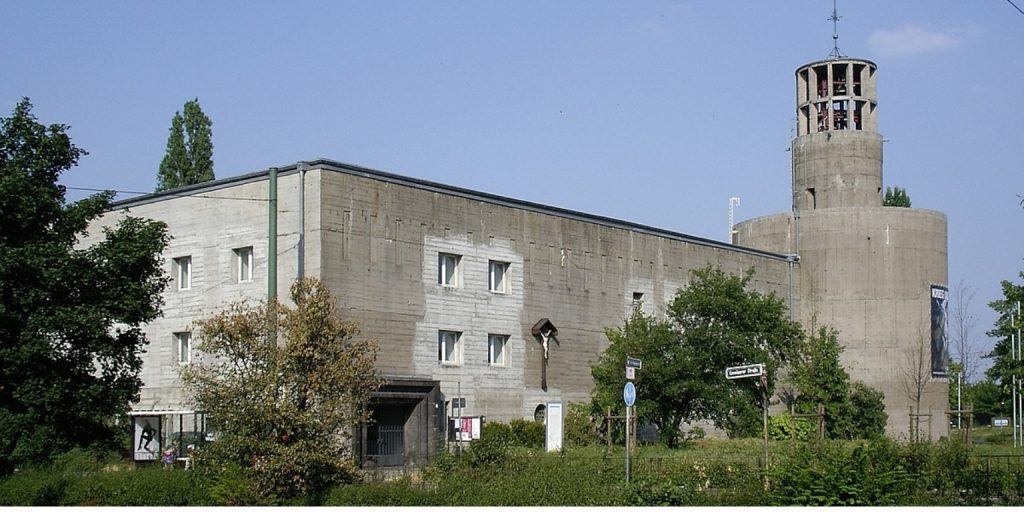
From Shelter to Sanctuary: Post-War Transformation
After the war, the parish, whose temporary wooden church had been destroyed, faced a unique challenge and opportunity. In 1947, Pastor Carl Klinkhammer, a determined and charismatic figure known as the “Ruhrkaplan,” took on the immense task of transforming the unyielding concrete bunker into a fully functional church. This audacious project was overseen by architect Philipp Wilhelm Stang, who had originally designed the bunker.
The conversion was a monumental undertaking. To create the soaring interior typical of a church, massive over two-meter-thick concrete ceilings had to be blasted through. Openings for windows were carved out of walls that were over a meter thick. A nine-meter-high altar wall was constructed, and a concrete bell tower, designed to match the bunker’s austere aesthetic, was added in 1952. Pastor Klinkhammer’s tireless efforts in fundraising and his reputation allowed this incredible vision to materialize. On October 30, 1949, Cardinal Josef Frings consecrated the transformed structure as the Catholic Church of Sankt Sakrament.
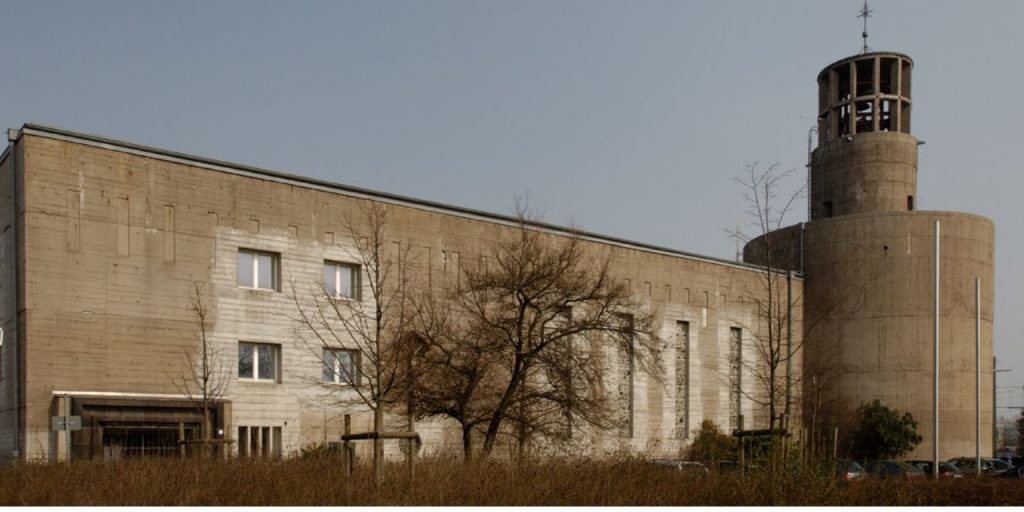
Architectural Identity and Enduring Symbolism
The architecture of Sankt Sakrament is a fascinating blend of its origins and its post-war purpose. While modified, its “bunker look” remains evident, characterized by a monumental, unadorned concrete exterior. This robust, almost brutalist style, softened by the later additions and internal modifications, gives it a unique and imposing presence. The interior, despite its history, manages to be light-filled, with a rectangular nave and a distinct altar area.
Beyond its physical form, the Bunkerkirche Sankt Sakrament is imbued with deep symbolism. It stands as a powerful reminder of the destructive folly of war and the enduring human spirit’s capacity for peace and transformation. It is often referred to as “the most stable church in the world,” a literal and metaphorical testament to its resilience.
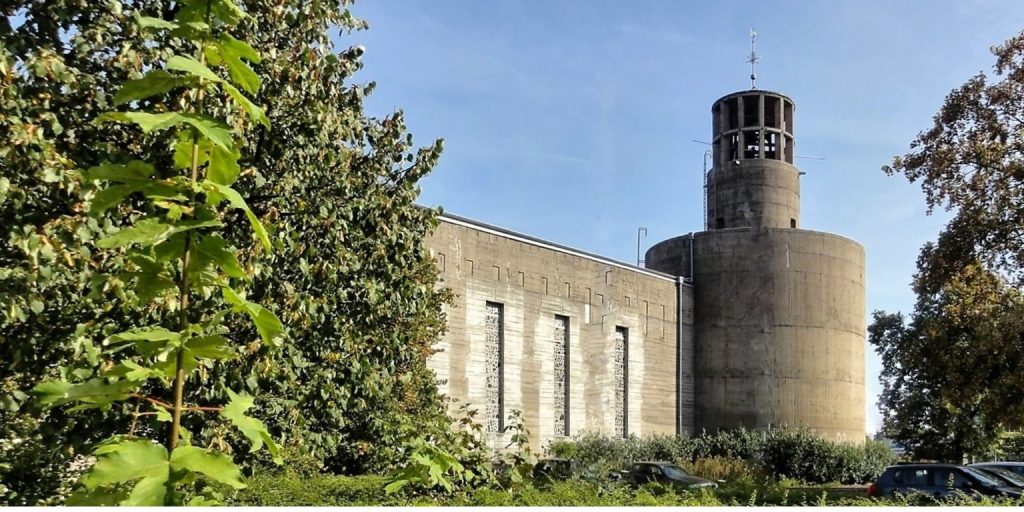
A New Chapter: The Coptic Orthodox Community
In a significant new chapter for the church, Sankt Sakrament was transferred from the Catholic parish to a Coptic Orthodox parish in December 2015. On May 12, 2019, Pope Tawadros II, the head of the Coptic Orthodox Church, consecrated the Bunker Church as a Coptic Orthodox Church, officially rededicating it to Saint Mary. This transfer highlights the evolving religious landscape of Germany and the continued spiritual relevance of this remarkable building. The basement of the church still preserves original sections of the air-raid shelter, serving as a tangible memorial to its unique past.
The Sankt Sakrament in Düsseldorf, located at Pastor-Klinkhammer-Platz 1 (or Heerdter Landstraße 270), is more than just a church; it’s a living monument. Born from a wartime bunker in 1940-1942 and ingeniously transformed into a sacred space from 1947-1949, it stands as an extraordinary example of architectural adaptation and a powerful emblem of peace and faith in the heart of Düsseldorf.

Düsseldorf Scavenger Hunt and Self-Guided Tour
<div class="wp-block-uagb-tabs uagb-block-a029b1f4 uagb-tabs__wrap uagb-tabs__hstyle1-desktop uagb-tabs__vstyle…