
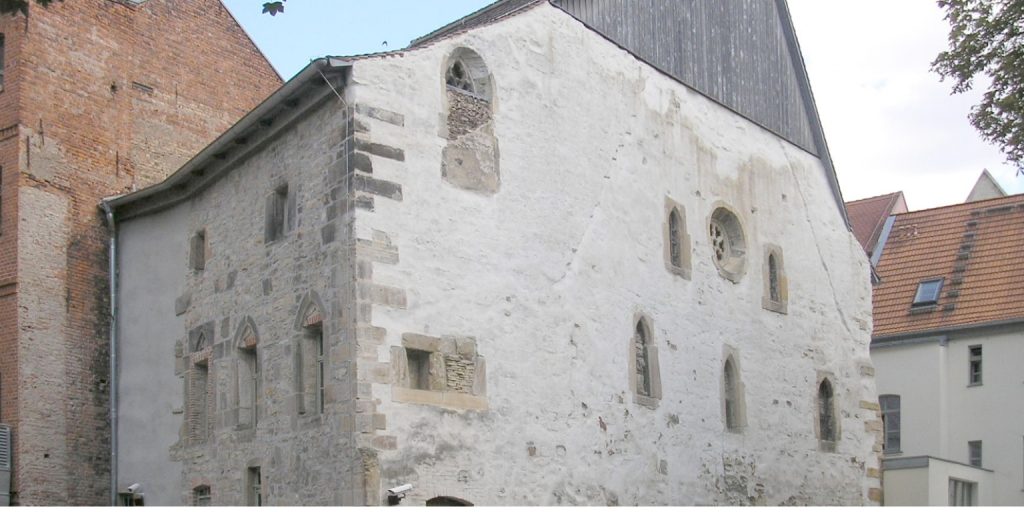
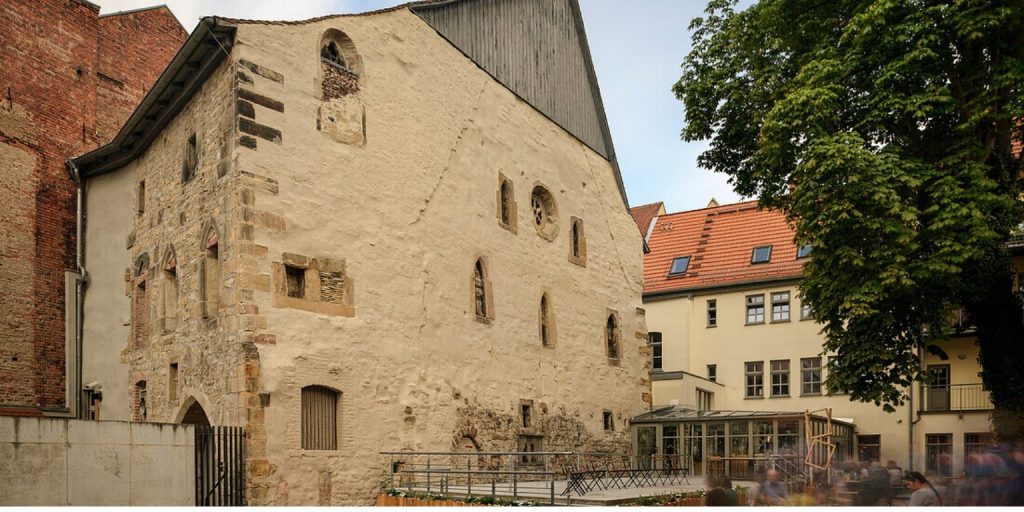
Nestled within the historic cobblestone streets of Erfurt, Germany, stands a building of unparalleled historical and cultural significance: the Old Synagogue (Alte Synagoge). Recognized as one of the oldest and best-preserved medieval synagogues in Europe, it is a profoundly moving testament to a vibrant Jewish community that once thrived in Erfurt and to the enduring legacy of Jewish life in Central Europe. A visit to the Old Synagogue in Erfurt is not just a journey through architectural history, but a deep dive into centuries of faith, prosperity, persecution, and remarkable preservation.
A Millennium of History: Construction and Early Life
The history of the Old Synagogue dates back to the late 11th century. Archaeological and dendrochronological (tree-ring dating) evidence confirms that its oldest surviving parts were constructed around 1094. This makes it one of the earliest extant synagogue buildings north of the Alps. The synagogue underwent several significant building phases in the medieval period, expanding to accommodate the growing and increasingly prosperous Jewish community of Erfurt. Major additions and renovations took place in the early 13th century (around 1250) and the early 14th century (around 1300), creating the structure largely visible today.
During the Middle Ages, Erfurt was a significant trading city and a major center of Jewish intellectual and economic life. The Jewish community played a crucial role in the city’s development, engaging in trade, finance, and scholarship. The magnificent Old Synagogue, with its substantial stone construction, reflects the wealth and standing of this medieval Jewish community.
The Tragedy of 1349 and a Miraculous Survival
The prosperity of Erfurt’s Jewish community came to a brutal end with the Black Death pogrom of 1349. During this horrific period, fueled by unfounded accusations that Jews were responsible for the plague, communities across Europe were violently persecuted. The Jewish community in Erfurt was annihilated, and their synagogue, along with their homes, was seized.
Remarkably, the Old Synagogue was not destroyed. Instead, it was put to various secular uses over the centuries. After the pogrom, the building was sold and subsequently served as a warehouse, a dance hall, and even a restaurant at different times. These continuous secular uses, ironically, protected the building from the fate of many other synagogues, which were often demolished or heavily altered beyond recognition for religious conversions. The interior walls were plastered over, concealing the medieval arcades and window openings, effectively “hiding” its true identity for centuries.
Rediscovery, Restoration, and Recognition
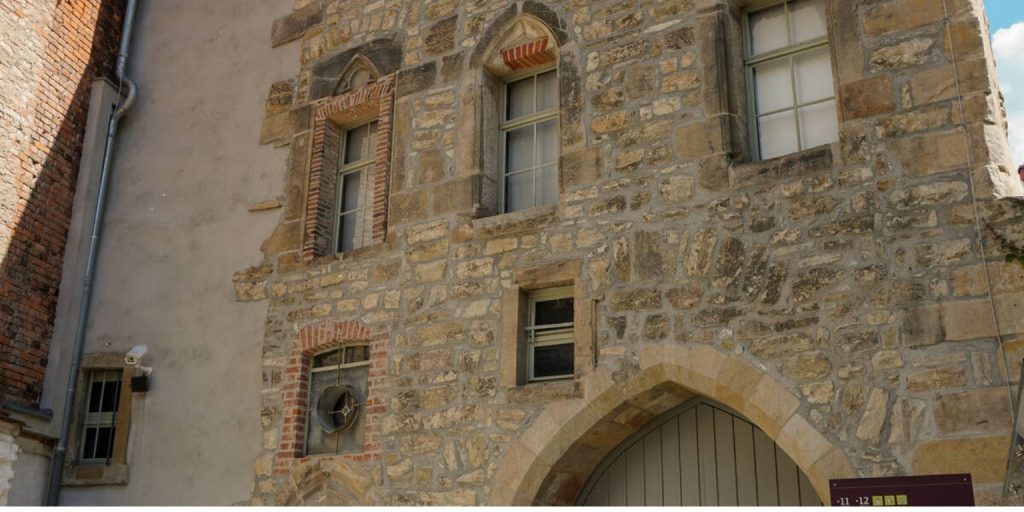
The true significance of the building as a medieval synagogue was only properly recognized in the late 1980s and early 1990s, after the reunification of Germany. Extensive archaeological investigations and meticulous restoration work began. This process revealed the original medieval walls, the distinct window shapes, and the architectural elements characteristic of a synagogue, including the niche for the Torah ark.
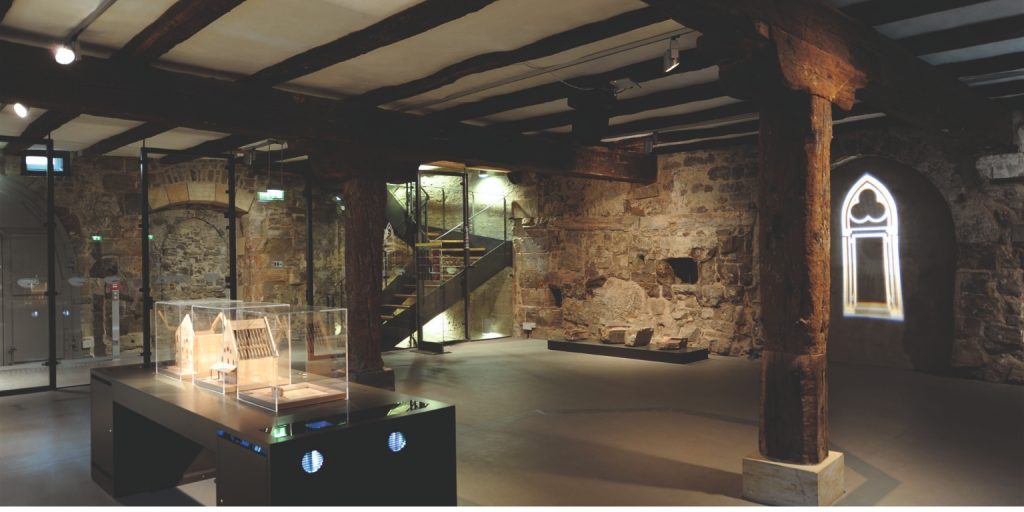
The restoration efforts culminated in the Old Synagogue in Erfurt being opened to the public as a museum and cultural center in 2009. It now showcases the history of Erfurt’s Jewish community and presents some of the extraordinary artifacts discovered in the city.
One of the most spectacular finds associated with the Old Synagogue is the Erfurt Treasure (Erfurter Schatz). Discovered in 1998 in the immediate vicinity of the synagogue, this hoard comprises over 3,000 silver coins, 14 ingots, and 600 pieces of Gothic goldsmiths’ work, including exquisite rings, brooches, and a unique Jewish wedding ring. This treasure, believed to have been buried by a Jewish merchant during the 1349 pogrom, offers an unparalleled glimpse into the material culture and wealth of the medieval Jewish community. It is now exhibited within the Old Synagogue, adding another layer to its profound historical narrative.
A UNESCO World Heritage Site
In 2023, the Old Synagogue in Erfurt was designated a UNESCO World Heritage Site, along with the Mikveh (ritual bath) and the Stone House (Steinerne Haus), as part of the “Jewish-Medieval Heritage of Erfurt.” This international recognition underscores its unparalleled importance as a tangible link to Europe’s medieval Jewish past.
The Old Synagogue in Erfurt, located at Waagegasse 8, is a powerful monument to survival and remembrance. Dating back to 1094, it stands as a unique witness to the rich and tragic history of Jewish life in medieval Germany, offering visitors a rare opportunity to connect directly with centuries of profound heritage.