
Nestled within the enchanting and historic heart of Erfurt, Germany, where the Gera River gracefully weaves through the city, lies the charming Venediger Bridge (Venedigerbrücke). This picturesque bridge, part of a network of over 140 bridges and footbridges that earned Erfurt the nickname “Little Venice” (Klein Venedig), is more than just a crossing; it’s a window into the city’s medieval heritage, its strategic waterways, and its enduring charm. A stroll across the Venediger Bridge in Erfurt offers a delightful glimpse into a bygone era, connecting visitors to the city’s rich past and its unique architectural beauty.
A Medieval Lifeline in “Little Venice”
Erfurt’s identity is inextricably linked to its waterways. The Gera River and its numerous branches, along with man-made canals, crisscross the city, creating a distinct character that evokes comparisons to Venice. The Venediger Bridge is one of the many historical bridges that were crucial for urban life in medieval Erfurt. These bridges facilitated trade, connected different parts of the city, and allowed for the passage of people and goods over the intricate system of rivers and canals that often ran directly beneath houses.
While the exact construction date of the first bridge at this specific location is often integrated into the broader history of Erfurt’s medieval bridge-building, the current appearance of the Venediger Bridge largely reflects the architectural styles and engineering practices common in the Late Middle Ages and early modern period. These bridges were typically built of stone, designed to be robust and enduring, forming essential parts of the city’s infrastructure as it grew into a major trading hub and intellectual center.
Architectural Charm and Urban Integration
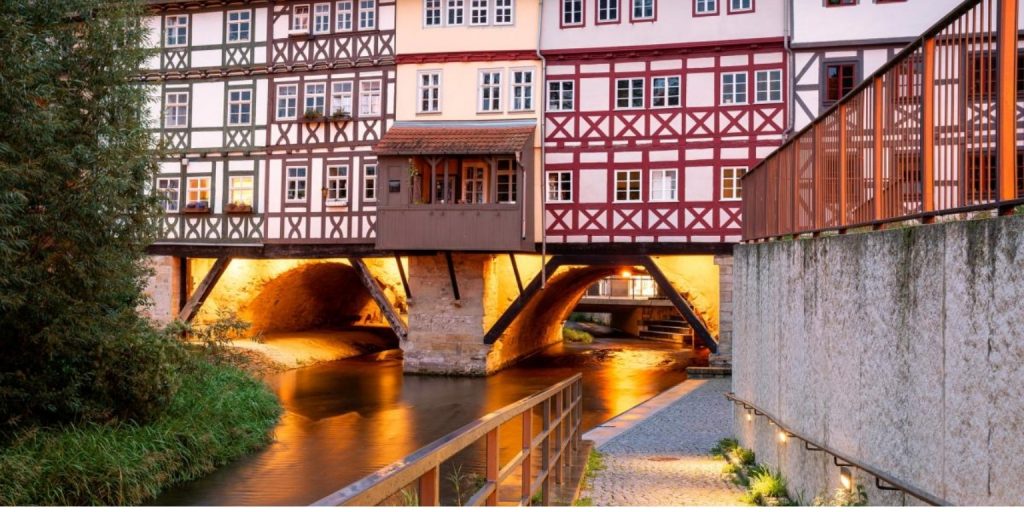
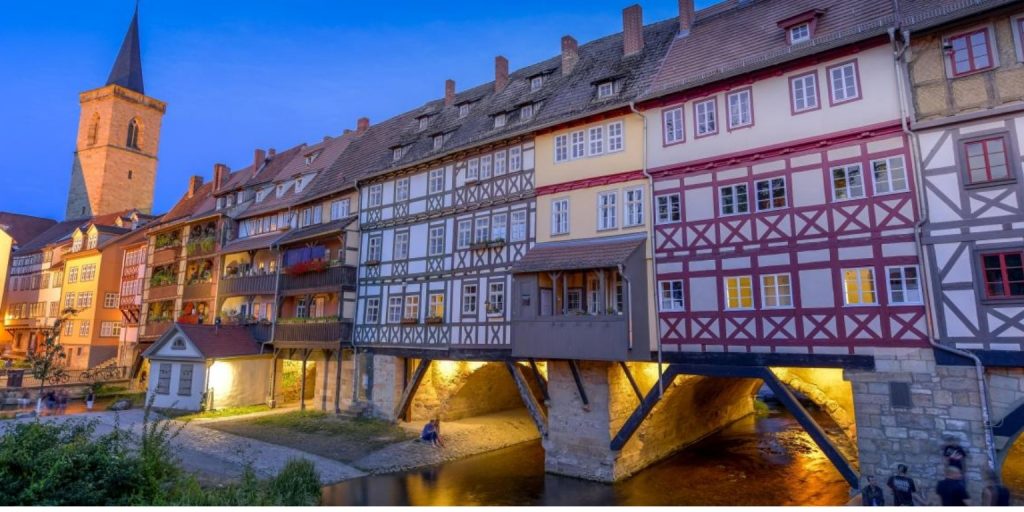
The Venediger Bridge is characterized by its traditional arched stone construction, common for bridges of its era. What makes it particularly charming, and a hallmark of Erfurt’s “Little Venice,” is its integration with the surrounding buildings. Unlike many bridges that stand alone, the Venediger Bridge, like its more famous counterpart, the Krämerbrücke (Merchants’ Bridge), features houses built directly upon it or immediately adjacent to its structure. This unique architectural arrangement creates a sense of continuity between the street, the bridge, and the river, forming a picturesque urban ensemble.
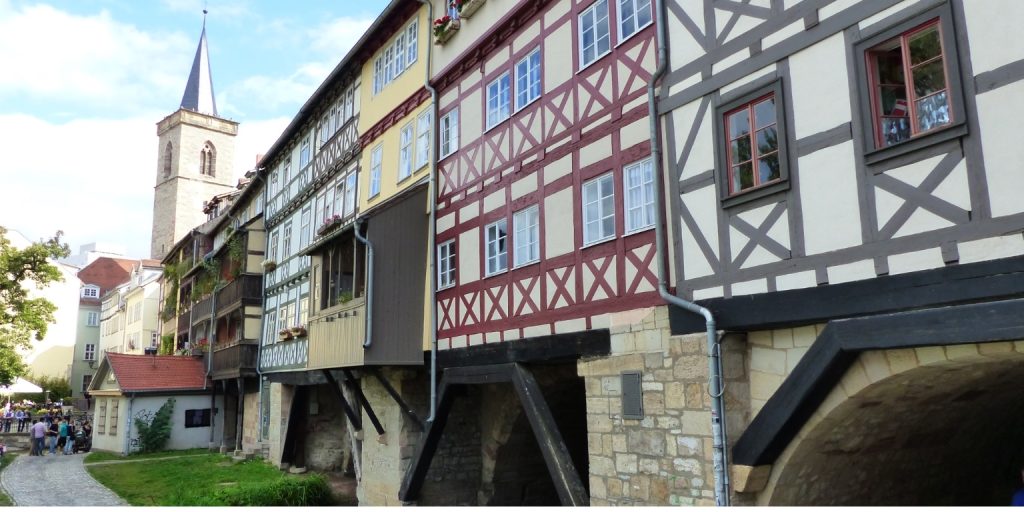
These houses, often half-timbered and leaning slightly, would have served as homes for craftsmen, merchants, and small businesses, capitalizing on the prime location over the water. This style of construction is reminiscent of old European cities where space was at a premium, and every available inch was utilized for living and commerce. The narrowness of the street and the way the buildings seem to grow out of the bridge enhance the intimate, historical feel of the area.
Historical Context and Evolution
The area around the Venediger Bridge would have been a bustling part of medieval Erfurt. The Gera River, which it crosses, was vital for trade, mills, and even sanitation in earlier times. The bridge would have witnessed centuries of daily life: the comings and goings of citizens, the clatter of carts, the sounds of workshops, and the flow of the river below.
Over the centuries, like many urban structures, the Venediger Bridge likely underwent various repairs, renovations, and minor alterations to adapt to changing needs and to repair damage from floods or wear and tear. However, its core medieval structure and its unique integration with the surrounding buildings have been carefully preserved, contributing to Erfurt’s outstanding collection of historical architecture. The preservation efforts ensure that visitors today can still experience the authentic atmosphere of a medieval trading city.
A Popular Spot for Strolls and Photography
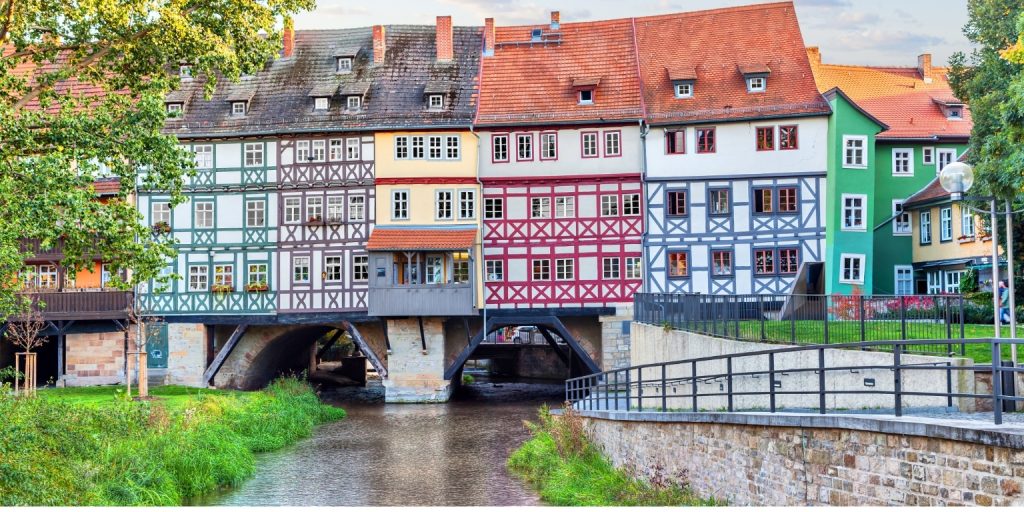
Today, the Venediger Bridge in Erfurt is a popular spot for both locals and tourists. It forms an integral part of any walking tour through Erfurt’s Old Town, especially for those exploring the charming alleys and waterways that make the city so distinctive. Its picturesque appearance makes it a favorite subject for photographers, particularly with the colorful houses, reflections in the water, and the nearby St. Augustine’s Monastery adding to the scenic beauty.
While perhaps not as globally famous as the Krämerbrücke with its shops, the Venediger Bridge offers a quieter, more intimate encounter with Erfurt’s “Little Venice” charm. It’s a place to pause, absorb the atmosphere, and appreciate the ingenious ways in which medieval engineers and town planners adapted to their watery environment. The Venediger Bridge in Erfurt, a beautiful stone bridge integrated with historic houses, stands as a charming and enduring link to the city’s medieval past and its unique character defined by its many waterways.