
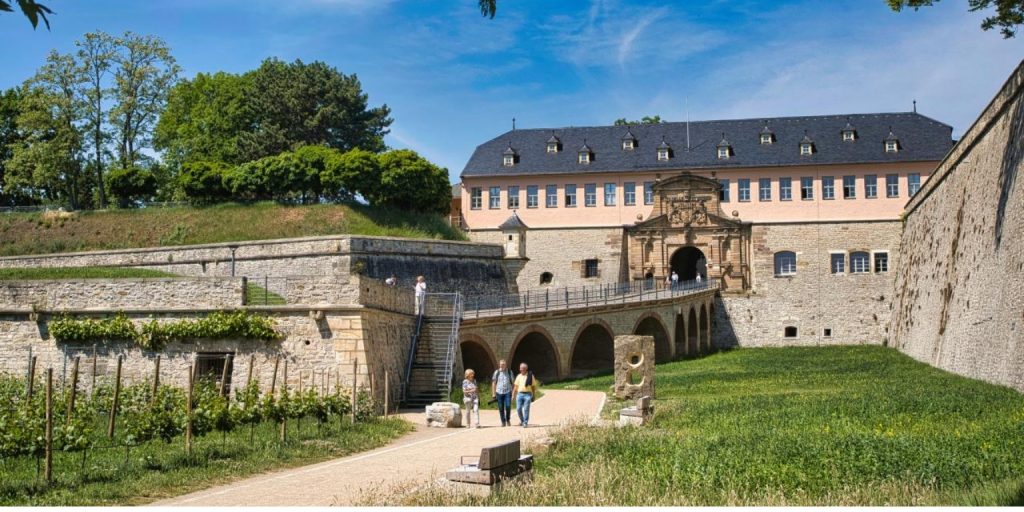
Perched majestically atop the Petersberg hill, overlooking the historic skyline of Erfurt, stands the formidable Zitadelle Petersberg (Petersberg Citadel). This imposing baroque fortress, with its intricate bastions, underground passages, and panoramic views, is not merely a historical relic; it is a living monument that encapsulates centuries of military strategy, political change, and urban development in the heart of Thuringia. A visit to the Zitadelle Petersberg in Erfurt offers an unparalleled journey through German history, from medieval times to the modern era.
From Monastery to Mighty Fortress: A Strategic Evolution
The history of the Zitadelle Petersberg begins long before its current form. The Petersberg hill was originally home to a Benedictine monastery, founded in the 11th century. This elevated position, providing a commanding view over the city and its surrounding plains, was recognized for its strategic importance even in medieval times.
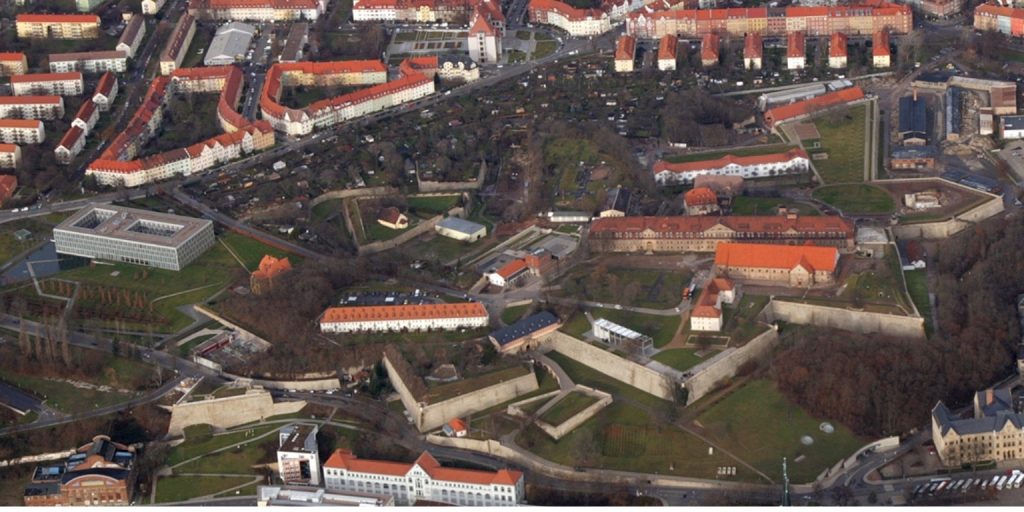
However, the fortress as we know it today was primarily constructed between 1665 and 1860 by the Electorate of Mainz. Following the Thirty Years’ War, which exposed the vulnerabilities of many German cities, Mainz sought to establish a strong, modern bastion to secure its territories and control the crucial trade routes passing through Erfurt. Under the supervision of renowned fortress architects, including Antonio Petrini and later August Günther, the Petersberg was transformed into a sophisticated Baroque-style bastion fortress. Its star-shaped design, with projecting bastions and intricate defensive lines, was a cutting-edge military innovation of its time, designed to withstand cannon fire and provide overlapping fields of fire.
A Witness to European Power Shifts
Throughout its active military life, the Zitadelle Petersberg in Erfurt played a pivotal role in numerous conflicts and witnessed the ebb and flow of European power. It was occupied by French troops during the Napoleonic Wars and even hosted Napoleon Bonaparte himself in 1806 and 1808. Following Napoleon’s defeat, the citadel, along with Erfurt, fell under Prussian rule in 1815, becoming an important Prussian state fortress.
Under Prussian command, the fortifications were further expanded and modernized. It served as a military base through the Franco-Prussian War, World War I, and even briefly in World War II, when parts of it were used as air-raid shelters. Its thick walls and strategic position made it a formidable, though never directly attacked in its full capacity during these later conflicts, deterrent. The fortress was ultimately decommissioned as a military installation in 1963 by the East German government.
Architectural Features and Underground Secrets
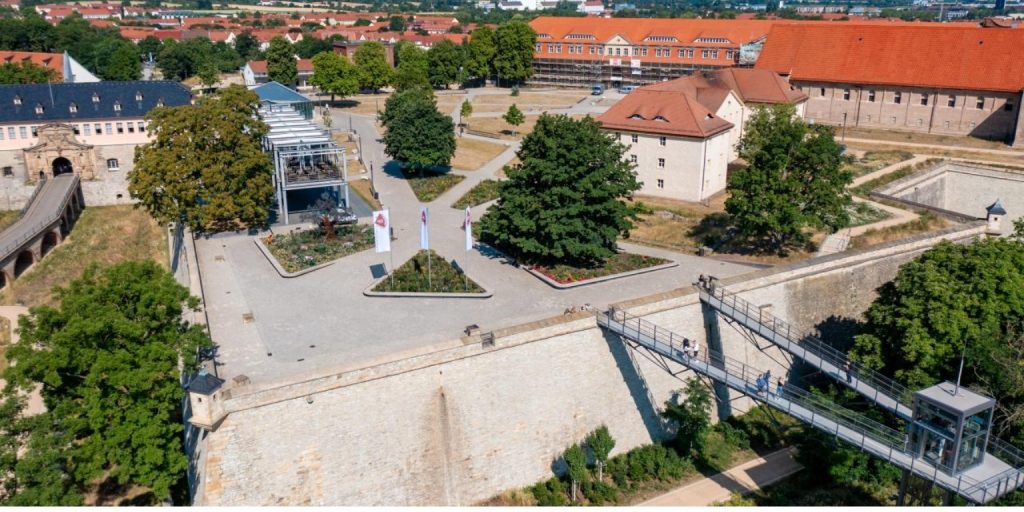
The Zitadelle Petersberg is a fascinating complex to explore. Key architectural features include:
- Bastions: Named after various saints (e.g., Martin, Leonhard, Philipp), these prominent, arrow-shaped projections allowed for flanking fire and provided defensive strength.
- Casemates: Vast, vaulted, bomb-proof chambers located within the bastions and walls, used for troop accommodation, storage, and protected firing positions. Many of these are now accessible to visitors.
- Underground Passages and Mines: An extensive network of tunnels, listening galleries, and mine chambers lies beneath the fortress, designed for counter-mining operations in the event of a siege. Guided tours often provide access to parts of this hidden world.
- Peterskirche (St. Peter’s Church): The former monastery church, partially integrated into the fortress, which serves as a poignant reminder of the site’s earlier spiritual purpose, now used for cultural events.
- Kommandantenhaus (Commander’s House): The former residence of the fortress commander, now housing a restaurant and offering magnificent views.
A Cultural Hub and Tourist Destination
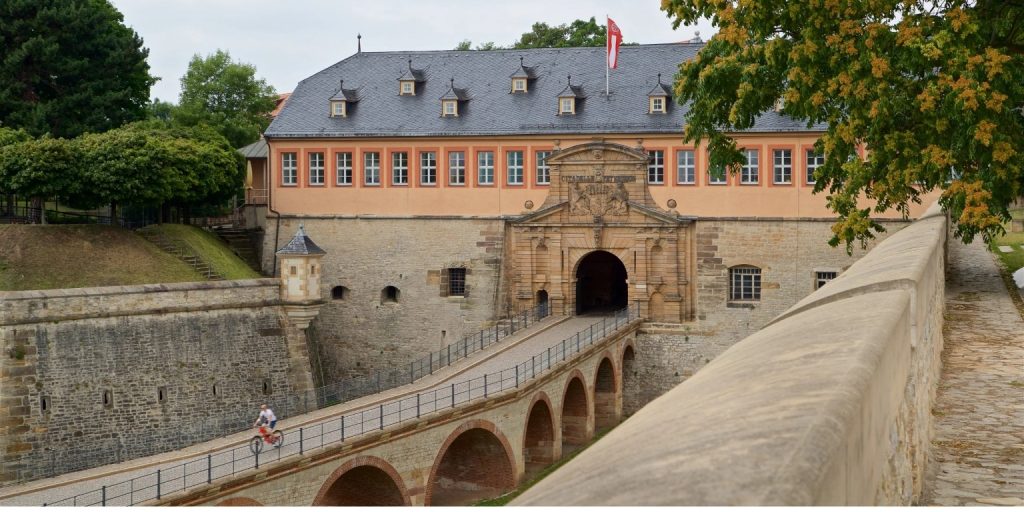
Today, the Zitadelle Petersberg in Erfurt is a major tourist attraction and a vibrant cultural center. It hosts a variety of events, including concerts, festivals, and historical reenactments. The accessible parts of the fortress, including its casemates and some of the underground passages, offer guided tours that bring its rich history to life. The views from the ramparts are simply spectacular, offering an unrivalled panorama of Erfurt’s medieval Old Town, including the Dom (Cathedral) and Severikirche.
The Zitadelle Petersberg in Erfurt, built between 1665 and 1860 by the Electorate of Mainz on the site of an 11th-century monastery, stands as one of Europe’s best-preserved Baroque city fortresses. It serves as a powerful reminder of Erfurt’s strategic past and a living testament to centuries of military and urban history, making it an indispensable part of any visit to Thuringia’s capital.