
In the bustling heart of Oxford, a city famed for its scholarly spires and medieval colleges, stands a building that predates them all. The Saxon Tower in Oxford, an unassuming but profoundly important structure on Cornmarket Street, is the oldest surviving building in the city, a remarkable relic of the Anglo-Saxon era. This thousand-year-old tower, which belongs to the church of St. Michael at the Northgate, offers a rare and tangible link to a time before the Norman Conquest, serving as a silent witness to a millennium of British history, from Viking raids to the fiery passions of the Reformation.
A Bastion of the Anglo-Saxon Age
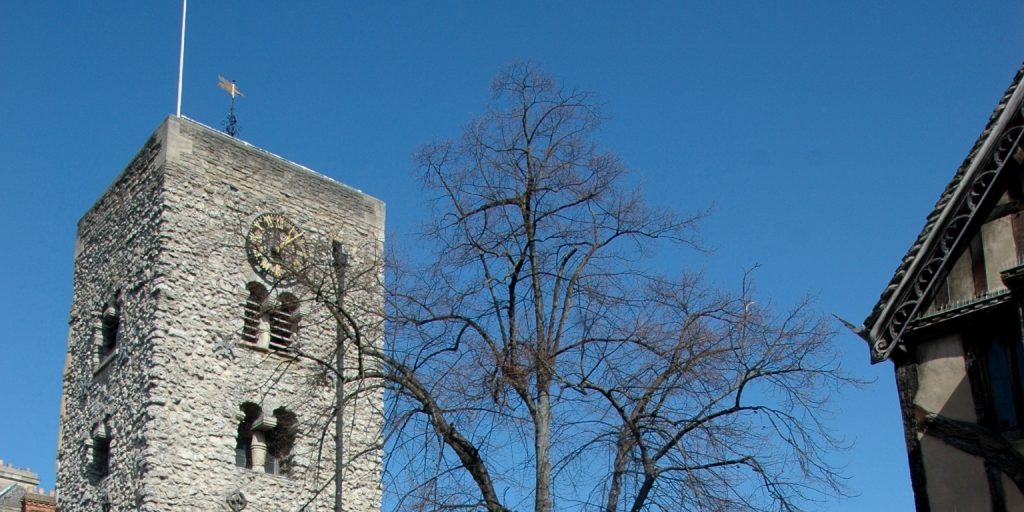
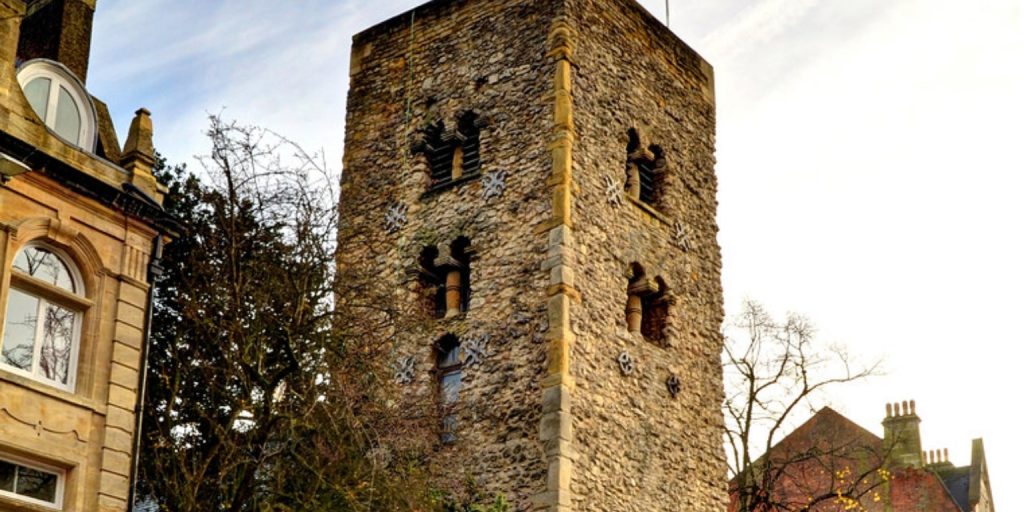
The tower’s name, as well as its location, is a key to understanding its origins. It was built around 1040 AD, a time when Oxford was a fortified town (burh) and the city wall was its primary defense. The tower was strategically placed next to the North Gate, a vital entry point into the city, serving as both a lookout post and a formidable part of the city’s fortifications. Its robust and simple construction is a hallmark of Saxon architecture, characterized by the distinctive “long-and-short” quoin stones at the corners, which provide stability, and its double-arched belfry windows divided by a simple central column.
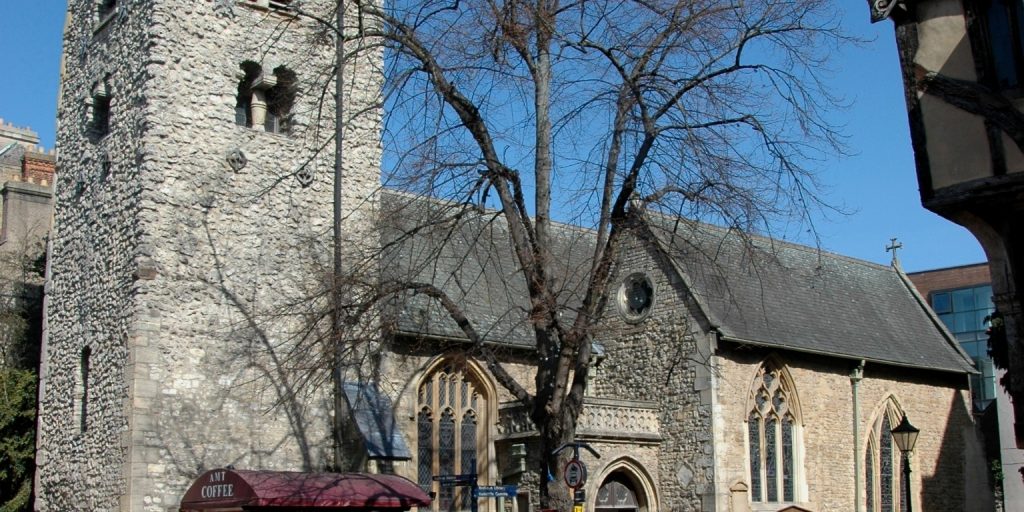
While the rest of the church of St. Michael at the Northgate has been rebuilt and modified over the centuries—its main body is a mixture of later medieval styles—the tower remains a pristine example of pre-Conquest architecture. Its enduring presence is a testament to the skill of its original builders, who crafted a structure so solid that it has withstood the test of time, wars, and the ceaseless march of progress. Today, it stands as a unique and invaluable example of the architecture of the Anglo-Saxon period, of which few examples remain.
The Martyrs’ Door and a Chilling Legacy
Perhaps the most poignant and powerful story associated with the saxon-tower-in-oxford is its connection to the Oxford Martyrs. On the narrow spiral staircase that leads to the top of the tower, visitors will find a heavy, iron-clad wooden door. This is the authentic door from the former Bocardo Prison, which once stood above the North Gate. It is famously known as the “Martyrs’ Door” because it is the very door through which Archbishop Thomas Cranmer and Bishops Hugh Latimer and Nicholas Ridley were led to their deaths.
These three men were prominent Protestant reformers who were imprisoned during the reign of the Catholic Queen Mary I in the 1550s. After refusing to recant their faith, they were taken from their cell and led through this door to be burned at the stake in the nearby Broad Street. Their martyrdom is a pivotal event in the English Reformation and a chilling reminder of the religious turmoil of the era. The presence of the door inside the tower provides a tangible and sobering link to this tragic chapter of history, making the climb an experience that is both historical and deeply moving.
A Climb to a Breathtaking View
Today, the Saxon Tower in Oxford is a popular destination for tourists, who are drawn not only by its historical significance but also by the stunning views it offers. For a small admission fee, visitors can ascend the winding staircase to the top, passing by the ancient prison door on their way up. The climb is a journey through history, culminating in a spectacular panoramic vista. From the top, you can see the entire cityscape, a breathtaking landscape of spires, quadrangles, and rooftops that epitomize the “city of dreaming spires.”
Saxon Tower, with its simple yet powerful presence, serves as a cornerstone of Oxford’s history. It is a reminder that even in a city of academic giants and architectural masterpieces, some of the most profound stories are held within the oldest and most unassuming of walls. The Saxon Tower in Oxford stands not just as a monument, but as a living record of a thousand years of faith, conflict, and endurance.