
The story of the Citadella is deeply intertwined with the Austro-Hungarian Empire. The fortress was built between 1851 and 1854 by the Habsburgs, following the suppression of the 1848 Hungarian Revolution and War of Independence. Its purpose was not to protect the city, but to intimidate and control the rebellious Hungarians. Designed by Austrian military engineers, the U-shaped, 220-meter-long fortress was a clear show of force, with its imposing walls and sixty cannons aimed directly at the city. It was a constant, physical reminder of Austrian dominance and a source of resentment for the people of Budapest.
Despite its menacing design, the Citadella never fired a shot in battle. Its strategic purpose was rendered obsolete by the time of the Austro-Hungarian Compromise of 1867, which led to the creation of the dual monarchy. The Hungarians, now with greater autonomy, demanded its demolition, but it was not until 1897 that the last Austrian troops left. The city symbolically took possession of the fortress in 1899, and a portion of its walls was finally demolished in 1900, a triumphant act of national pride.
The Liberty Statue: A Changing Symbol
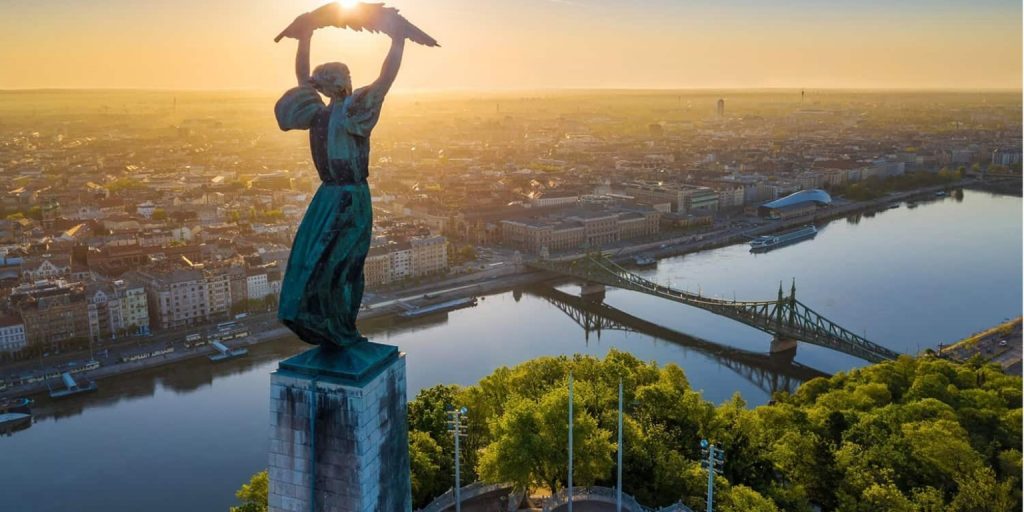
One of the most defining features of the Citadella is the Liberty Statue (Szabadság-szobor), a prominent and easily recognizable monument that stands at the fortress’s eastern end. Erected in 1947, the statue was originally built by the Soviet Red Army to commemorate the liberation of Hungary from Nazi occupation during World War II. It features a 14-meter-tall bronze woman holding a palm leaf, a traditional symbol of victory.
For decades, the statue was a complex symbol for Hungarians. While it marked the end of Nazi rule, it also represented the beginning of Soviet control, a period of over forty years of communist oppression. Following the fall of communism in 1989, the inscription on its pedestal was changed, and the monument’s meaning evolved. Today, the Liberty Statue is seen less as a symbol of Soviet liberation and more as a general tribute to freedom and a poignant reminder of Hungary’s long and arduous struggles.
A Tourist Destination and a Renovation
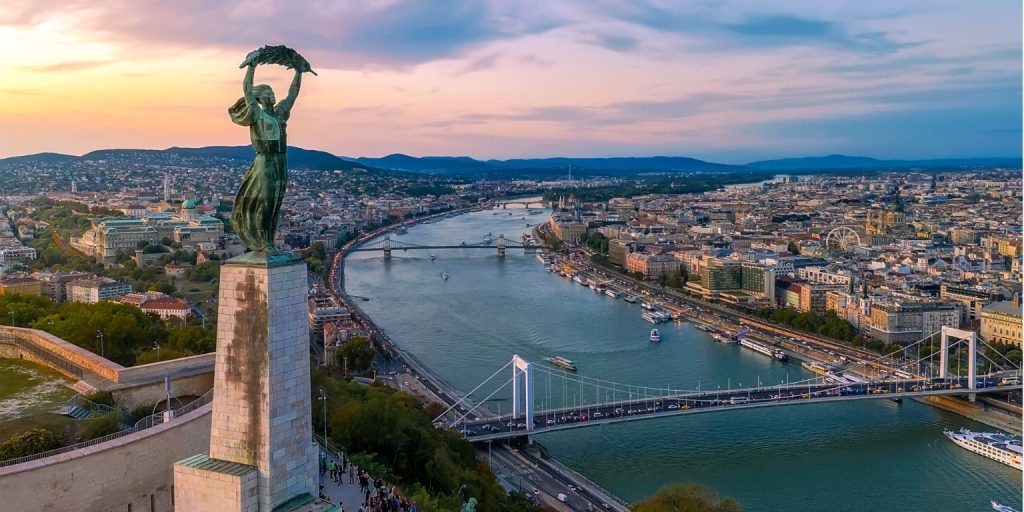
Today, the Citadella is a major tourist draw. While the fortress itself has been subject to a long-running renovation project, with much of the interior closed to the public, the grounds and surrounding area of Gellért Hill remain open and hugely popular. Visitors can walk the paths of the hill, which is a UNESCO World Heritage site, and enjoy various lookout points that offer breathtaking vistas of the city.
The climb up Gellért Hill to the Citadella is an essential part of the experience. Numerous paths wind their way up the steep slopes, leading to the summit where the fortress and Liberty Statue stand. The panoramic views from the top are arguably the best in all of Budapest, providing an uninterrupted perspective of the Danube, its bridges, and the city’s iconic landmarks.
The ongoing renovation, part of a larger government initiative to restore historical sites, aims to transform the Citadella into a modern cultural and public space. The plans include new exhibitions, a public park within the fortress walls, and the restoration of key architectural features. These efforts are designed to make the site more accessible and engaging for both locals and tourists, ensuring its role as a vital part of Budapest’s heritage continues for generations to come.
In essence, the Citadella is a living history book carved in stone. It tells a story of conflict, endurance, and transformation. Its past as a tool of oppression has given way to its present as a symbol of freedom, and its future as a vibrant public space. A visit to the Citadella is a journey through Budapest’s soul, offering not just spectacular views, but a deep appreciation for the city’s resilience and its complex journey toward self-determination.