
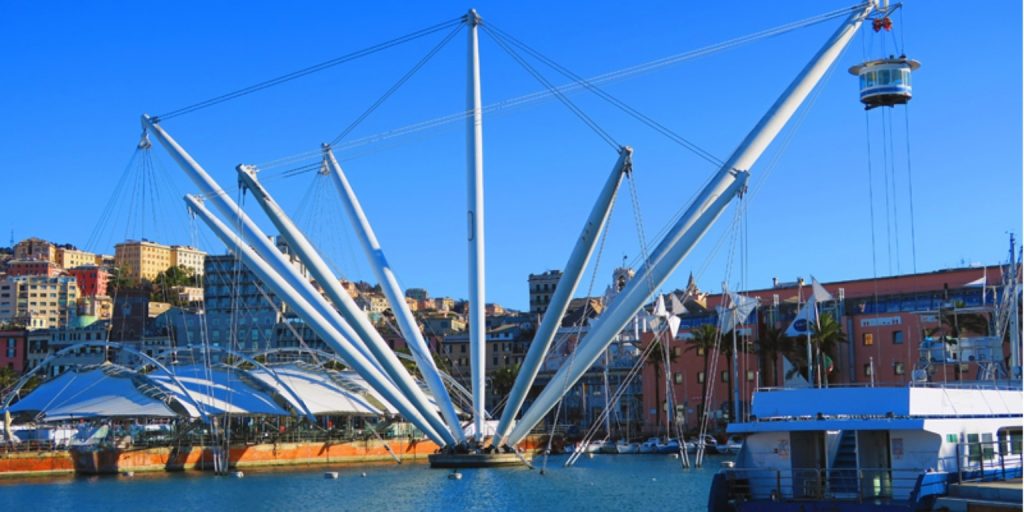
The Bigo is one of the most distinctive and recognizable landmarks in Genoa’s revitalized Porto Antico (Old Port) area. More than just a scenic attraction, this remarkable structure is a powerful symbol of the city’s urban renaissance, a project that transformed a derelict harbor into a vibrant public space. Designed by world-renowned architect Renzo Piano, a native of Genoa, the Bigo elegantly bridges the gap between the city’s rich seafaring past and its forward-looking future.
An Ode to Genoa’s Nautical Past
Renzo Piano’s design for the Bigo is a profound tribute to Genoa’s history as a major maritime power. The name “Bigo” is derived from a local term for the gigantic derricks and cranes that were once used to load and unload cargo ships in the bustling port. The structure’s design, with its long, spider-like arms fanning out from a central core, deliberately evokes the shape of these traditional harbor cranes. This aesthetic choice is not just a nod to history; it is a conscious effort to integrate the city’s industrial legacy into a modern, public-facing space.
The Bigo was a central piece of the extensive urban renewal project undertaken for the 1992 Genoa Expo, an event that celebrated the 500th anniversary of Christopher Columbus’s voyage. The project, led by Piano, was a masterclass in urban revitalization, turning a neglected waterfront into a hub of culture, leisure, and tourism. The Bigo, along with other new structures like the Aquarium and the Biosfera, became the architectural anchors of this new chapter for the city, drawing visitors back to a part of Genoa that had long been abandoned.
The Panoramic Elevator: An Unrivaled View
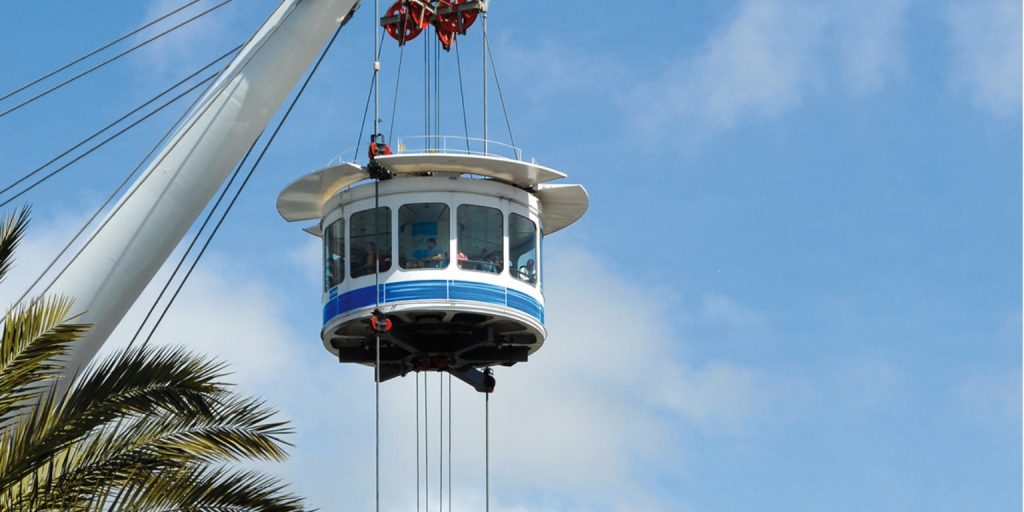
The most popular and spectacular feature of the Bigo is its panoramic elevator. The cylindrical cabin, with its transparent walls, slowly ascends to a height of 40 meters (approximately 131 feet). As it rises, the cabin rotates a full 360 degrees, providing an uninterrupted, breathtaking aerial perspective of the city and its harbor.
This slow, deliberate rotation allows passengers to fully absorb the surrounding panorama. From the top, you can see a sweeping view of the Porto Antico, with the historic port activity below and the majestic Ligurian Sea stretching out to the horizon. The view also encompasses Genoa’s historic city center, one of Europe’s largest and most intricate. Visitors can spot key landmarks such as the ancient bell towers, the maze of narrow medieval alleys known as caruggi, and the distinct slate rooftops that cascade down the surrounding hills. Informative optional voice narrations within the cabin highlight these landmarks, providing context to the captivating views.
A Hub for Modern Life
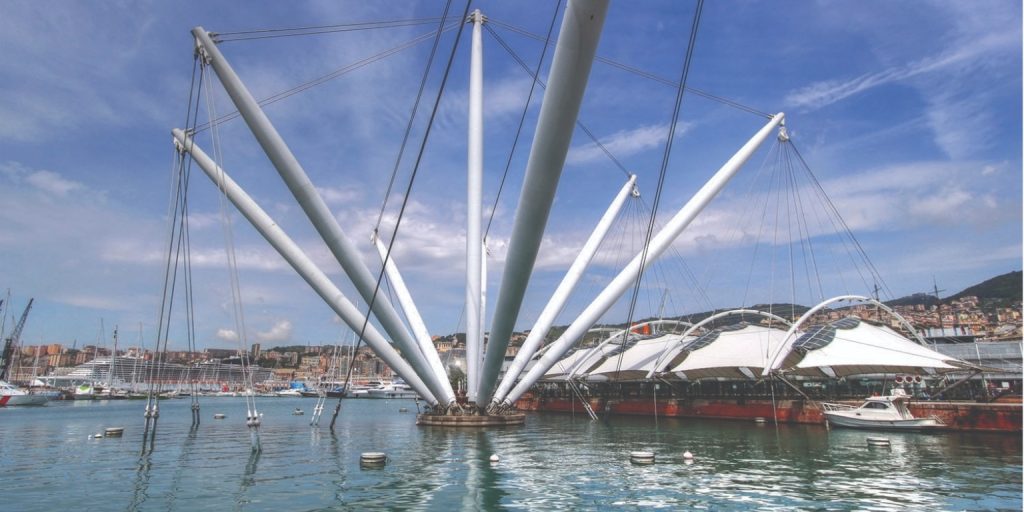
Beyond its function as a scenic viewpoint, the Bigo serves a practical purpose within the Porto Antico area. Its long, steel arms support a sprawling canopy, providing a sheltered public space below. This area, known as the Piazza delle Feste, hosts a wide range of cultural and public events throughout the year, from concerts and festivals to ice-skating rinks in the winter. This multi-functional design perfectly embodies the spirit of Piano’s work, which often combines elegant architecture with a high degree of social utility.
The Bigo is a critical component of the wider cultural and entertainment complex in the Porto Antico. It is located near the Genoa Aquarium, the Galata Museo del Mare, and the Biosfera, making it a natural stop for tourists exploring the waterfront. The structure itself is a work of art and a marvel of engineering, a testament to the fact that even industrial forms can be transformed into things of beauty and purpose.
The Bigo is more than just a ride; it is an experience that connects visitors with the very soul of Genoa. By offering a new perspective on the city from above, it allows you to appreciate the intricate tapestry of its past and its bright, modern future. It is a reminder that Genoa, a city with a history of great explorers and powerful fleets, continues to look outward, embracing innovation while honoring its deep-seated maritime roots.