
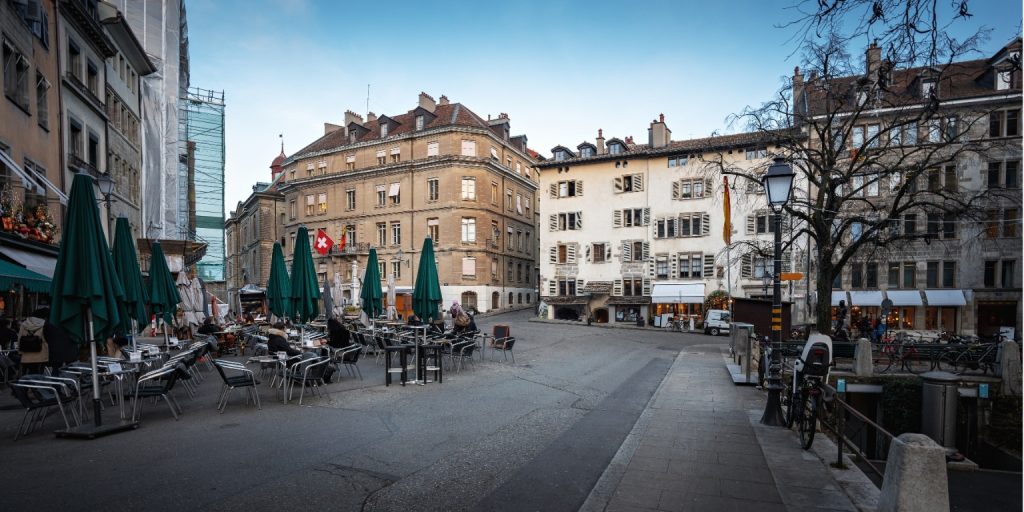
Nestled in the upper reaches of Geneva’s historic Old Town, the Place du Bourg-de-Four is a charming and timeless square that serves as a living museum of the city’s past. As Geneva’s oldest public square, it has been the city’s social, commercial, and political heart for over 2,000 years. Its cobblestone ground, irregular shape, and surrounding historic buildings tell a story that stretches from the Roman Empire to the modern-day.
A Crossroads of History
The roots of Place du Bourg-de-Four reach back to the Roman era, when it served as the city’s forum, a bustling center for trade and public life. Its name is thought to have two possible origins: one suggests a link to the Latin “Forum of the Burgundians,” referring to the Germanic tribe that settled here in the 5th century. Another theory points to the Celtic term “Borg de Feur,” meaning “Village Outside,” as it was once located outside the city’s early defensive walls. Regardless of its exact etymology, the square’s history as a hub for commerce is undisputed. Throughout the Middle Ages, it was a lively medieval market, hosting everything from cattle fairs to important trade gatherings.
The Place du Bourg-de-Four most pivotal role came during the 16th-century Protestant Reformation. Under the leadership of figures like John Calvin, Geneva became a bastion of the Reformation and a safe haven for Protestant refugees fleeing persecution across Europe. Many of these refugees, particularly the French Huguenots, poured into the city, creating an urgent need for housing. The architectural mix of styles visible today—with buildings from the 16th, 17th, and 18th centuries—reflects this period. The influx of new residents led to a unique architectural solution: instead of expanding outward, the city grew upward. The narrow, medieval buildings were given additional stories to accommodate the new population, giving the square its distinctive and charmingly irregular facade.
A Blend of Architectural Styles
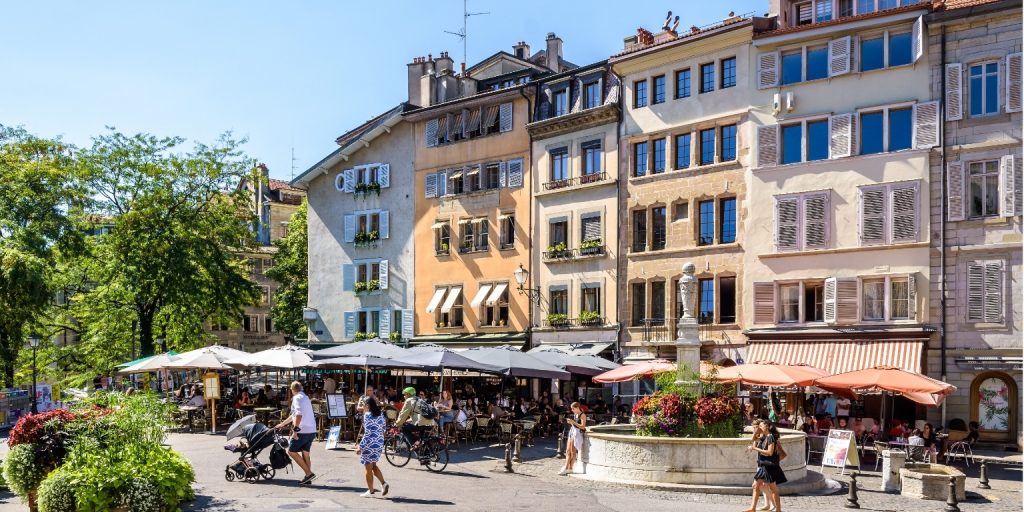
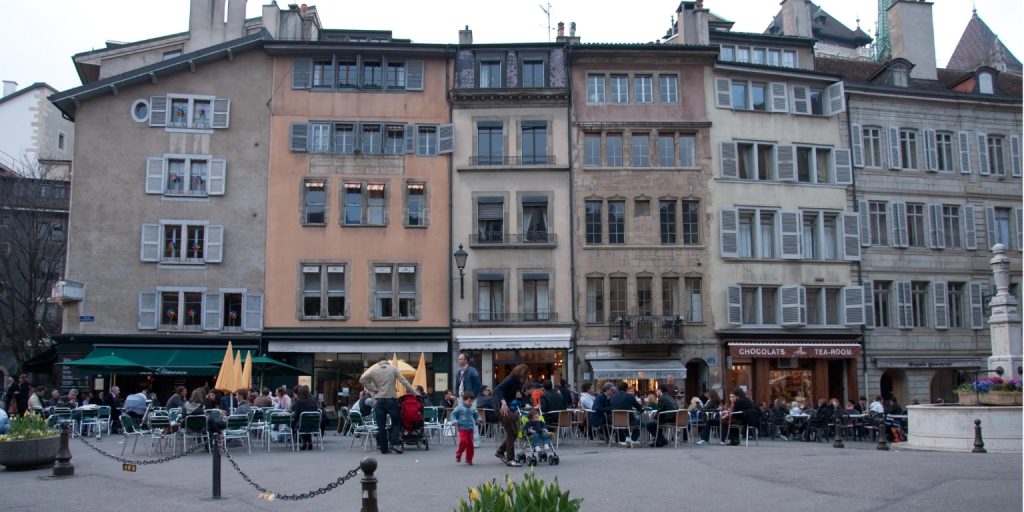
The architecture surrounding Place du Bourg-de-Four is a visual timeline of the city. The square is framed by a mix of tall, narrow houses that stand as silent witnesses to its past. While some of the buildings retain their original medieval character, others have been updated over the centuries with elements of Gothic and Renaissance design. This architectural fusion creates a cohesive yet varied aesthetic, with pastel-colored facades, intricate ironwork on balconies, and small shops tucked into ancient ground floors.
At the center of the Place du Bourg-de-Four is an elegant 18th-century stone fountain. It is a simple but beautiful feature that serves as a natural gathering point and a quiet focal point amid the lively atmosphere. The fountain, with its classical design, provides a serene contrast to the often-bustling activity of the square, offering a place for quiet reflection.
A Place for People
Today, the Place du Bourg-de-Four is a vibrant and essential part of modern Geneva. While it no longer hosts cattle markets, it remains a social heart for locals and a major attraction for tourists. The square is lined with a variety of terraced cafes, inviting bistros, and small shops, which spill out onto the cobblestones. Here, people gather to have coffee, a meal, or simply to sit and enjoy the atmosphere. It is the perfect place for people-watching, with the sounds of conversation, the clinking of glasses, and the distant bells of nearby St. Pierre Cathedral filling the air.
The square’s intimate size and irregular shape give it a cozy, almost private feel, making it a favorite spot for artists, writers, and students who are inspired by its timeless beauty. It is a common starting point for walking tours of the Old Town, with the winding staircase of the Passage des Degrés-de-Poules leading directly up to the St. Pierre Cathedral. This connection highlights its importance as a nexus of both spiritual and social life.
The Place du Bourg-de-Four is a testament to Geneva’s ability to preserve its history while embracing its role as a cosmopolitan city. It is a place that feels simultaneously ancient and alive, where every cobblestone has a story to tell and every cafe table offers a window into the enduring charm of Geneva.