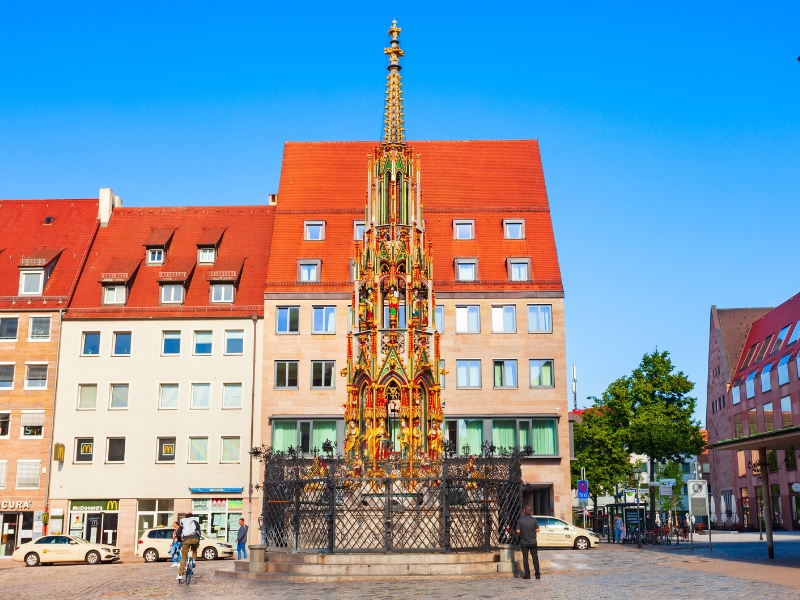
Schöner Brunnen in Nuremberg: 40 Figures and a Wishing Ring
The Schöner Brunnen in Nuremberg: the 1385–1396 Gothic fountain, its 40 stone figures and the legend of the wishing ring. Checked October 2026.
The Schöner Brunnen in Nuremberg: the 1385–1396 Gothic fountain, its 40 stone figures and the legend of the wishing ring. Checked October 2026.
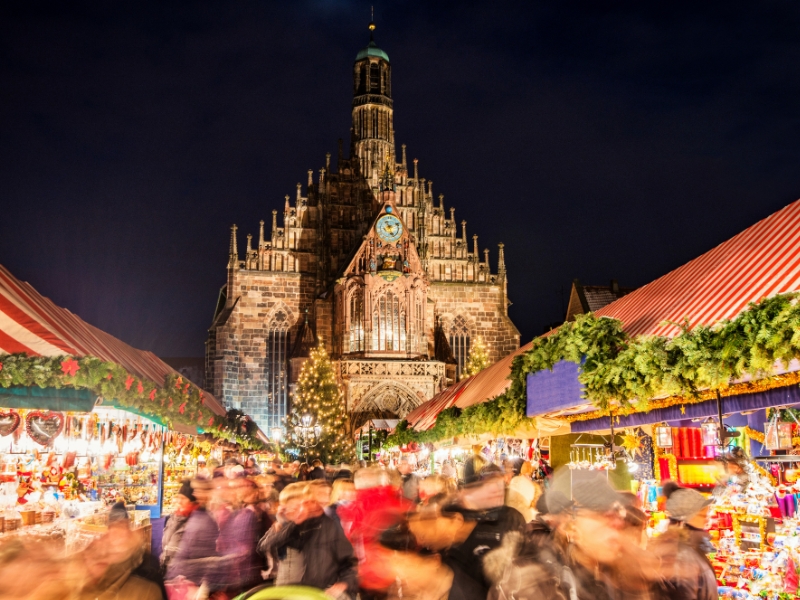
Nuremberg’s Hauptmarkt: a square built on the Jewish quarter destroyed in 1349, the Frauenkirche’s noon clock and the Schöner Brunnen. Checked October 2026.
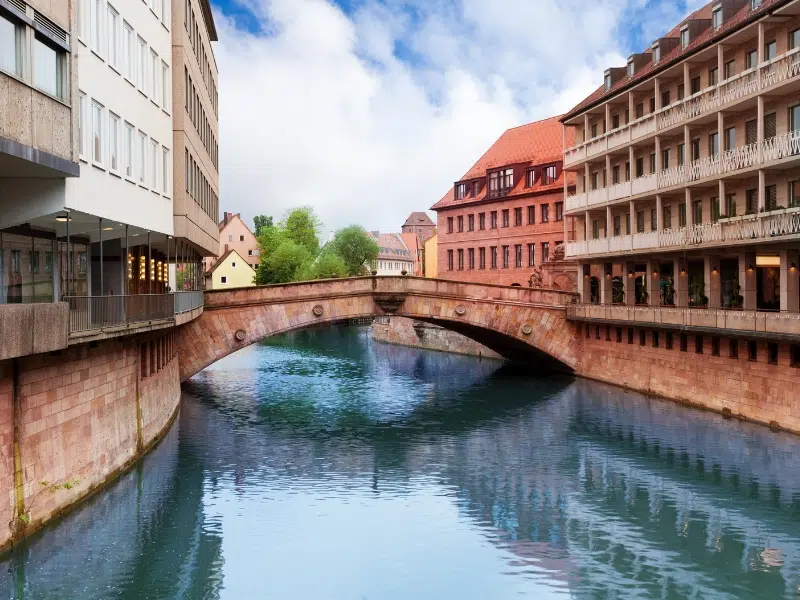
Nuremberg’s Fleischbrücke: the 1598 bridge with Germany’s widest stone arch of its day, the ox portal and its joke inscription. Checked October 2026.
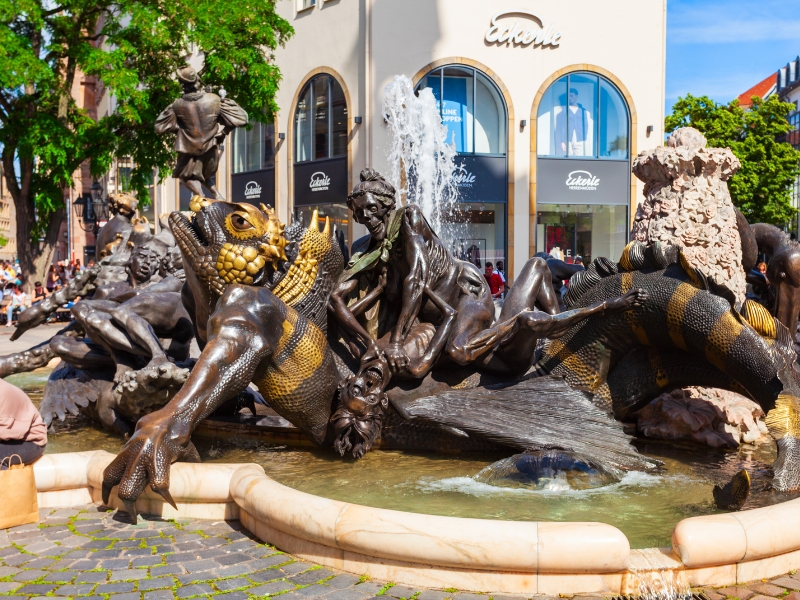
The Ehekarussell in Nuremberg: Hans Sachs’s 1541 poem in bronze, six carriages from first love to skeletons, and why it still divides opinion. Checked October 2026.
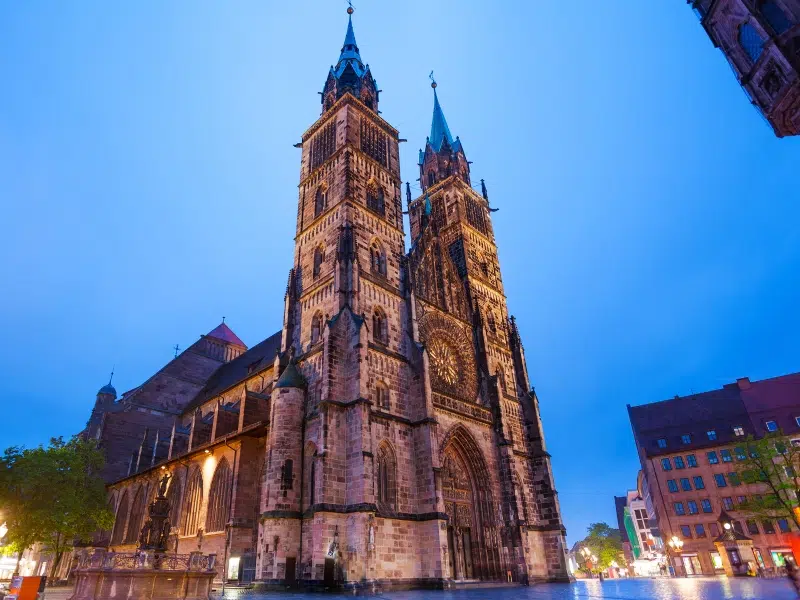
St. Lorenz in Nuremberg: Veit Stoss’s hanging Annunciation, Adam Kraft’s 19-metre tabernacle, the rose window and how it survived 1945. Checked October 2026.
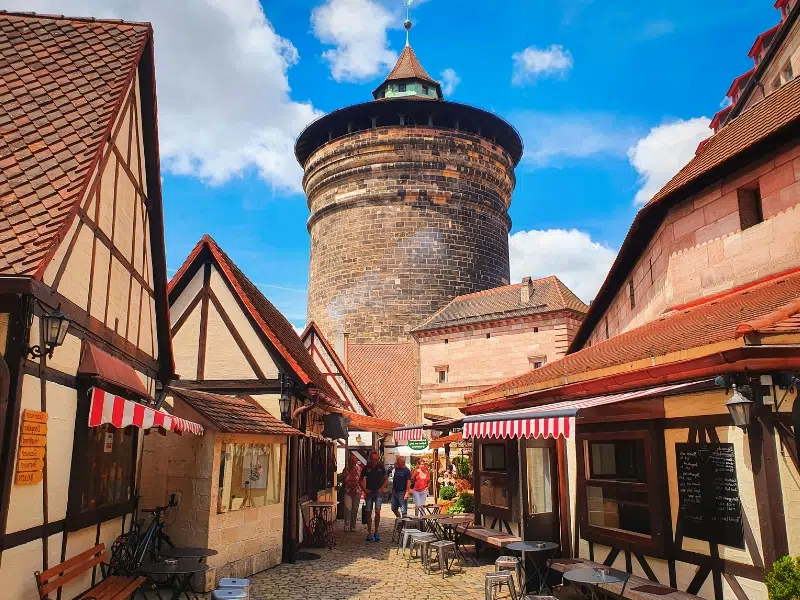
Handwerkerhof in Nuremberg: the 1971 Dürer Year craft village in the old weapons yard, the workshops, Lebkuchen and finger-sized bratwurst. Checked October 2026.

Nuremberg Opera House: Heinrich Seeling’s 1905 theatre, its Norns mosaic and Noris sculptures, and the box Hitler used after 1935. Checked October 2026.

Fun facts about Nuremberg: the Männleinlaufen clock, the lucky ring in the Schöner Brunnen, Dürer’s city and why the bratwurst is protected. Checked October 2026.
