
Table of Contents
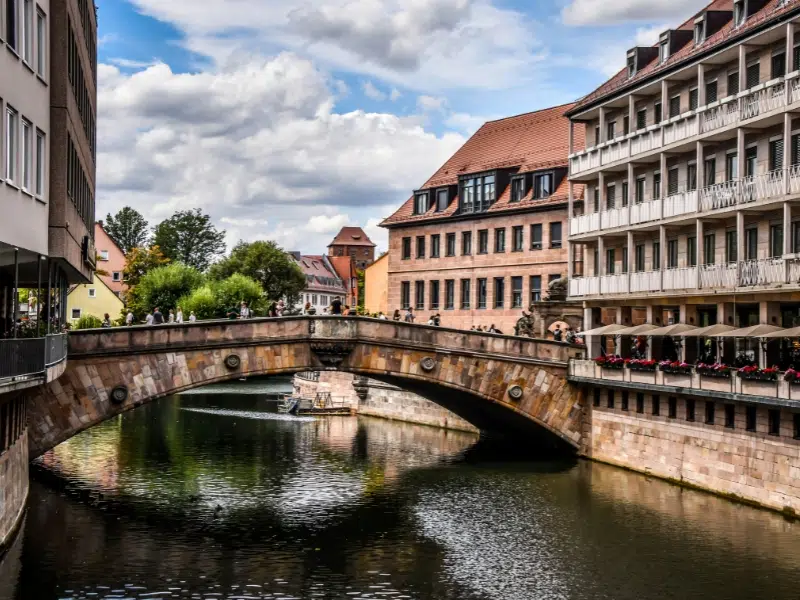
The Fleischbrücke, or Meat Bridge, is a remarkable historical landmark in the heart of Nuremberg. Spanning the Pegnitz River, this elegant Renaissance bridge stands as a testament to the city’s architectural innovation and commercial prominence during the 16th century. It is both a functional crossing and a symbol of Nuremberg’s rich history.
A Masterpiece of Renaissance Engineering
Built between 1596 and 1598, the Fleischbrücke was designed to replace earlier wooden structures that were prone to damage and decay. The city’s leaders commissioned the bridge to accommodate increasing trade and transportation needs while creating a structure that would endure for generations. Inspired by the Rialto Bridge in Venice, the Fleischbrücke showcases the technical ingenuity of its time, combining functionality with artistic elegance.
Architectural Features
The Fleischbrücke’s most defining characteristic is its magnificent single-span stone arch. Measuring 27 meters in length, it was a groundbreaking engineering feat of its time. Key architectural features include:
- Sandstone Construction: The bridge was built using local sandstone, known for its durability and distinct warm hue, giving the bridge its timeless aesthetic.
- Elliptical Arch Design: The precise curvature of the arch allows the bridge to support heavy loads while maintaining a refined appearance.
- Geometric Symmetry: The bridge’s proportions reflect the mathematical precision and balance typical of Renaissance architecture.
- Ornamental Detailing: Subtle decorative elements highlight the craftsmanship and artistry that went into its construction.
Historical Significance
The Fleischbrücke was a vital artery for trade and commerce in Nuremberg, connecting the city’s two sides and facilitating the movement of goods and people. Its construction represented the city’s economic prosperity and its role as a hub of trade in Europe during the Renaissance. The bridge’s location near the main market square further cemented its importance in daily life.
Remarkably, the Fleischbrücke has withstood the challenges of time, including natural wear, wars, and urban development. While much of Nuremberg’s Old Town suffered extensive damage during World War II, the bridge remained intact, a testament to its sturdy construction and the foresight of its engineers. Today, it is one of the city’s most enduring symbols of resilience and history.
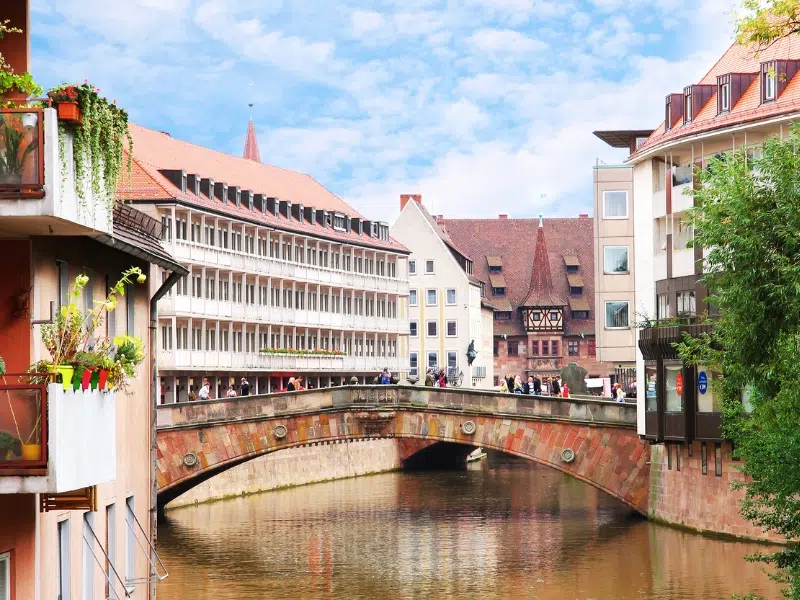
The Fleischbrücke continues to serve as a pedestrian bridge, providing a picturesque route for visitors and locals exploring Nuremberg. Its central location near the Hauptmarkt (Main Market Square) makes it a popular spot for tourists to admire the city’s scenic views and rich architectural heritage.
A Legacy of Innovation
The bridge offers stunning views of the Pegnitz River and the surrounding historic buildings, making it a favorite spot for photography. Its integration into Nuremberg’s medieval streetscape highlights the harmony of Renaissance engineering within a Gothic cityscape.
The Fleischbrücke is more than just a bridge; it is a symbol of Nuremberg’s ingenuity, prosperity, and enduring heritage. Whether you are crossing it to explore the city or pausing to appreciate its artistry, the Fleischbrücke offers a glimpse into the history and culture that shaped Nuremberg into the vibrant city it is today.
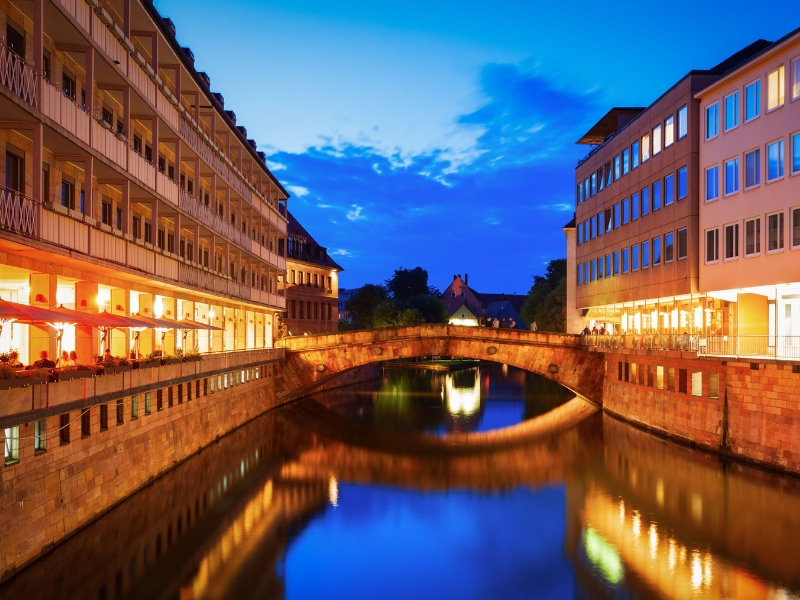
Fleischbrücke is part of Nuremberg scavenger hunt and walking tour!
Embark on an unforgettable journey through the enchanting city of Nuremberg with World City Trail. Our interactive walking tour combines the thrill of exploration with the rich history and culture of this beautiful city.
Key Features:
Interactive gameplay: Solve engaging puzzles and challenges as you explore the city.
Hidden gems: Uncover lesser-known spots.
Cultural insights: Learn about the city’s fascinating history.
Flexibility: Explore at your own pace and create your own itinerary.
Family friendly activity and a great way to explore the city!
Further reading on Wikipedia: Nuremberg