What is the Naples self-guided walking tour?
The Naples self-guided walking tour is a walk down through the old centre at a speed you set, with audio narration on your phone taking the place a guide would normally hold. Allow about 3 hours: 46 minutes of that is time on your feet, the route measures 3.7 km, and at 10 stops you stand still and listen. Nothing runs to a clock and nobody sets the pace but you.
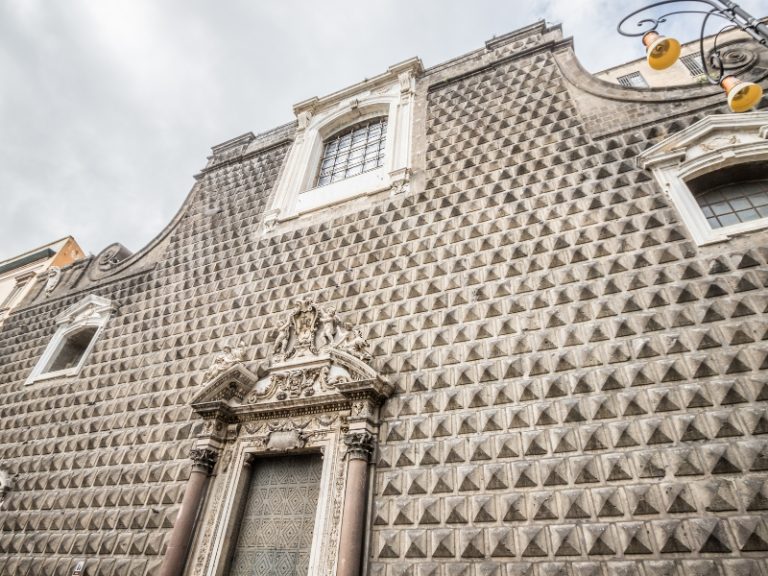
At the Sansevero Chapel the narration follows Raimondo di Sangro, the 18th-century prince whose experiments bred legends, and the veiled marble Christ that Giuseppe Sanmartino carved for him in 1753. Outside the Gesù Nuovo it points to the small marks cut into the diamond-pointed stones, which some read as a hidden musical score. Later you hear that Via Toledo was laid out by a Spanish viceroy in 1536, and the story told on Piazza del Plebiscito that few people manage to walk blindfolded in a straight line between the two royal horsemen.
- Durationabout 3 hours
- Walkingabout 46 min · 3.7 km
- Stops10
- LanguagesEnglish, German, French, Italian, Spanish, Dutch
What you do on the walk
Listen
Every stop brings the story of the place, the legends around it and the detail most people pass without noticing. The same text sits on screen for anyone who would rather read.
Walk on
The way from one stop to the next is already in Google Maps: 46 minutes on foot, 3.7 km in all, and most of it leads downhill towards the sea.
Break off
Stop at a counter for a coffee and a sfogliatella, give an hour to a cloister or a museum, then take the walk up again later or on another day.
Eat and browse
Tips for food and shops near the route come with the stops. Your starting point and the order are yours to set in the app.
See the route and attractions →
How it works
- Book online Choose the number of people. Your booking reference arrives by email straight away.
- Get the app Download the World City Trail app from the App Store or Google Play and enter your booking reference.
- Walk when you like Start whenever you are ready, walk at your own pace and pause any time. No guide, no fixed schedule.
Who the walk is for
A first time in Naples
One walk sorts out the ancient street grid, the Angevin churches and the royal quarter by the sea and explains what you are standing in front of.
Anyone who avoids groups
No raised umbrella to follow and no meeting time: you stay where something holds you and move on when you are ready.
A single day in the city
3 hours links the museum to the bay, which leaves the afternoon for the Spanish Quarters or a trip along the coast.
Good to know
- Bring a charged smartphone with mobile data; a power bank helps.
- No entry tickets needed: everything happens outside the buildings. Going inside is optional and paid separately.
- Family friendly; children must be accompanied by an adult.
- Not suitable for wheelchair users and difficult with strollers.
- Groups of up to 5 work best; larger groups split up, one ticket per person.
- Every purchase helps support stray cats and dogs in Greece.
The walk stop by stop: the old centre, Via Toledo, Castel Nuovo, Piazza del Plebiscito
10 stops · about 46 min walking · start: National Archaeological Museum of Naples · finish: Piazza del Plebiscito
The National Archaeological Museum of Naples is the first stop, at the upper end of the route. Four stops of the old centre follow within a few blocks of the ancient street grid: the Sansevero Chapel, San Domenico Maggiore, the Santa Chiara complex and the Gesù Nuovo. Via Toledo then takes the walk downhill, past San Nicola alla Carità, to the Fountain of Neptune on Piazza Municipio and to Castel Nuovo, and Galleria Umberto I opens onto Piazza del Plebiscito, where it ends. A different opening stop or another order can be set in the app, and no stop asks for an entry ticket.
Open the route map ↗
1National Archaeological Museum of NaplesStart
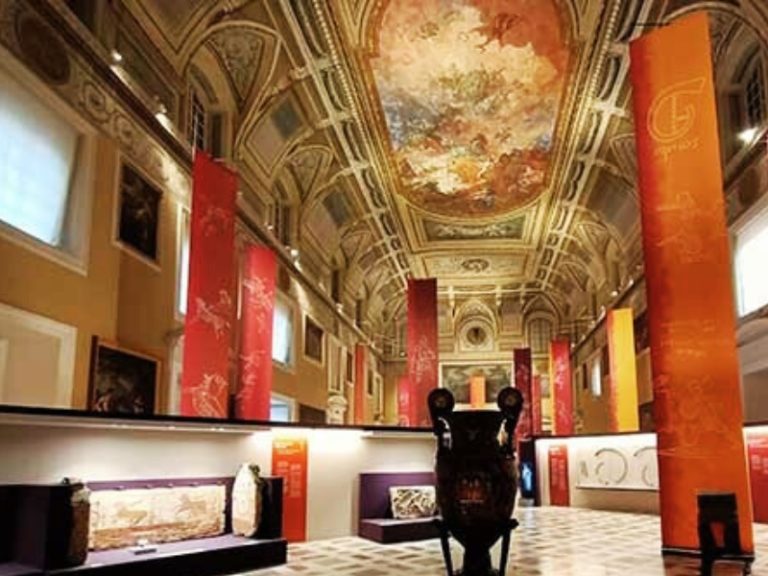
The museum fills a large palace built in the late 16th century as cavalry barracks and later used by the university. The Bourbon kings turned it into a museum for the Farnese collection of ancient sculpture and the finds from Pompeii and Herculaneum. It is one of the most important archaeological museums in the world.
2Sansevero Chapel
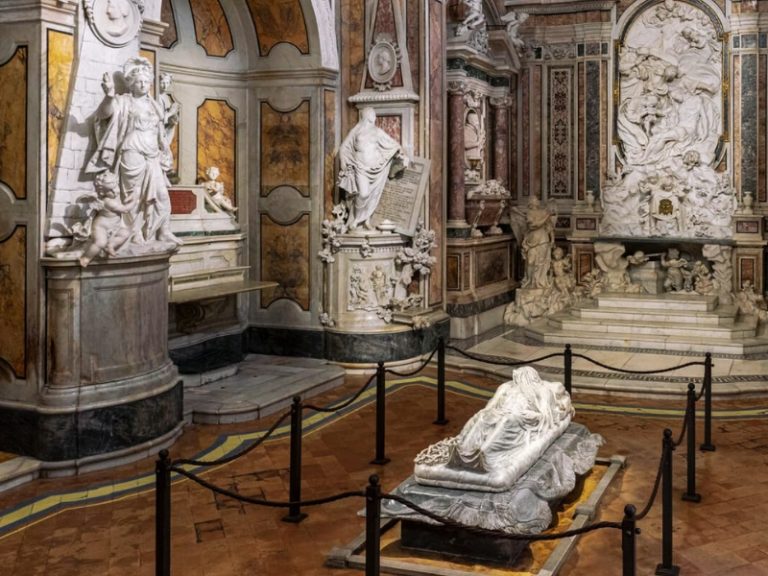
This family chapel of the princes of Sansevero was transformed in the 18th century by Raimondo di Sangro, a prince with a reputation as an alchemist and inventor. Its most famous work is the Veiled Christ, carved by Giuseppe Sanmartino in 1753, whose marble shroud seems transparent. Many legends grew up around the prince's experiments.
Read the full story →
3San Domenico Maggiore
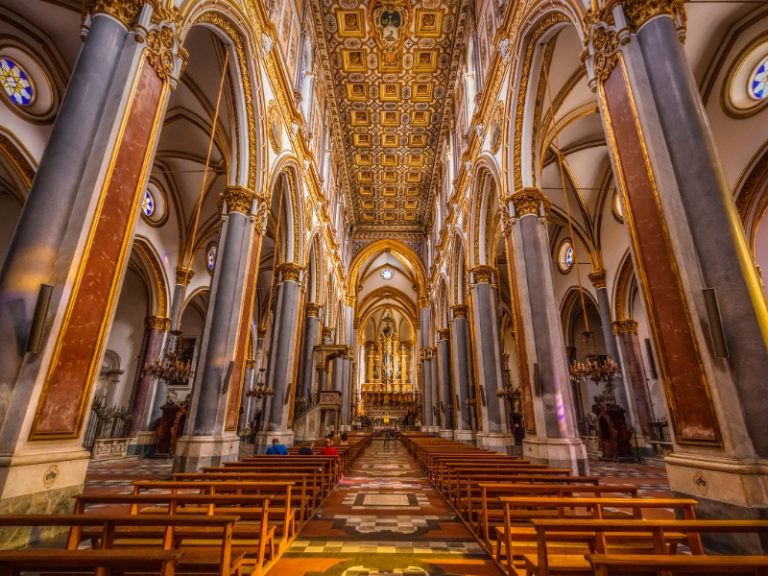
Charles II of Anjou founded this Gothic church in 1283, and Thomas Aquinas lived and taught in the Dominican convent next door. The church turns its apse, not a façade, towards the square, so you first see it from behind. In the middle of Piazza San Domenico Maggiore rises a baroque spire raised after the plague of 1656.
Read the full story →
4Santa Chiara Monumental Complex
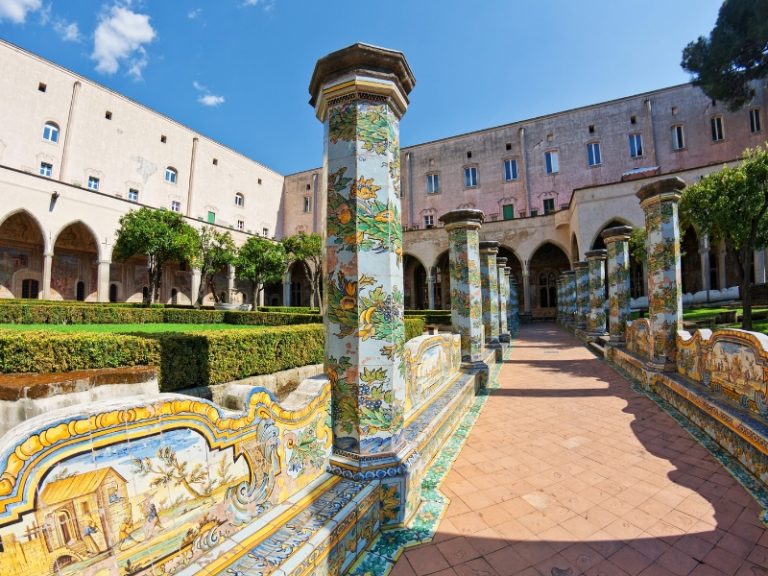
King Robert of Anjou and Queen Sancha of Majorca built this Gothic church and convent of the Poor Clares between 1310 and 1340. Bombs gutted the church in 1943, and it was rebuilt in its original Gothic form. Behind it lies the cloister, decorated in the 1740s with painted majolica tiles under the direction of Domenico Antonio Vaccaro.
5Gesù Nuovo Church
The church's façade of diamond-pointed stones belonged to a palace built in 1470 for Roberto Sanseverino, prince of Salerno, which the Jesuits turned into a church from the 1580s. Look closely at the stones for small carved marks, which some say form a hidden musical score. In the square in front rises the baroque Spire of the Immaculate.
Read the full story →
6San Nicola alla Carità
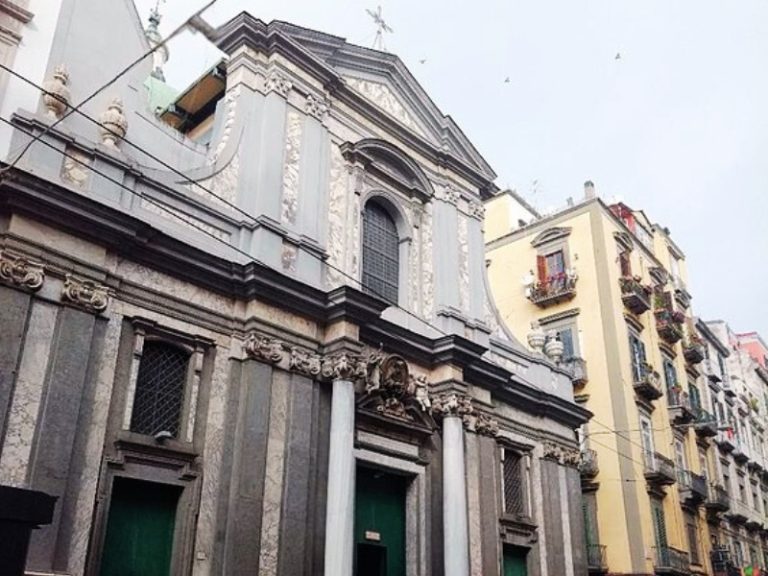
This baroque church stands on Via Toledo near Piazza della Carità and was built in the 17th and early 18th centuries. Via Toledo itself was laid out in 1536 by the Spanish viceroy Pedro de Toledo and is still one of the main shopping streets of Naples. Uphill to the west lie the narrow lanes of the Spanish Quarters.
7Fountain of Neptune
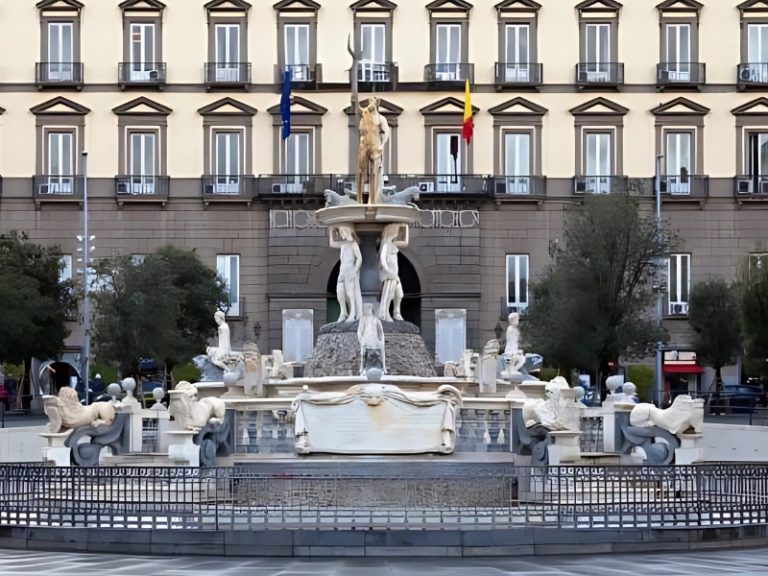
This fountain was designed around 1600 by Domenico Fontana, with sculptures by artists including Michelangelo Naccherino and Pietro Bernini, and has been moved several times around the city. It now stands in Piazza Municipio, between the town hall and the port. Look for the lions and sea creatures spouting water around the statue of Neptune.
Read the full story →
8Castel Nuovo
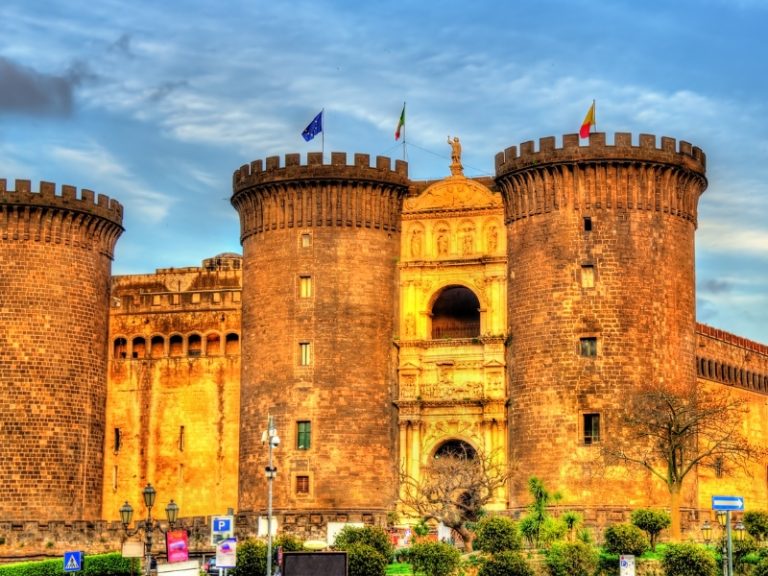
Known as the Maschio Angioino, the New Castle was begun in 1279 under Charles I of Anjou and rebuilt in the 15th century by Alfonso V of Aragon. Between two of its massive round towers stands a white marble triumphal arch celebrating Alfonso's entry into Naples in 1443.
9Galleria Umberto I
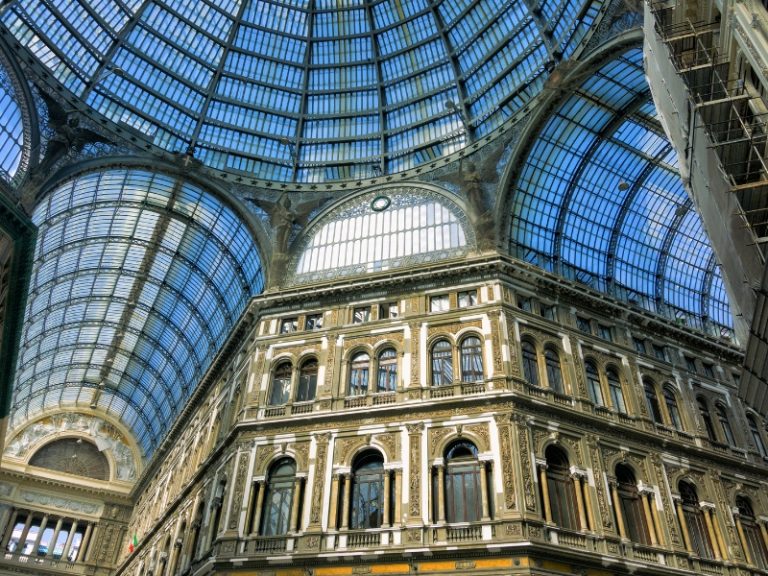
This shopping arcade was built between 1887 and 1890 and named after King Umberto I. Its four glass-and-iron wings meet under a dome about 57 metres high, with the signs of the zodiac set into the marble floor below. Across the street stands the Teatro di San Carlo, opened in 1737.
Read the full story →
10Piazza del PlebiscitoFinish
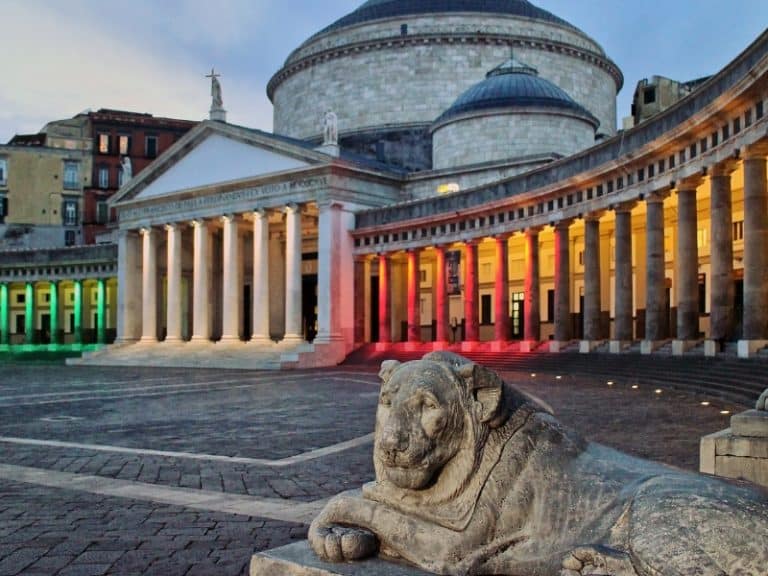
One of the largest squares in Naples, it takes its name from the 1860 plebiscite that joined the city to the Kingdom of Italy. The Royal Palace faces the church of San Francesco di Paola, inspired by the Pantheon in Rome, and two equestrian statues of Bourbon kings, partly by Antonio Canova. Legend says few people can walk blindfolded in a straight line between them.
Read the full story →
Only logged in customers who have purchased this product may leave a review.




Reviews
There are no reviews yet.