What is the Syracuse outdoor escape game?
The Syracuse outdoor escape game is a puzzle trail through the streets of the city: you carry your phone from stop to stop, and at each of the 10 landmarks you work out a puzzle by reading the surroundings and applying logic. Expect about 2 hours in total, including 36 minutes of walking over 3 km, and begin whenever suits you.
Each puzzle belongs to one landmark, from the bronze of Archimedes to the Temple of Apollo and the baroque front of the cathedral, and stands alone, so no storyline threads the stops together. Hints come in up to three levels if you get stuck. Ortigia suits this kind of game well: the island is compact, its lanes are narrow, and the sea is never far away.
- Durationabout 2 hours
- Walkingabout 36 min · 3 km
- Stops10
- LanguagesEnglish, German, French, Italian, Spanish, Dutch
What you do on the escape game
Solve
Work out each puzzle from what you can see around the landmark. Nothing beforehand is required.
Look closer
Clues sit in the carvings, the water and the layout of each square, so the details matter more than any guidebook.
Walk
Google Maps brings you from one puzzle to the next: roughly 36 minutes on foot over about 3 km.
No rush
No clock runs in the background. Ask for a hint when you need one, rest on a bench and carry on later or on another day.
See the route and attractions →
How it works
- Book online Choose the number of players. Your booking reference arrives by email straight away.
- Get the app Download the World City Trail app from the App Store or Google Play and enter your booking reference.
- Play when you like Start whenever you are ready, walk at your own pace and pause any time. No guide, no fixed schedule.
Who it suits
Friends on a day out
The puzzles spark debate at every corner, and a group of friends can share out the thinking between them.
Couples
Solving riddles side by side gives you something to talk about all the way from the church to the castle.
Team building
Teams of up to 5 each use their own phone, so colleagues can split up or stay together as they like.
Good to know
- Bring a charged smartphone with mobile data; a power bank helps.
- Best started in daylight, so you can see the details the puzzles ask about.
- No entry tickets needed: everything happens outside the buildings. Going inside is optional and paid separately.
- Family friendly; children must be accompanied by an adult.
- Not suitable for wheelchair users and difficult with strollers.
- Teams of up to 5 work best; bigger groups split into several teams, one ticket per player.
- Every purchase helps support stray cats and dogs in Greece.
Puzzle route: from San Tommaso al Pantheon to Castello Maniace
10 stops · about 36 min walking · start: Church of San Tommaso al Pantheon · finish: Castello Maniace
The first puzzle sits in the domed Church of San Tommaso al Pantheon, and the trail then crosses the Foro Siracusano before reaching Ortigia over the bridge. Once on the island, you pass the Statue of Archimedes, the Ortigia Market, the Temple of Apollo, the Archimedes and Leonardo da Vinci Museum and the Fountain of Diana, then the cathedral, the Fountain of Arethusa and Castello Maniace at the tip of the island. Daylight suits the start, since rain or wind slow outdoor play. Google Maps guides you between stops, the app allows reordering, and no entry tickets are needed.
Open the route map ↗
1Church of San Tommaso al PantheonStart
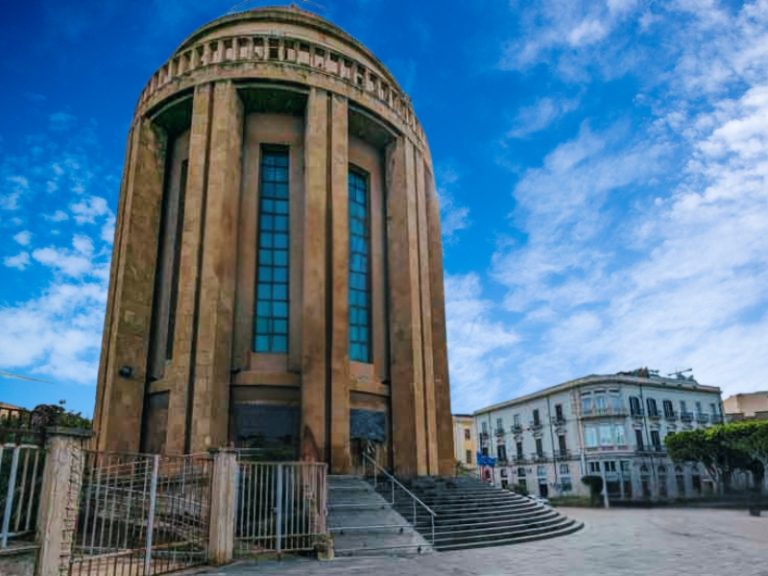
This round church with a large dome, known in Syracuse simply as the Pantheon, was built in the 1930s as a shrine to the local soldiers who died in the First World War. Its plan and dome deliberately recall the Pantheon in Rome.
2Foro Siracusano
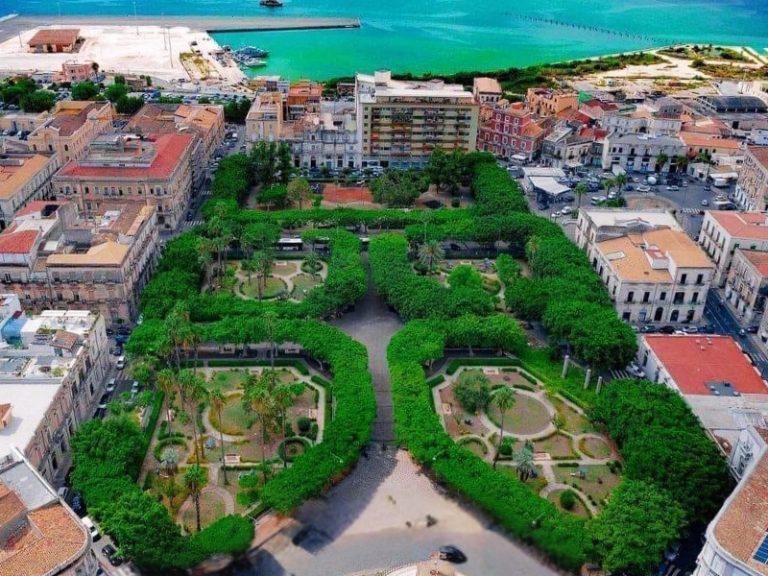
This large square with gardens on the mainland side of Syracuse covers part of the area of the ancient agora, the main public square of the Greek city. Remains of ancient buildings have been found here, and today palms, benches and wide paths make it a meeting point just before the bridges to Ortigia.
3Statue of Archimedes
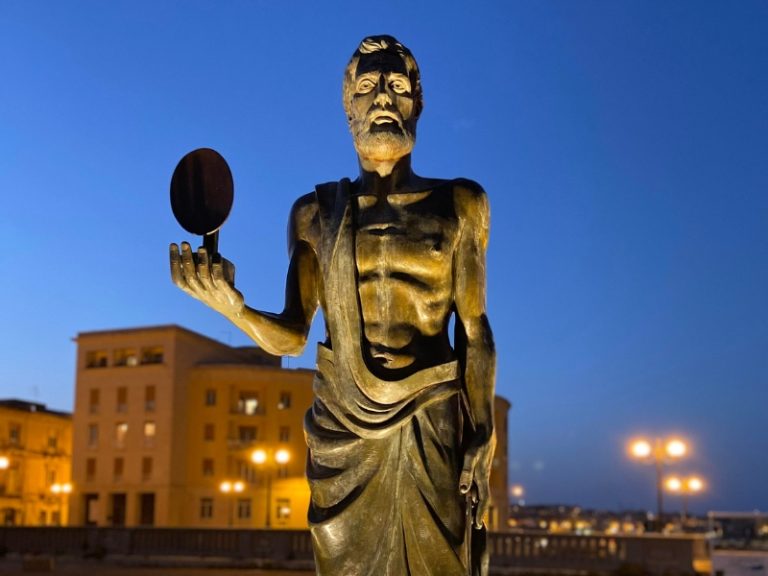
Archimedes, the mathematician and inventor, was born in Syracuse around 287 BC and died when the Romans took the city in 212 BC. This modern bronze near the bridge to Ortigia shows him holding a mirror, a nod to the legend that he set Roman ships on fire with focused sunlight.
Read the full story →
4Ortigia Market
Ortigia's street market fills the lanes near the Temple of Apollo with stalls of fresh fish, fruit, vegetables, cheese, olives and spices. It is a morning market where traders still call out their goods, and a good place to see what Sicilian kitchens use, from swordfish and sardines to citrus fruit.
Read the full story →
5Temple of Apollo
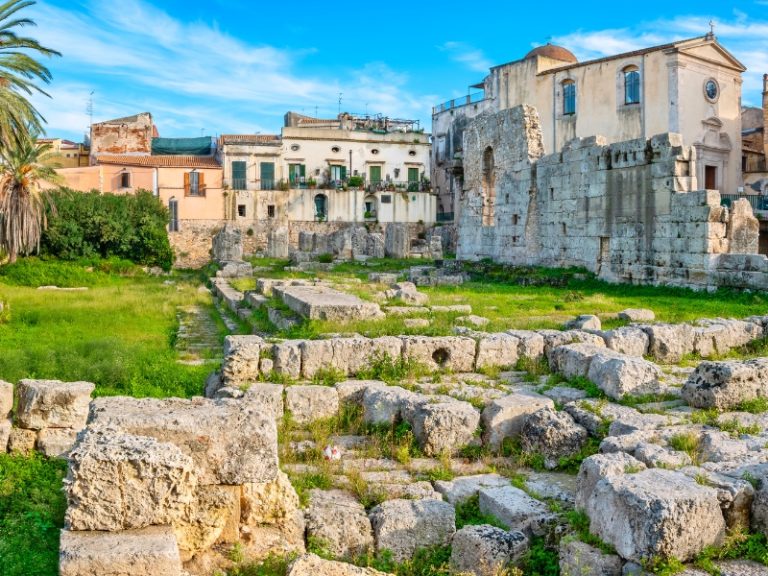
Built in the early 6th century BC, this is one of the oldest Doric temples in Sicily. Only the base, parts of the walls and the stumps of its heavy columns survive, and an inscription carved on the top step names the builder Kleomenes. Over the centuries it was turned into a church and later a mosque.
Read the full story →
6Archimedes and Leonardo da Vinci Museum
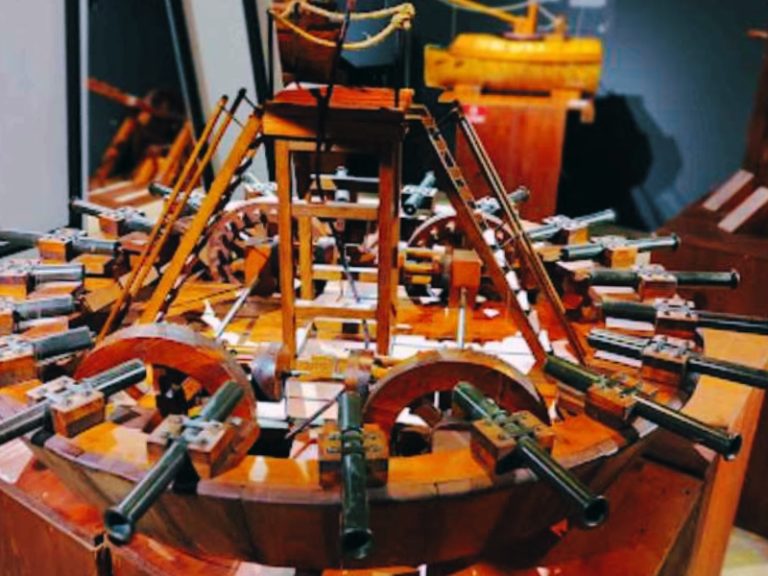
This small museum shows working models of machines inspired by two great inventors, Archimedes of Syracuse and Leonardo da Vinci. Its exhibits include devices such as the Archimedes screw for lifting water and reconstructions of the war machines said to have defended Syracuse against the Romans.
Read the full story →
7Fountain of Diana
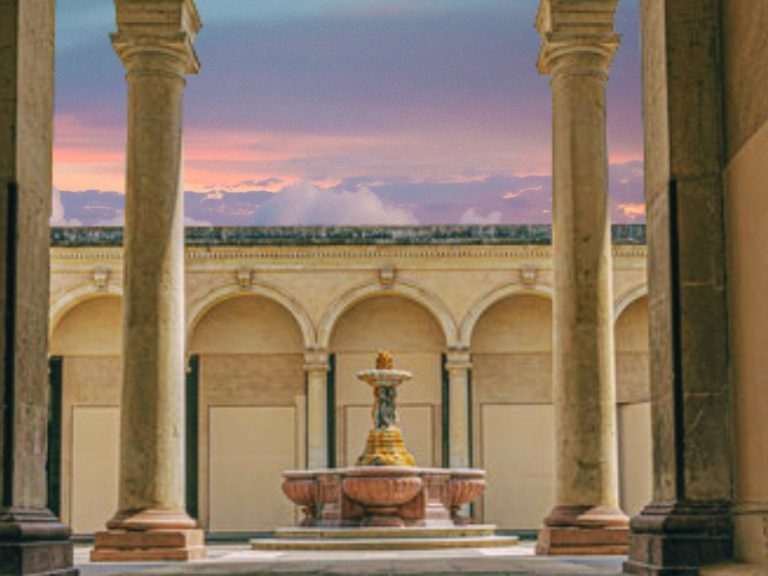
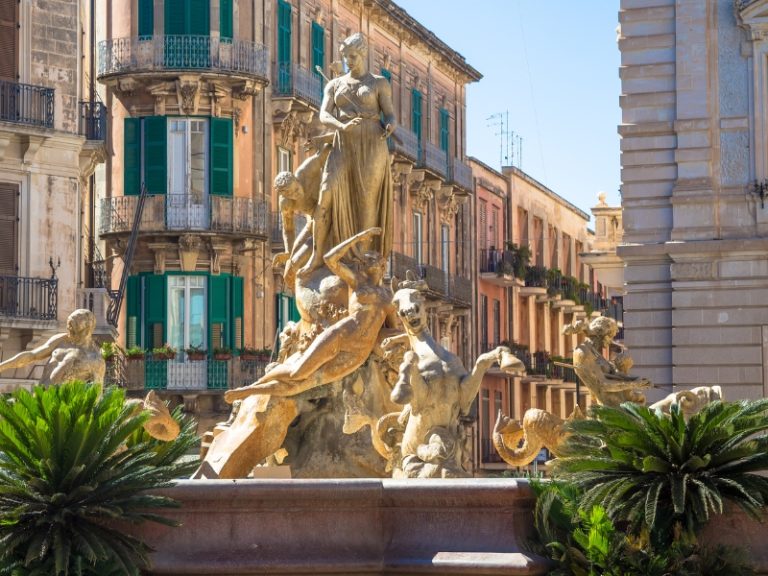
The Fountain of Diana stands in the middle of Piazza Archimede, the main square of Ortigia, and was made by the sculptor Giulio Moschetti in the early 20th century. Above the basin the goddess Diana watches as the nymph Arethusa turns into a spring to escape the river god Alpheus, surrounded by tritons and sea creatures.
Read the full story →
8Syracuse Cathedral
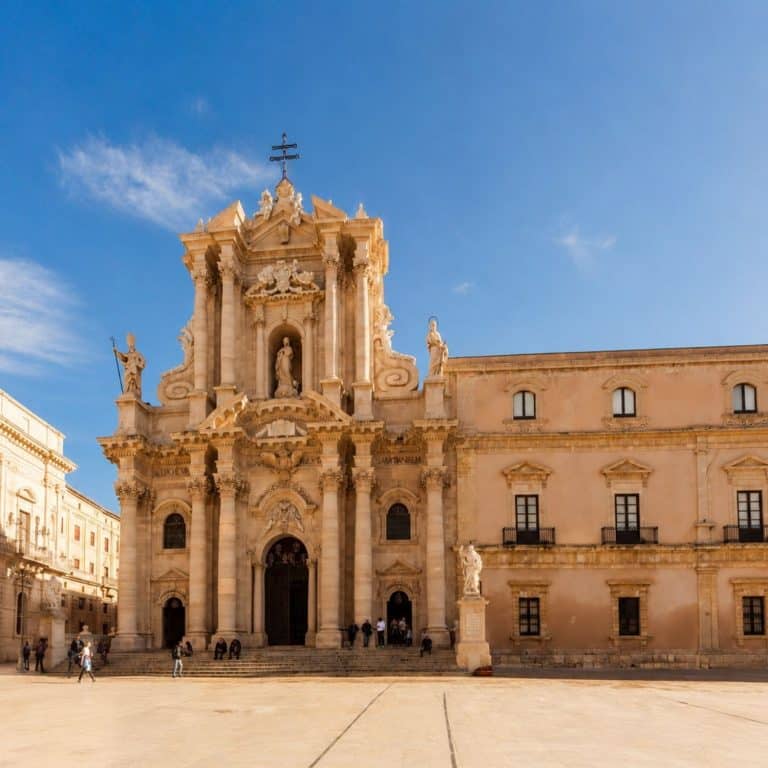
Syracuse Cathedral was built into the Doric Temple of Athena, erected in the 5th century BC after the Greek victory over Carthage at Himera. Ancient columns still stand in its side walls and inside the nave, while the baroque façade on Piazza Duomo was added after the earthquake of 1693.
9Fountain of Arethusa
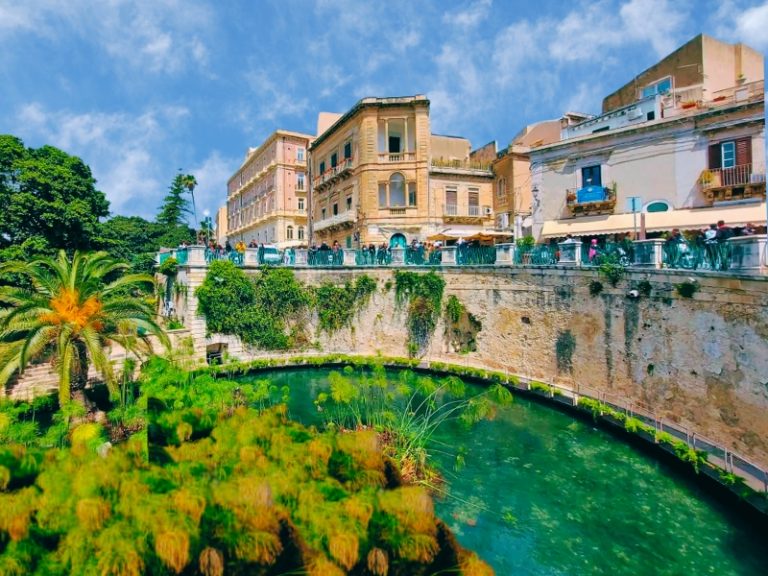
This freshwater pool lies right beside the sea on the western shore of Ortigia, and papyrus grows in it alongside ducks and fish. According to myth, the nymph Arethusa fled the river god Alpheus from Greece and was turned into this spring by Artemis, but Alpheus followed her under the sea.
Read the full story →
10Castello ManiaceFinish
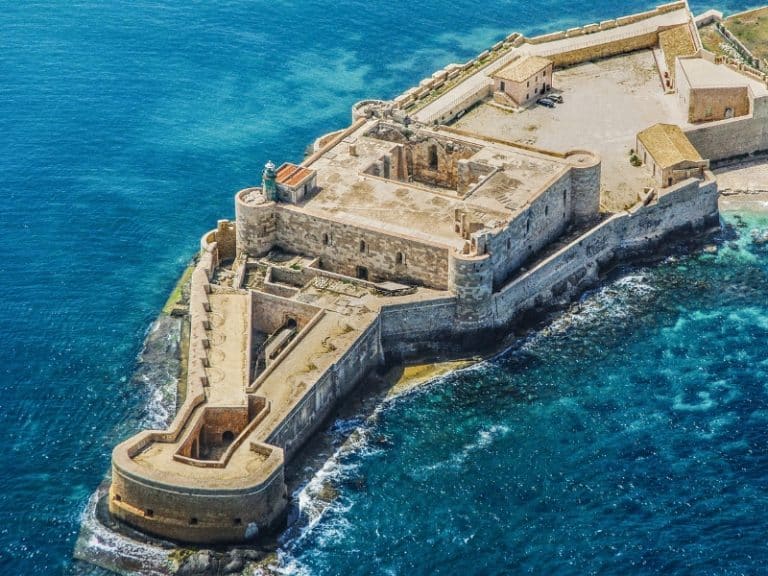
This fortress on the southern tip of Ortigia was built for Emperor Frederick II between about 1232 and 1240. It is named after George Maniakes, the Byzantine general who briefly retook Syracuse from the Arabs in 1038, and its square plan with round corner towers guards the entrance to the harbour.
Read the full story →
Only logged in customers who have purchased this product may leave a review.




Morgane– France –
Collected on GetYourGuide
Activité très sympa pour découvrir Syracuse en famille de façon ludique.
Morgane– France –
Collected on GetYourGuide
Activité très sympa pour découvrir Syracuse en famille de façon ludique.