

Table of Contents
The Cibeles Fountain, or Fuente de Cibeles, is one of Madrid’s most treasured landmarks, combining stunning artistry with deep cultural and historical significance. Located at the heart of the city in the bustling Plaza de Cibeles, this majestic fountain is more than just a piece of art—it is a symbol of Madrid’s identity and an enduring representation of Spanish heritage.
A Mythological Inspiration
The Cibeles Fountain was commissioned in the late 18th century during the reign of King Carlos III, a monarch celebrated for his modernization efforts in Madrid. Designed by Spanish architect Ventura Rodríguez, the fountain depicts the Roman goddess Cybele, known as Cibeles in Spanish mythology. She is the goddess of nature, fertility, and agriculture, symbolizing the abundance and vitality of life.
Seated on a chariot pulled by two lions, Cibeles exudes power and grace. The lions represent Atalanta and Hippomenes, figures from Greek mythology who were transformed into lions as a punishment for their hubris. Together, these elements convey themes of strength, resilience, and harmony with nature.
Architectural Elegance
The Cibeles Fountain is crafted from marble and showcases exceptional artistry. Its centerpiece, the figure of Cibeles, is depicted in flowing robes, holding a scepter and a key, both of which symbolize her authority over the natural world. The lions pulling her chariot are intricately carved, capturing a sense of motion and strength.
The fountain’s base is adorned with additional decorative details, including motifs of waves and marine life, which reflect its connection to water and life’s sustaining forces. The overall design harmonizes perfectly with the grand architecture of the surrounding Plaza de Cibeles, making it a striking focal point in Madrid’s cityscape.

A Central Role in Madrid’s Culture
Over the centuries, the Cibeles Fountain has become much more than a work of art. It holds a special place in the hearts of Madrileños and serves as a gathering point for celebrations.
One of its most famous roles is as the meeting place for Real Madrid fans, who congregate at the fountain to celebrate the team’s victories. The goddess Cibeles herself is often dressed in the team’s scarf or jersey during these jubilant events, reflecting the strong bond between the city and its beloved football club.
The fountain is also a centerpiece for official ceremonies, national celebrations, and cultural events, cementing its status as a symbol of Madrid’s vibrant life.
Visiting the Cibeles Fountain
While the fountain is most often admired from afar, it is especially captivating at night when it is beautifully illuminated. Visitors can take photographs of the fountain from various angles, capturing its intricate details and the surrounding architectural splendor.
The Cibeles Terrace, located in the nearby Palacio de Cibeles, offers a stunning vantage point for viewing the fountain and the square from above, providing a unique perspective on this iconic Madrid landmark.
The Cibeles Fountain is not just a masterpiece of art and architecture—it is a timeless emblem of Madrid’s rich history, cultural pride, and vibrant spirit. Whether you’re a history enthusiast, a fan of mythology, or simply a traveler seeking beauty and inspiration, the Cibeles Fountain is a must-visit destination that perfectly embodies the essence of Spain’s capital.
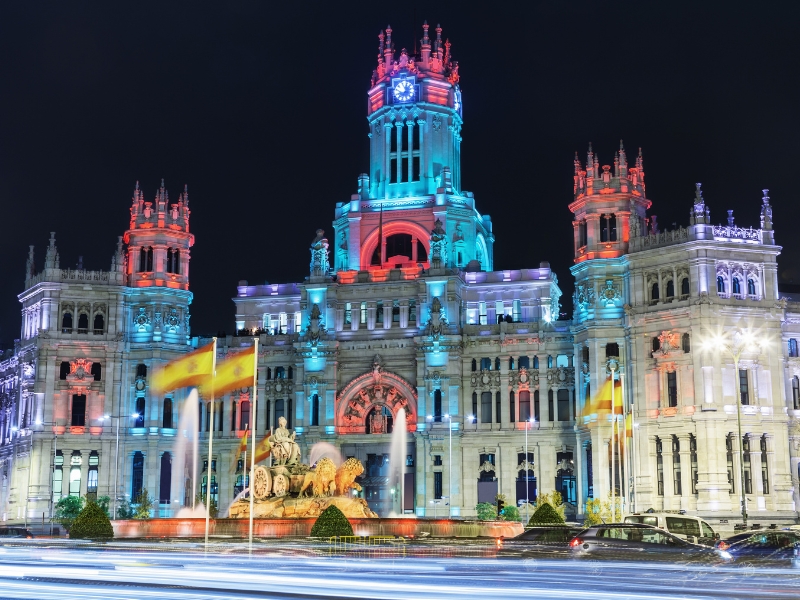
Cibeles Fountain is part of Madrid scavenger hunt and walking tour!
Embark on an unforgettable journey through the enchanting city of Madrid with World City Trail. Our interactive walking tour combines the thrill of exploration with the rich history and culture of this beautiful city.
Key Features:
Interactive gameplay: Solve engaging puzzles and challenges as you explore the city.
Hidden gems: Uncover lesser-known spots.
Cultural insights: Learn about the city’s fascinating history.
Flexibility: Explore at your own pace and create your own itinerary.
Family friendly activity and a great way to explore the city!
Further reading on Wikipedia: Madrid