
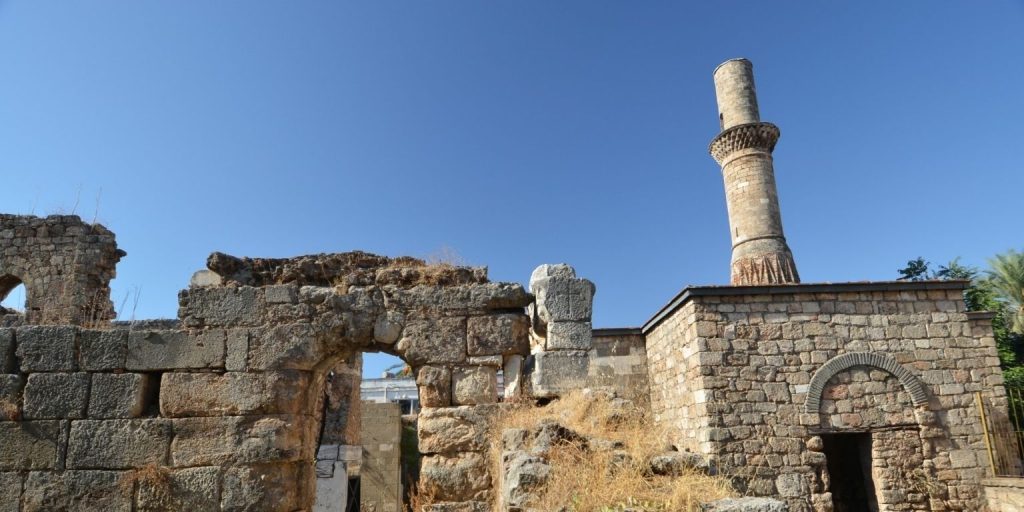
Antalya’s Kaleiçi, the enchanting old quarter, is a labyrinth of narrow streets, Ottoman-era houses, and ancient ruins that whisper tales of bygone civilizations. Among its most evocative landmarks is the Broken Minaret of the Korkut Mosque, locally known as Kesik Minare. This striking structure, with its truncated top, stands as a silent witness to millennia of changing faiths, empires, and urban transformations, making it one of Antalya’s most historically significant and visually compelling sites.
A Site of Continuous Worship: From Roman Temple to Mosque
The history of the Broken Minaret of the Korkut Mosque is an extraordinary journey through time, demonstrating remarkable continuity of use as a place of worship. It’s a prime example of how successive cultures built upon, adapted, and re-purposed earlier structures, leaving behind a fascinating architectural palimpsest.
The story begins in the 2nd century AD, when the site was originally occupied by a Roman temple.2 Dedicated to Sarapis, an Egyptian-Greco deity, this temple formed an integral part of Roman Pamphylia’s religious landscape.
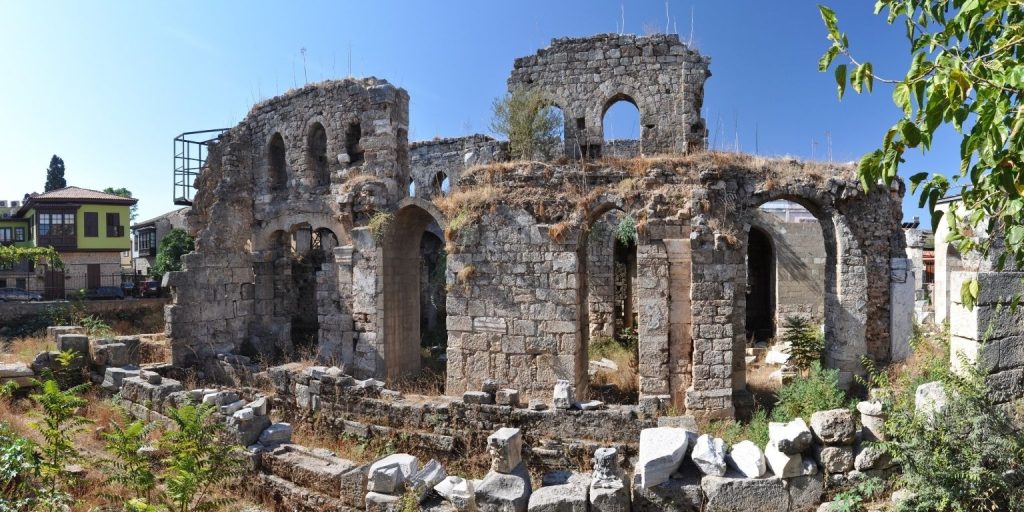
In the 7th century AD, as the Byzantine Empire flourished, the Roman temple was transformed into a Byzantine church. This basilica, dedicated to the Virgin Mary (often referred to as Panagia Church), would have served Antalya’s Christian community for centuries. However, its existence was not without peril; it suffered significant damage during the Arab invasions of the 7th and 8th centuries but was subsequently repaired and expanded in the 9th century.
The 13th century marked a significant shift in Antalya’s history with the arrival of the Seljuk Turks. Upon conquering the city, they converted the Byzantine church into a mosque, and it was at this time, in the early 13th century, that the first minaret was added to the structure, signaling its new Islamic function.
The building’s religious identity continued to fluctuate. In 1361, when Peter I, the Crusader King of Cyprus, briefly captured Antalya from the Seljuks, it was once again consecrated as a church. However, with Antalya’s eventual integration into the Ottoman Empire, the building reverted to being a mosque during the late 15th or early 16th century. It specifically gained the name Korkut Mosque (Korkut Cami) during the governorship of Şehzade Korkut (1470–1509), a son of Ottoman Sultan Bayezid II, who ruled Antalya.
The Fire and the Broken Minaret of the Korkut Mosque
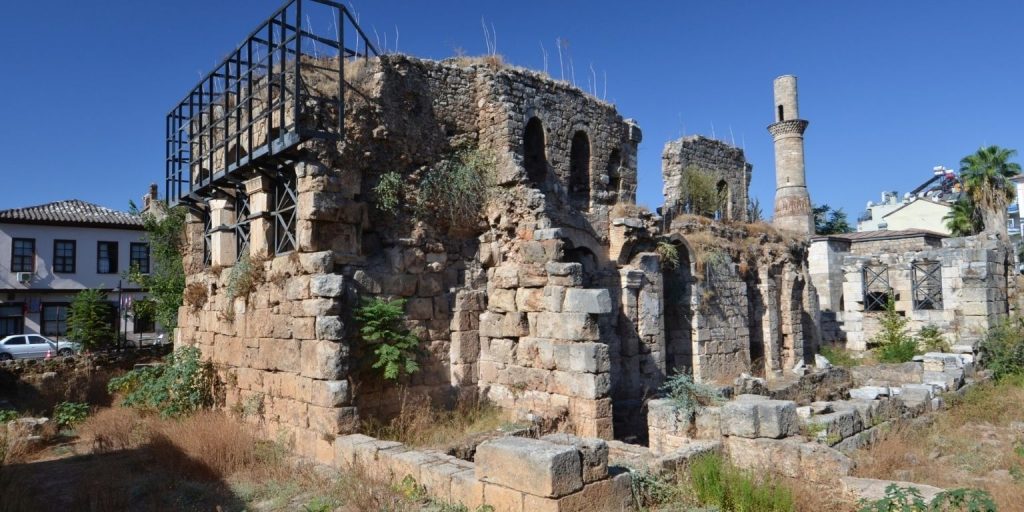
The dramatic event that gave the minaret its poignant nickname occurred much later. In 1896, a devastating fire swept through Kaleiçi, destroying much of the main building of the Korkut Mosque, including the wooden top of its minaret. This left the stone shaft standing starkly, thus earning it the moniker Kesik Minare (Broken or Severed Minaret). For over a century, it remained in this damaged state, a powerful visual reminder of its turbulent history.
Modern Restoration and Renewed Life
For many decades, the Broken Minaret stood as a picturesque ruin, a beloved but incomplete landmark. However, in recent years, a comprehensive restoration project was initiated. Extensive work began around 2017-2018, meticulously restoring the mosque complex and, significantly, rebuilding the top cone and roof of the minaret.
This remarkable restoration culminated in the official reopening of the Korkut Mosque for worship on March 5, 2021, marking the first time it had served as a mosque in nearly 125 years. The project aimed not only to preserve the historical fabric but also to reactivate its original spiritual purpose, allowing future generations to connect with its profound heritage.
Today, the Broken Minaret of the Korkut Mosque in Antalya stands as a magnificent testament to resilience and continuity. From its origins as a Roman temple in the 2nd century AD, through its Byzantine church phases (7th and 9th centuries), its first minaret addition in the early 13th century, and its final rebirth as a mosque in 2021 (after the fire of 1896), it encapsulates the layered history of Antalya. It is a vital and deeply symbolic landmark, inviting visitors to ponder the rich tapestry of cultures and faiths that have shaped this vibrant Mediterranean city.