
On Johns Island, just a short drive from the historic heart of Charleston, South Carolina, stands a living legend: the Angel Oak. This colossal Southern live oak (Quercus virginiana) is not just a tree; it’s a natural monument, a symbol of resilience, and a testament to the enduring power and beauty of nature. With its sprawling, moss-draped branches reaching out across an astounding expanse, the Angel Oak in Charleston offers a profoundly awe-inspiring experience, drawing hundreds of thousands of visitors each year to marvel at its ancient grandeur.

A Legacy Spanning Centuries: The Tree’s Ancient Roots
The exact age of the Angel Oak is a subject of passionate debate among arborists and historians, with estimates ranging widely from 400 to over 500 years old. Some even suggest it could be as ancient as 1,500 years, though the conservative estimates are more widely accepted. Regardless of its precise age, what is undeniable is that this magnificent tree predates European settlement in the area and has silently witnessed centuries of history unfold around it – from Native American gatherings to colonial expansion, the Civil War, and the modern era.
The tree derives its name from the Angel Estate, the property owned by Justus Angel and his wife, Martha Waight Tucker Angel, in the 18th and 19th centuries. Local folklore also weaves tales of formerly enslaved people whose spirits appear as angels around the tree, lending a poignant spiritual layer to its name.
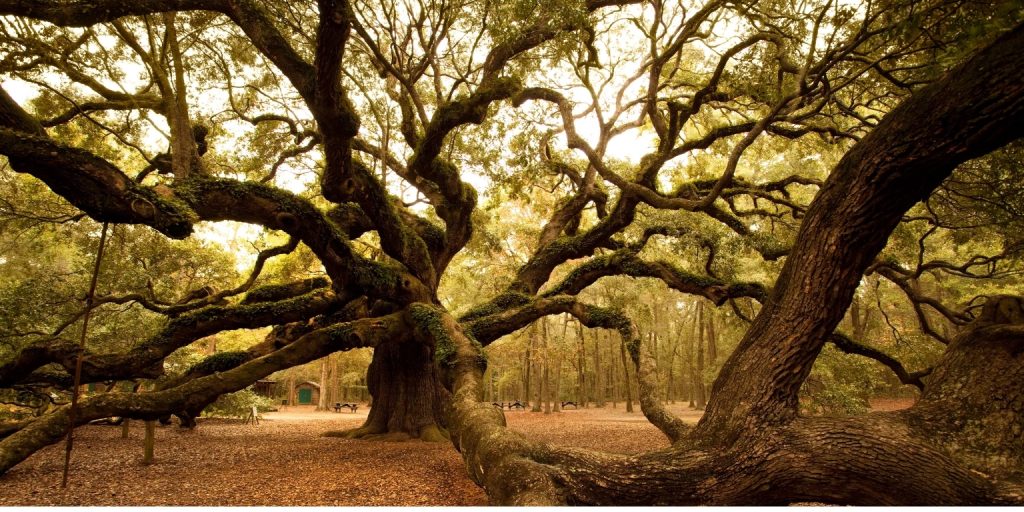
Dimensions of Majesty: A Natural Wonder
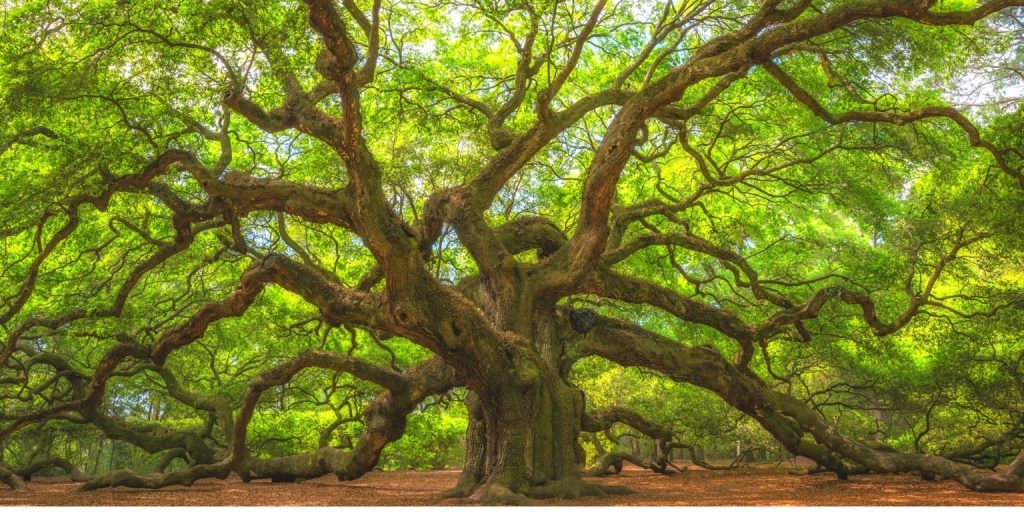
What truly sets the Angel Oak apart are its staggering dimensions. While Southern live oaks are not typically known for their height, the Angel Oak is an exceptional specimen, standing approximately 66.5 feet (20 meters) tall. Its trunk measures an impressive 28 feet (8.5 meters) in circumference. However, it is the tree’s incredible spread that leaves visitors breathless. Its majestic canopy provides shade covering an area of approximately 17,200 square feet (1,600 square meters), equivalent to the size of several tennis courts. Its longest limb stretches an astonishing 187 feet (57 meters) from the trunk, with many of its massive branches so heavy they touch and even re-root into the ground, a characteristic unique to very old live oaks.
This colossal size is a result of centuries of unobstructed growth and the unique spreading habit of the live oak. The tree’s gnarled, intertwining branches, often draped with ghostly Spanish moss, create a truly ethereal, almost mystical, atmosphere that feels like stepping into another world.
Resilience and Preservation: A Protected Treasure
The Angel Oak has endured countless challenges throughout its long life. It has survived numerous hurricanes, including the devastating Hurricane Hugo in 1989, as well as floods and even earthquakes, a testament to its inherent strength and deep root system. Its survival through such adversity has made it a powerful symbol of resilience for the Lowcountry region.
The importance of preserving this natural wonder has been a significant community effort. In 1991, the City of Charleston acquired the tree and the surrounding land, transforming it into a public park. More recently, significant conservation efforts, led by groups like the Lowcountry Land Trust, successfully battled proposed development adjacent to the tree. In 2013, the Land Trust purchased an additional 17 acres surrounding the Angel Oak, further protecting its vital root system and ensuring its long-term preservation from encroachment. This expanded area is now being developed into the Angel Oak Preserve, which will include boardwalk trails, educational exhibits, and areas honoring the Indigenous and Gullah Geechee history of the land.
The Angel Oak in Charleston, located on Johns Island and estimated to be between 400 and 500 years old, is more than just a magnificent tree; it’s a living piece of history, a beacon of natural beauty, and a cherished symbol of endurance for the entire region. Its breathtaking presence and the ongoing dedication to its preservation ensure that future generations will continue to be humbled and inspired by this timeless sentinel of the Lowcountry.