
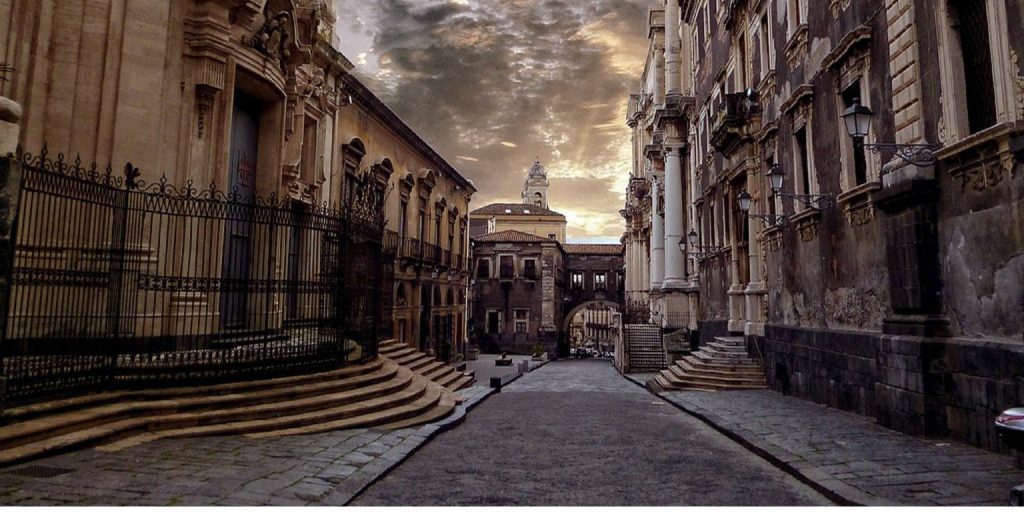
In the vibrant heart of Catania, Sicily, lies Via dei Crociferi, a street that is far more than just a thoroughfare; it is a stunning open-air museum, a living testament to the city’s remarkable rebirth from destruction. Recognized as part of the UNESCO World Heritage site “Late Baroque Towns of the Val di Noto,” this relatively short street is an unparalleled example of unified Sicilian Baroque architecture, a breathtaking panorama of churches, monasteries, and palaces that captivate every visitor. To stroll along Via dei Crociferi in Catania is to step back into the grandeur of the 18th century, a period of ambitious reconstruction and artistic flourishing.
Born from Ash: Post-Earthquake Reconstruction
The magnificence of Via dei Crociferi owes its existence, paradoxically, to catastrophe. On January 11, 1693, a devastating earthquake, one of the most powerful in Sicilian history, struck the Val di Noto region, including Catania, leveling much of the city. The subsequent rebuilding effort provided a unique opportunity for urban planners and architects to design a cohesive, grand city center in the prevailing Baroque style.
Via dei Crociferi was conceived as a monumental axis, specifically designed to showcase the power and wealth of the various religious orders that sought to re-establish themselves in Catania. Its construction and embellishment occurred throughout the 18th century, transforming what was once a ruined area into a street of unparalleled architectural harmony. The unified design, often attributed to the influence of master architects like Giovanni Battista Vaccarini, created a theatrical effect where each building complements the next, forming a perfect Baroque ensemble.
A Succession of Baroque Masterpieces
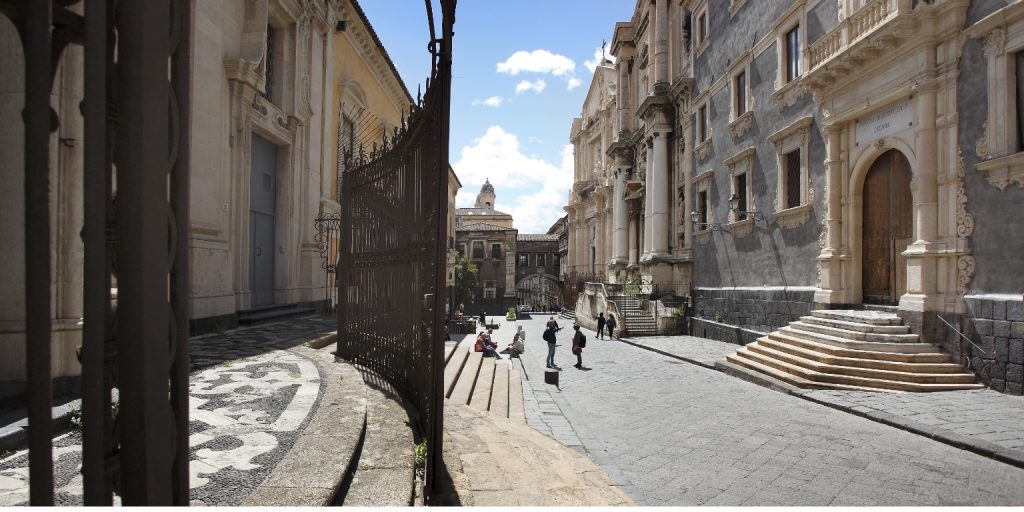
What makes Via dei Crociferi in Catania so extraordinary is the sheer concentration of architectural jewels packed onto its approximately 400-meter length. As you enter the street, typically from Piazza San Francesco d’Assisi, you are immediately greeted by the Arch of San Benedetto (Arco di San Benedetto). Built by the Benedictine nuns in 1704, according to legend, it was constructed in a single night to defy a city ordinance. This elegant arch connects the “Badia Grande” (the larger Benedictine monastery) with the “Badia Piccola,” forming a grand gateway to the street’s wonders.
Beyond the arch, a series of stunning churches and monastic complexes unfold:
- Chiesa di San Benedetto: Immediately past the arch, this church (rebuilt by 1714, with construction continuing until 1763) is known for its intricate facade, the famous “Angel’s Staircase” (Scalinata dell’Angelo) with its ornate marble and wrought-iron details, and a richly frescoed interior.
- Chiesa di San Francesco Borgia: Adjacent to the former Jesuit College, this church (begun in 1698 and completed by 1736) features a more classical Baroque facade with two grand staircases and a majestic interior, now often used for cultural exhibits.
- Collegio dei Gesuiti (Jesuit College): Next to San Francesco Borgia, this imposing building, now housing regional cultural offices, boasts a magnificent cloister with black and white pebble courtyards, showcasing meticulous craftsmanship.
- Chiesa di San Giuliano: Attributed to the genius of Giovanni Battista Vaccarini and built between 1739 and 1751, this church is considered one of the finest examples of Catania’s Baroque. Its elegant convex façade and clean, harmonious lines create a sense of movement and grace.
- Convento dei Crociferi and Chiesa di San Camillo de’ Lellis: Further along the street, these structures contribute to the street’s monastic character.
- Villa Cerami: At the very end of Via dei Crociferi, this impressive 18th-century palace, once a noble residence, now houses the Faculty of Law of the University of Catania, providing an elegant conclusion to the Baroque promenade.
A UNESCO Treasure and Filming Location
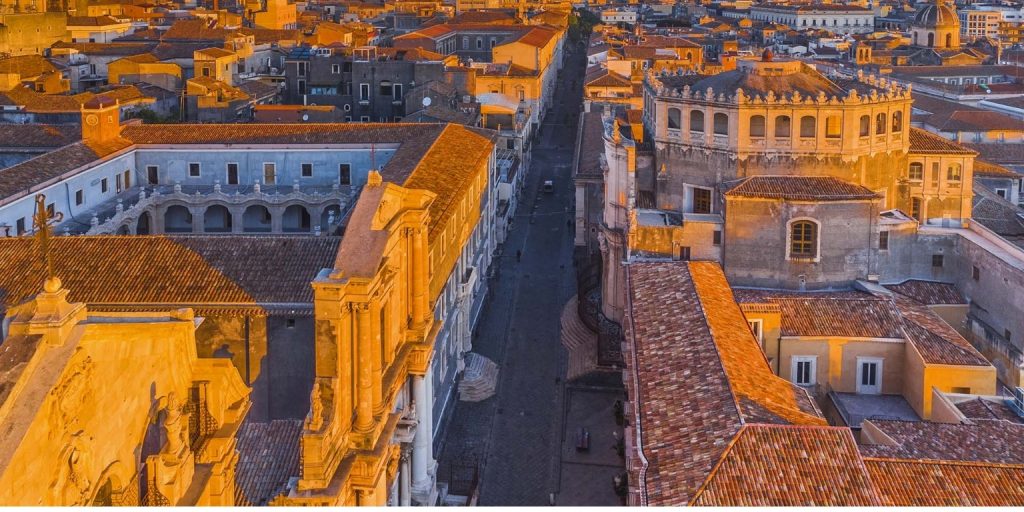
The collective beauty and architectural integrity of Via dei Crociferi in Catania earned it a place within the UNESCO World Heritage listing in 2002, as part of the “Late Baroque Towns of the Val di Noto.” This recognition highlights its outstanding universal value as a supreme example of European Baroque art and architecture, characterized by its unity of style and ambitious urban planning.
Its breathtaking aesthetics have also made it a popular choice for filmmakers, serving as a backdrop for numerous Italian and international productions, further cementing its fame. Today, Via dei Crociferi in Catania is not only a historical and architectural marvel but also a vibrant cultural hub, often host to outdoor concerts and events. For visitors, it offers an immersive and unforgettable journey through the grandeur of Sicilian Baroque, standing as a proud testament to Catania’s enduring beauty and resilience.