
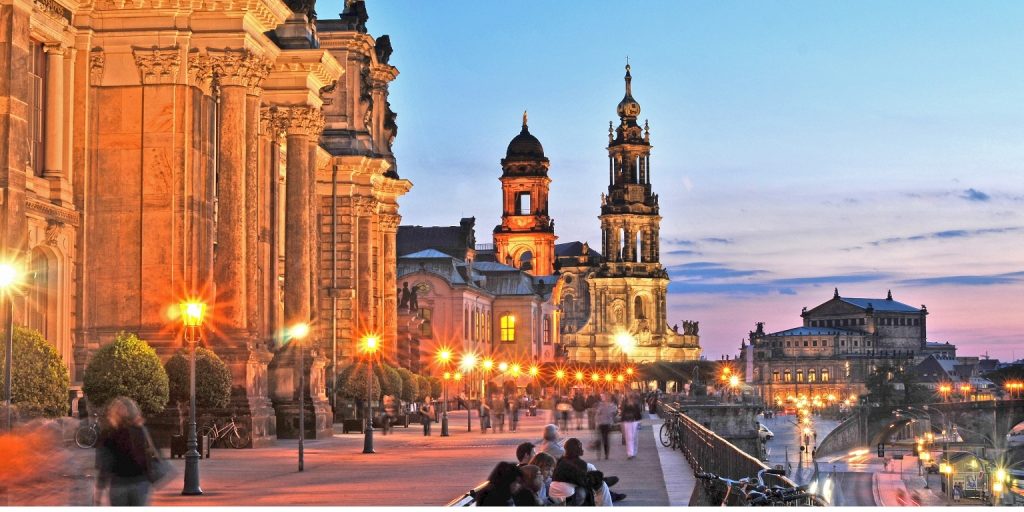
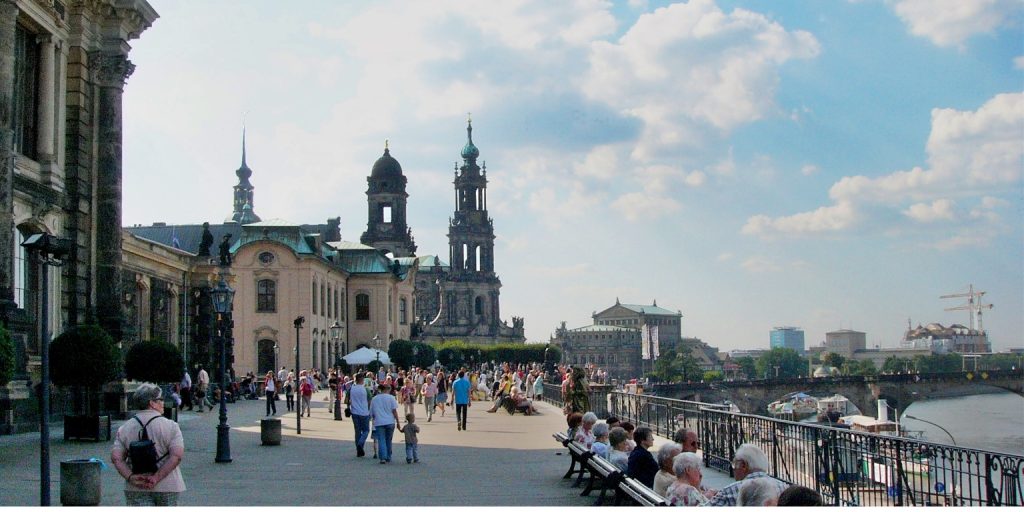
Stretching majestically along the banks of the River Elbe in Dresden, Brühl’s Terrace is one of the city’s most beloved and iconic architectural ensembles. Often affectionately dubbed the “Balcony of Europe” by none other than Johann Wolfgang von Goethe, this elevated promenade offers breathtaking panoramic views of the Elbe, the historic bridges, and the stunning skyline of Dresden’s Old Town. A stroll along Brühl’s Terrace in Dresden is an essential experience for any visitor, providing a unique vantage point to appreciate the city’s Baroque grandeur and its remarkable resilience.
From Fortification to Aristocratic Delight
The history of Brühl’s Terrace dates back to the 16th century, when it was originally conceived as a formidable part of Dresden’s city fortifications. After the Schmalkaldic War (1546/47), Elector Maurice of Saxony and his successors ordered the reconstruction and strengthening of these defensive ramparts overlooking the Elbe.
However, its transformation into a place of beauty and leisure began in the 18th century, under the patronage of Count Heinrich von Brühl (1700-1763), the powerful Prime Minister to Elector Frederick Augustus II (Augustus III of Poland). In 1737, Brühl acquired this section of the fortifications and, over the next decade, embarked on an ambitious project to convert the military stronghold into a magnificent private residence. He commissioned a grand city palace, a gallery, a library, and exquisite gardens – collectively known as “Brühl’s Glories” – on the terrace. In 1747, the entire terrace was formally gifted to him by the Elector, a testament to Brühl’s influence and the city’s burgeoning Baroque ambitions.
This transformation shifted the terrace’s role from defense to ostentatious display, becoming a privileged promenade for the Saxon court and nobility.
The “Balcony of Europe” Opens to the Public
The exclusive nature of Brühl’s Terrace changed dramatically following the Napoleonic Wars. After Saxony’s defeat at the Battle of Leipzig and the subsequent occupation by Russian troops, the military governor, Prince Nikolai Grigorjevich Repnin-Volkonski, issued a pivotal order in 1814: Brühl’s Terrace was to be opened to the public. This decision democratized one of Dresden’s most beautiful spaces, making it accessible to all citizens and visitors.
To facilitate public access, architect Gottlob Friedrich Thormeyer was tasked with building a grand flight of stairs at the western end, connecting the terrace to Schlossplatz (Castle Square) and the Augustus Bridge. These stairs, adorned with allegorical sculptures by Johannes Schilling depicting “The Four Times of Day” (Morning, Day, Evening, Night), still serve as the primary entry point to the terrace today, adding to its monumental charm.
An Ensemble of Architectural Jewels
Today, Brühl’s Terrace stretches for approximately 500 meters between the Augustus Bridge and the Carolabrücke. It is not just a promenade but an architectural ensemble housing several significant buildings, many of which were rebuilt or restored after the devastating firebombing of Dresden in February 1945. While much of the original “Brühl’s Glories” were destroyed, the spirit and form of the terrace have been painstakingly recreated.
Key buildings and features on or adjacent to the terrace include:
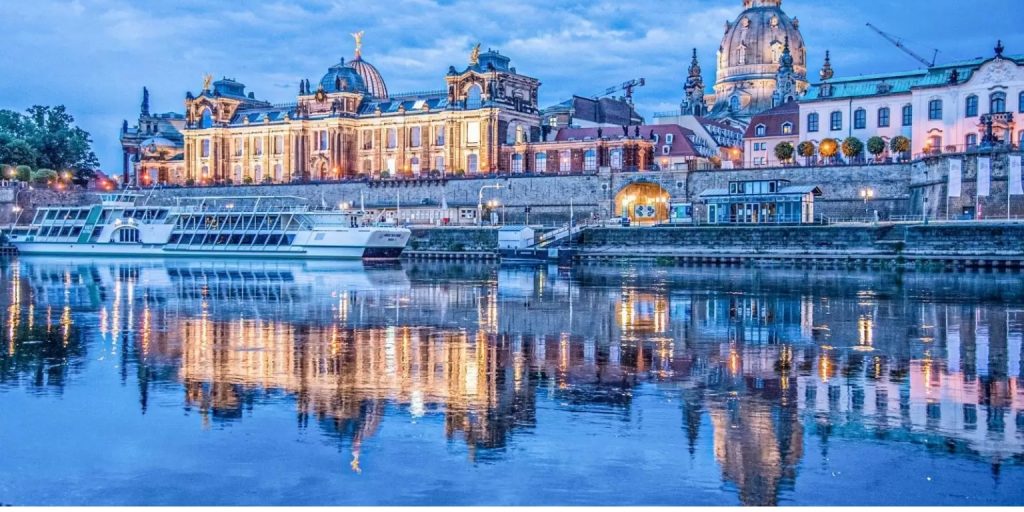
- Academy of Fine Arts (Kunstakademie): Recognizable by its distinctive glass dome often called the “Lemon Squeezer” (Zitronenpresse), this institution is a beacon of artistic education.
- Albertinum: A renowned museum housing the New Masters Gallery and the Sculpture Collection.
- Ständehaus: A historic parliamentary building, now home to Saxony’s Supreme Court.
- Sekundogenitur: A building that once housed the second-born son of the Saxon Electors, now home to a café.
- Monuments and Statues: Various sculptures dot the terrace, including those dedicated to artists like Gottfried Semper and Ernst Rietschel, and the alchemist Johann Friedrich Böttger.
From the Brühl’s Terrace, visitors are treated to unparalleled views of Dresden’s most iconic landmarks across the Elbe, including the Semperoper (Opera House), the Hofkirche (Catholic Cathedral), and the reconstructed Frauenkirche (Church of Our Lady).
The Brühl’s Terrace in Dresden, originally a 16th-century fortification transformed by Count Heinrich von Brühl in the 18th century and opened to the public in 1814, remains an indispensable part of Dresden’s identity. As the “Balcony of Europe,” it offers not only stunning vistas but also a living narrative of the city’s Baroque splendor, its periods of destruction, and its triumphant rebirth, making it a powerful and moving experience for all who walk its historic length.