
In the heart of Modena, a city celebrated for its Romanesque architecture and rich cultural heritage, stands a portal of unparalleled historical and artistic significance. The Porta della Pescheria, or “Fish-market Gate,” is the northern entrance to the majestic Modena Cathedral, a UNESCO World Heritage site and a jewel of medieval Italy. While the entire cathedral complex is a marvel, this specific doorway captivates visitors with a secret hidden in its stonework: it contains the earliest known sculptural representation of the Arthurian legend, making the Porta della Pescheria in Modena a pilgrimage site for art historians and fans of folklore alike.
A Doorway to the Past, Named for the Market
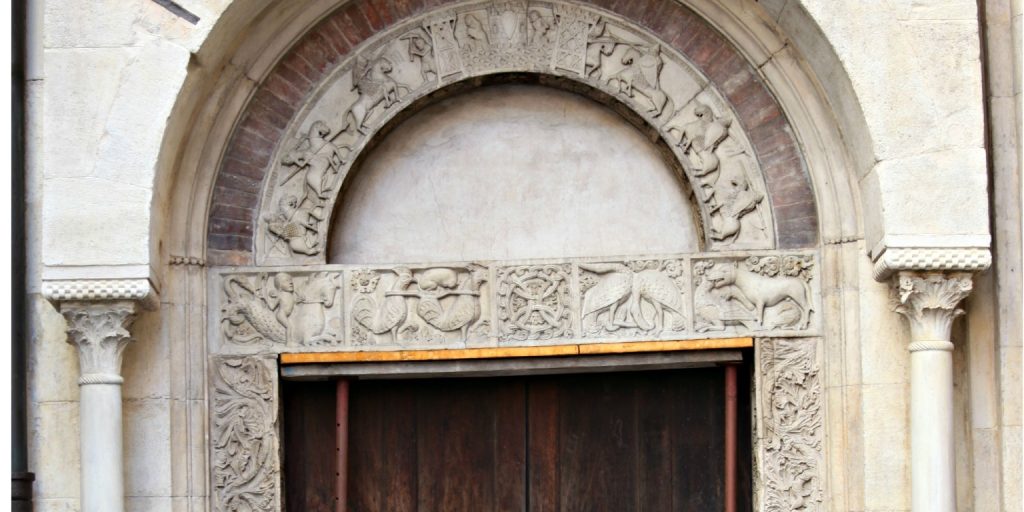
The Porta della Pescheria was meticulously crafted between 1120 and 1140, as part of the cathedral’s initial construction by the masterful architect Lanfranco and the sculptor Wiligelmo. Its name is a charming nod to its location, as it once faced the city’s old fish market, or pescheria. This doorway, like the cathedral itself, is a prime example of the Romanesque style, characterized by its solid forms, rounded arches, and a profound narrative conveyed through intricate stone carvings.
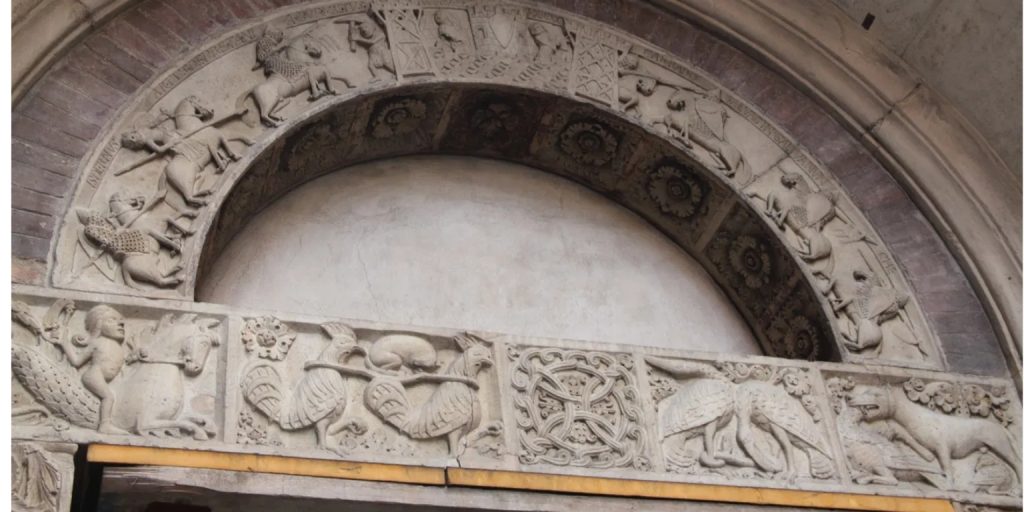
The portal’s artistic program is a fascinating mix of the sacred and the secular, blending Christian themes with scenes from everyday life and ancient fables. The jambs of the doorway are adorned with a remarkable cycle of the twelve months of the year, with each month represented by an agricultural activity. From the winter pruning of vines to the summer harvest, these carvings provide a vivid, almost encyclopedic, snapshot of medieval life and labor. They are a testament to the fact that art in this period was not just for spiritual contemplation but also for celebrating the rhythms of daily existence.
The Earliest Depiction of King Arthur and His Knights
What truly sets the Porta della Pescheria in Modena apart, however, is the extraordinary relief carving on its archivolt—the arched molding above the doorway. This is where the world of medieval Europe collides with the world of myth. Here, carved in stone, are scenes from the Arthurian legend. The carvings depict King Arthur (labeled “Artus Britani”) and his knights attacking a castle to rescue Queen Guinevere (labeled “Winlogee”), who is held captive. Other figures like “Galvaginus” (Sir Gawain) and “Isdernus” (likely Sir Yder) are also present.
This work is astonishing for its age. The Modena carvings were created decades before the renowned literary works of Geoffrey of Monmouth (his Historia Regum Britanniae dates to 1136) and Chrétien de Troyes that popularized the Arthurian cycle across Europe. This provides invaluable historical evidence that the legends of King Arthur were already circulating and deeply rooted in popular culture far earlier than previously assumed. It also reveals the wide-reaching cultural networks of the Middle Ages, with tales from Britain finding their way to the heart of northern Italy.
A Landmark of UNESCO Heritage
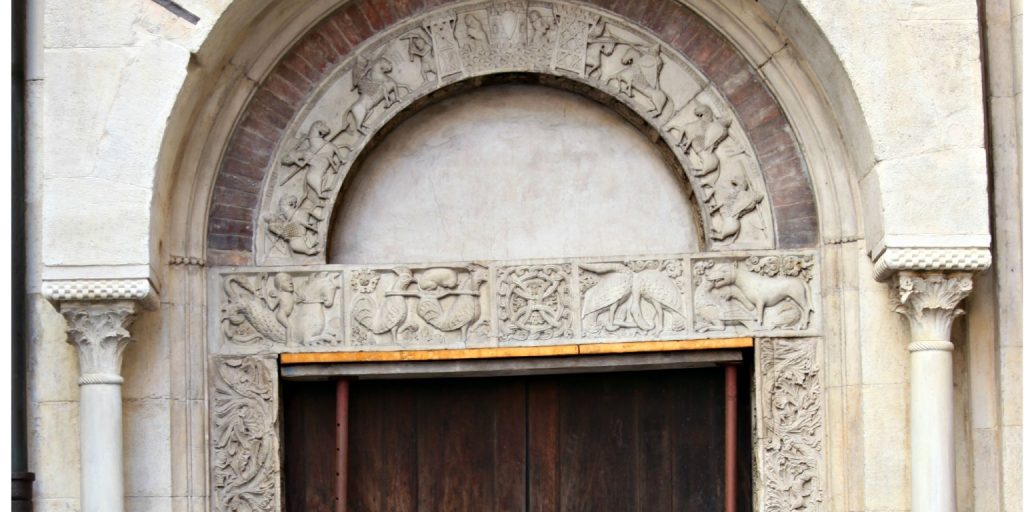
Today, the Porta della Pescheria in Modena is an integral part of the UNESCO World Heritage site that includes the Cathedral, the Ghirlandina bell tower, and the Piazza Grande. The meticulous preservation of these structures ensures that this invaluable piece of medieval art and literature is available for generations to come. While the original reliefs have been moved to the Cathedral’s museum for safekeeping, a faithful reproduction allows visitors to see the carvings in their original context.
A visit to the Porta della Pescheria in Modena is more than just a quick stop; it is an exploration of a portal where history, faith, and myth intertwine. It is a place to stand and reflect on the artistry of the Middle Ages and to marvel at a time when the legendary King Arthur was not just a literary figure but a hero carved in stone for all to see.