
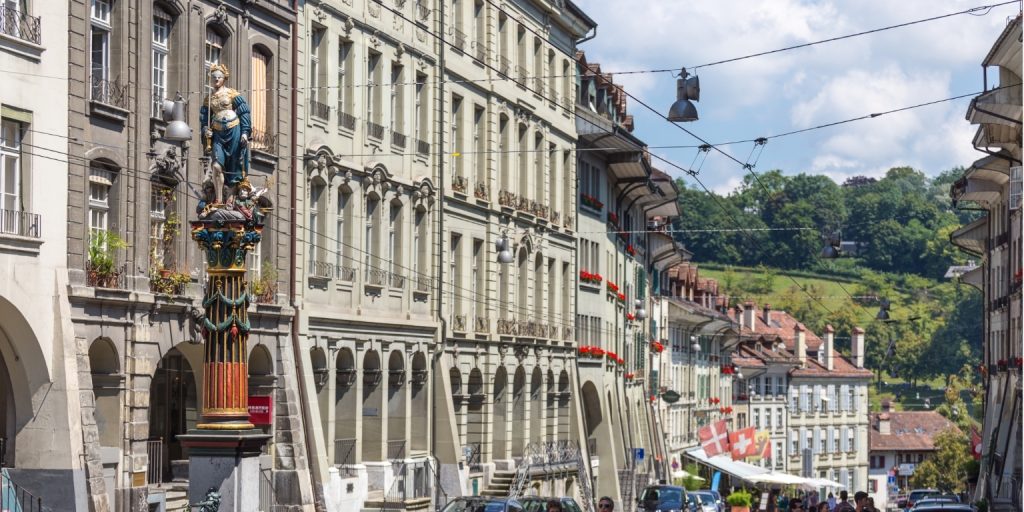
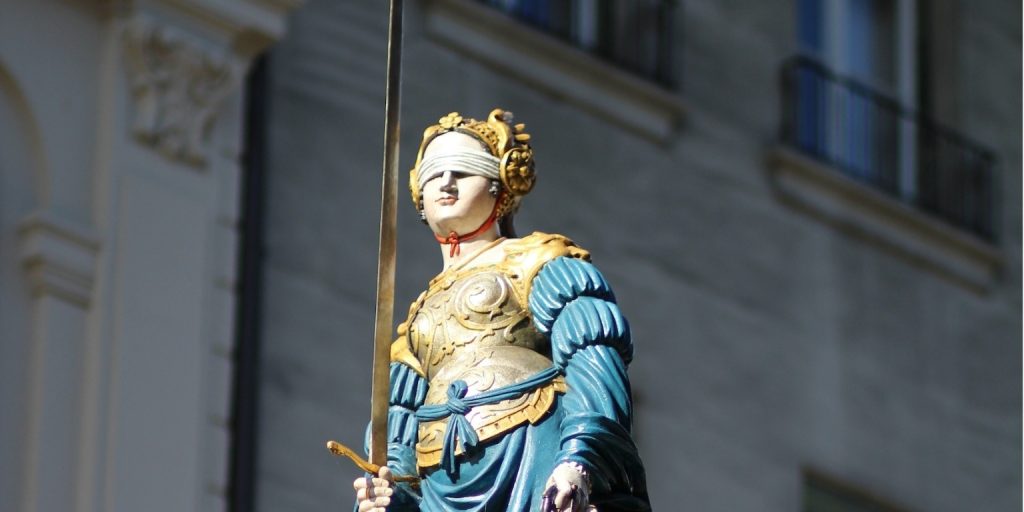
At the heart of the Gerechtigkeitsbrunnen is the statue of Justitia, or Lady Justice. This life-sized, brightly painted figure, created by sculptor Hans Gieng in 1543, holds her traditional attributes: a sword in her right hand, representing the power to enforce law, and a scale in her left, symbolizing balance and fairness. What makes this particular statue unique and historically significant is her blindfold, which was an innovative element at the time. This blindfold is not a sign of ignorance but rather of impartiality, signifying that justice should be served without prejudice to a person’s status or wealth.
At the feet of Lady Justice, four smaller busts gaze upwards with their eyes closed. These figures represent the Four Earthly Powers as understood during the Renaissance: a Pope (Theocracy), an Emperor (Monarchy), a Sultan (Autocracy), and a local official or Schultheiss (Republic). Their closed eyes and subservient posture symbolize the ultimate authority of justice over all forms of earthly power. The ensemble served as a powerful reminder during the Reformation era that all human authority, even the highest, was subject to divine law and fairness.
A Masterpiece of Bernese Renaissance Art
The Gerechtigkeitsbrunnen is more than just a public monument; it’s a prime example of Swiss Renaissance art. The fountain itself consists of an octagonal stone basin and a central pillar adorned with an acanthus frieze. Its artistry and symbolic depth set it apart from the other eleven figurative fountains in Bern, most of which were also crafted by Hans Gieng. The influence of Gieng’s work was so widespread that the iconic image of Lady Justice was copied across Switzerland well into the 17th century. The Gerechtigkeitsbrunnen holds the distinction of being the only Bernese fountain to have retained all of its original design elements and is recognized as a cultural heritage site of national significance.
The Fountain’s Tumultuous History
While the Gerechtigkeitsbrunnen has stood for centuries, it has not been immune to turmoil. The original statue was famously vandalized and largely destroyed in 1986, an act believed to be carried out by a militant separatist group. The current statue is a meticulous replica that faithfully preserves the details and spirit of Gieng’s original masterpiece. This act of restoration ensures that the fountain’s rich history and powerful message of justice continue to inspire visitors today.
The Gerechtigkeitsbrunnen remains one of Bern’s most photographed landmarks. It not only provides a refreshing drink of water but also offers a deep dive into the city’s past, reflecting the values that have shaped its identity for over five centuries. Whether you’re a history enthusiast, an art lover, or simply strolling through the city’s picturesque streets, this magnificent fountain is an essential stop. Its location on Gerechtigkeitsgasse also places it in the heart of Bern’s charming old town, surrounded by cafes and shops, making it a perfect spot to pause and soak in the atmosphere.