
Natural History Museum international reputation is built on its extraordinary collection of over 220 life-sized dioramas. These meticulously crafted exhibits, which feature preserved animals from around the world, are a testament to a long-standing tradition of naturalistic display. The most famous of these is the historical diorama collection of African mammals, originally assembled from a 1923 expedition to East Africa. Visitors can walk through darkened corridors to view scenes depicting lions, gorillas, zebras, and other wildlife in their natural habitats. These “3D picture books,” as they are sometimes called, are not only a marvel of taxidermy but also a historical record of biodiversity and a form of art in their own right.
Beyond the African collection, the museum houses extensive dioramas showcasing the native fauna of Switzerland. This exhibition, which opened during World War II, was intended to show Swiss soldiers the incredible natural treasures they were defending. It features over 600 specimens of native animals, including birds and mammals, many of which are now extinct or have returned to Switzerland after a period of absence. These displays offer a valuable record of the country’s biodiversity over the past century.

Barry: The Legendary St. Bernard Dog
One of the Natural History Museum’s most beloved and famous exhibits is Barry, the legendary St. Bernard rescue dog. Barry lived at the Great St. Bernard Pass hospice in the early 19th century and is credited with saving the lives of over 40 people. His story of loyalty and heroism has made him an icon. The museum has a dedicated exhibition that tells his fascinating tale and showcases his preserved remains, which have been a source of admiration and inspiration for generations of visitors. This display is a powerful reminder of the connection between humans and animals and the extraordinary acts of courage that can arise from it.
Beyond the Dioramas: A World of Scientific Discovery
While the dioramas are a major draw, the Natural History Museum of Bern is a center for serious scientific research and a repository of vast collections. The museum’s collections contain over 6.5 million objects, serving as a crucial archive of nature that documents biodiversity and aids in research on evolution and species distribution.
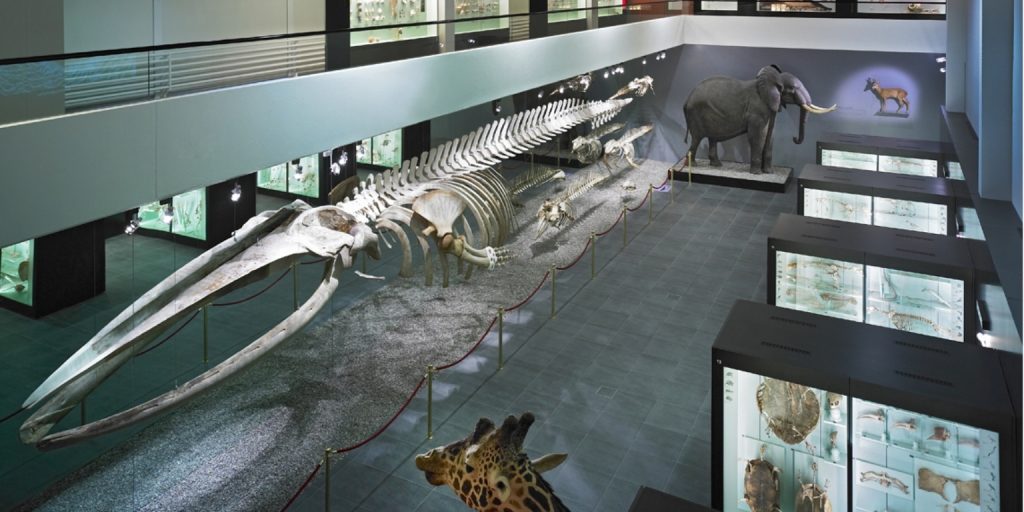
Among its other notable permanent exhibitions is “The Big Bone Show,” the largest collection of animal skeletons and bones in Switzerland. This impressive display features over 300 skeletons, including the massive remains of a fin whale and an Asian elephant, some of which are displayed on a continually revolving carousel.
Some more to see
The Natural History Museum also houses a stunning mineral collection, featuring the “Planggenstock treasure,” a group of unusually large and clear quartz crystals discovered in 2005. These sparkling specimens are a highlight of the geological section, showcasing the beauty and complexity of the Earth’s formations. Another unique exhibition, the “Cabinet of Curiosities,” gives the public a rare glimpse into the museum’s “wet collection,” with over 15,000 specimens preserved in glass jars, from iguanas to penguins, offering a fascinating look at the incredible diversity of life on the planet.
The Natural History Museum of Bern is more than just a place to see preserved animals; it is a dynamic institution that combines historical artistry with contemporary science. Its engaging and educational exhibits make it a compelling destination for families, researchers, and anyone with a curiosity about the natural world.
You can visit Natural History Museum through World City Trail.