
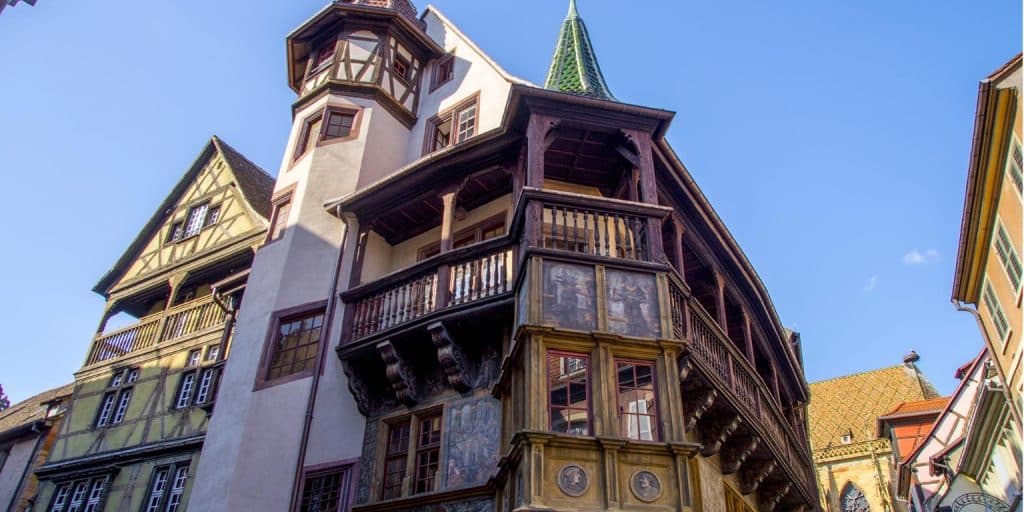
The Pfister House was built in 1537 for Ludwig Scherer, a wealthy hatter who made his fortune in the region. The building’s style is a fascinating blend of Renaissance and late Gothic elements, a common architectural trend in the Alsace region during this period of transition. While the house was not named after its original owner, it took its current name from the family who lived there from 1841 to 1892, a period during which it gained considerable fame and recognition.
Why is so unique?
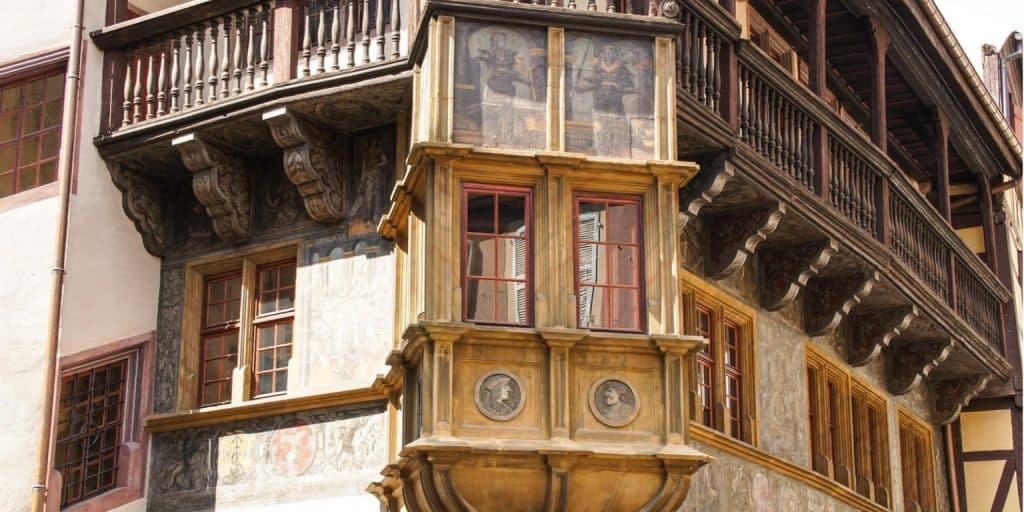
The house is instantly recognizable by its eight-sided corner tower, its two-story wooden gallery, and its ornate stone ground floor. The most celebrated feature of the Pfister House, however, is its magnificent murals. These frescoes, which adorn the facade of the building, depict scenes from the Bible, allegorical figures representing virtues, and portraits of German emperors. The vibrant colors and intricate details of the paintings have been meticulously preserved and restored, allowing visitors to appreciate the high level of artistry that went into its design.
The murals are a clear demonstration of the Protestant humanism that was prevalent in the region during the Reformation. The figures and scenes served a dual purpose: they were both decorative and educational, conveying moral and religious messages to the public. The presence of allegorical figures representing Faith, Hope, Charity, and other virtues reflects the values of the wealthy merchant class that commissioned such works. The Pfister House is a rare example of a private residence with such a richly decorated facade, making it a unique historical artifact.
A Symbol of Colmar’s Prosperity
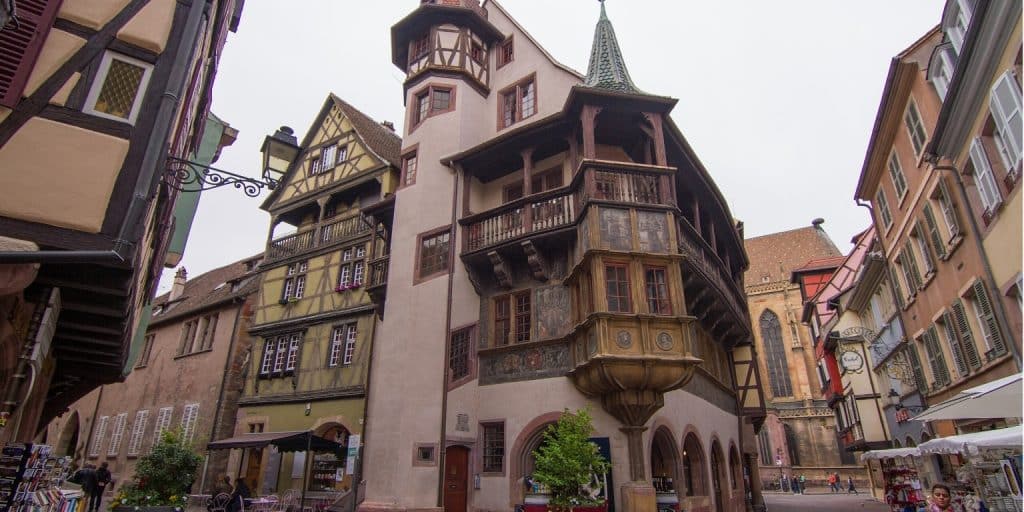
The construction of the Pfister House in the 16th century reflects Colmar’s status as a flourishing city. Its prime location on Rue des Marchands, or “Merchants’ Street,” was no coincidence. This street was the main commercial artery of the old town, a place where business was conducted and where wealthy merchants showcased their success. The Pfister House, with its grandeur and artistic flair, was a clear sign of the owner’s wealth and social standing.
The architectural elements of the house also speak to its purpose. The large windows on the first floor were designed to let in as much light as possible, a crucial feature for the work of a hatter. The wooden gallery, a typical feature of Alsatian architecture, provided additional space and a place to display goods or simply to enjoy the view of the bustling street below. The corner tower, a symbol of power and prestige, gave the house a fortress-like appearance, a visual representation of its owner’s security and success.
A Must-See Landmark in Colmar
Today, the Pfister House is one of Colmar’s most photographed and beloved landmarks. It stands as a centerpiece of the old town, drawing visitors from around the world. While the building is a private residence and not open to the public, its exterior is an open book of history and art. Visitors can walk along Rue des Marchands and spend time admiring its detailed facade, the intricate carvings, and the vibrant murals.
The Pfister House is a key component of Colmar’s walking tours, often serving as a starting point for exploring the city’s other treasures, such as the Koïfhus (Old Customs House) and the Bartholdi Museum. Its enduring beauty and historical significance make it a powerful symbol of Colmar’s past and a testament to the city’s commitment to preserving its heritage. The Pfister House is more than just a building; it is a window into a bygone era of prosperity, craftsmanship, and a deep appreciation for art and beauty. It remains a highlight of any visit to this enchanting Alsatian city.
Colmar Scavenger Hunt and Self-Guided Tour
<div class="wp-block-uagb-tabs uagb-block-a029b1f4 uagb-tabs__wrap uagb-tabs__hstyle1-desktop uagb-tabs__vstyle…