

Table of Contents
Honolulu is the capital city of Hawaii, located on the island of Oahu. Known for its beautiful beaches, including the world-famous Waikiki Beach, it is a vibrant hub of culture, history, and natural beauty. Honolulu blends urban amenities with tropical charm, offering a mix of modern skyscrapers, historical sites like the Pearl Harbor Memorial, and scenic landscapes such as Diamond Head and lush valleys. It’s a popular destination for both tourists and residents, boasting a diverse population and a laid-back, island lifestyle.
Key features of Honolulu:
- Waikiki Beach: One of the most famous beaches in the world, known for its clear waters, golden sand, and excellent surf conditions.
- Diamond Head: A volcanic crater and iconic landmark offering hiking trails with panoramic views of the city and coastline.
- Pearl Harbor: A historic site where the USS Arizona Memorial honors those who died during the 1941 attack. It is also home to several other military museums and memorials.
- Cultural Diversity: Honolulu is a melting pot of cultures, with influences from native Hawaiian traditions, Asian cultures, and the broader Pacific region.
- Hawaiian History and Art: The city boasts important cultural institutions, such as the Bishop Museum, Iolani Palace (the only royal palace in the U.S.), and the Honolulu Museum of Art.
- Tropical Climate: Honolulu has a warm, tropical climate year-round, with mild temperatures, occasional rain showers, and plenty of sunshine.
- Outdoor Recreation: The city offers a wide range of outdoor activities including surfing, hiking, snorkeling, and kayaking, with nearby parks and marine reserves.
- Oahu’s Capital and Economic Hub: As the state capital, Honolulu serves as Hawaii’s political, economic, and cultural center, home to government buildings, businesses, and international trade.
- Shopping and Dining: From luxury malls like Ala Moana Center to local markets like the Aloha Stadium Swap Meet, Honolulu offers diverse shopping experiences. The city’s food scene is also renowned for its fusion of local, Asian, and international flavors.
- Transportation Hub: Honolulu International Airport is a major gateway to the Pacific, connecting travelers to destinations across the U.S. and Asia.

Fun facts about Honolulu:
- Home of the Only Royal Palace in the U.S.: Iolani Palace in downtown Honolulu is the only royal palace in the United States. It was the residence of Hawaii’s last two monarchs, King Kalakaua and Queen Liliuokalani.
- Waikiki Beach Was Once a Playground for Hawaiian Royalty: The famous Waikiki Beach was originally a playground for Hawaiian royalty before it became a popular tourist destination. It was once known for its calm, shallow waters, ideal for canoeing and surfing.
- The Largest Trolley System in the U.S.: Honolulu’s trolley system, known as The Waikiki Trolley, is one of the largest in the United States. It operates on multiple routes and is a fun way to explore the city.
- The Aloha Spirit Is Law: The state of Hawaii has a law known as the “Aloha Spirit” which encourages people to show kindness, compassion, and love toward others. It’s a core value of Hawaiian culture and is often reflected in Honolulu’s welcoming atmosphere.
- Surfing’s Birthplace: Honolulu, specifically Waikiki Beach, is often considered the birthplace of modern surfing. Native Hawaiians were the first to develop the sport, and it was later popularized by surfers like Duke Kahanamoku in the early 20th century.
- Honolulu Was Once a Kingdom Capital: Before Hawaii became a U.S. state, Honolulu was the capital of the independent Kingdom of Hawaii. It was officially declared the capital in 1845 by King Kamehameha III.
- Home to the World’s Largest Open-Air Shopping Center: The Ala Moana Center in Honolulu is the largest open-air shopping mall in the world, with over 350 shops, restaurants, and entertainment options.
- Honolulu Is One of the Cleanest Cities: Honolulu is known for its cleanliness and well-maintained public spaces, earning it a reputation as one of the cleanest cities in the U.S.
- It’s an Epicenter of Astronomy: Honolulu is home to the headquarters of the University of Hawaii’s Institute for Astronomy, and the nearby Mauna Kea Observatory is one of the best places in the world for stargazing.
- The Honolulu Zoo Is the Only Zoo in the U.S. Located in a Former Royal Property: The Honolulu Zoo, located in Queen Kapiolani Park, was originally part of the royal grounds of King Kalakaua and Queen Kapiolani.
Local legends about Honolulu
1. The Legend of Diamond Head (Le’ahi)
Diamond Head, one of Honolulu’s most iconic landmarks, is also known as Le’ahi, which means “brow of the tuna” in Hawaiian. According to legend, the crater’s shape resembles the shape of a fish’s fin, and the name refers to the tuna fish that were abundant in Hawaiian waters. One story suggests that the crater was once a fiery volcano where the goddess Pele had a fiery battle with the ocean goddess Namakaokahai. It’s said that the goddess Pele’s lava flow shaped the crater, and her power left an everlasting imprint on the land.
2. The Legend of Hina and the Moon
The goddess Hina is an important figure in Hawaiian mythology. She is often associated with the moon and the ocean, and her legend is tied to the tides and the changing phases of the moon. One version of her story is that she once lived on Oahu, near Diamond Head, and was known for her wisdom and power. In some tales, she is the mother of Maui, the demigod who slowed the sun. It’s said that Hina’s spirit still resides in the moon, and her energy influences the ebb and flow of the ocean tides around Honolulu.
3. The Legend of Kamehameha the Great and the Koko Head Crater
Kamehameha I, the first king to unify the Hawaiian Islands, is often tied to legends surrounding local landmarks. One story says that he was once training on the slopes of Koko Head, an extinct volcanic cone on the southeastern tip of Oahu. It is said that Kamehameha could see the entire island from the summit, and he would watch for enemies or signals of impending danger. The strength and wisdom he derived from his training atop Koko Head are part of the local folklore, emphasizing his connection to Oahu.
4. The Legend of *Kaimuki*
The name Kaimuki, which refers to a neighborhood in Honolulu, is thought to be derived from a Hawaiian legend. According to the myth, an ancient warrior named Kaimuki once threw a spear at an enemy, and the point landed in the area now known as Kaimuki. Over time, the warrior’s name became associated with the region. The area’s name is said to signify “the place where the spear fell.”
What about the history of Honolulu?
Honolulu’s history is a fascinating journey through time, from its early settlement by Polynesians to its transformation into a vibrant, modern city. The area now known as Honolulu has been inhabited for over a thousand years, with the first settlers arriving from the Marquesas Islands around 300 AD. These early Polynesians established small fishing villages, creating an agricultural society that flourished with taro cultivation and fishing. The sheltered bay of Honolulu, with its coral reef, made it an ideal location for trade and canoe voyaging.
In 1778, Captain James Cook became the first European to visit the Hawaiian Islands, marking the beginning of Western contact. At the time, Honolulu was a small settlement under the rule of Oahu’s chief, but the island was soon drawn into the larger struggle for power among the Hawaiian Islands. In 1795, King Kamehameha I conquered Oahu at the Battle of Nuuanu and made Honolulu part of his kingdom. The city became the political center of the newly unified Hawaiian Islands under Kamehameha I.
In 1804, King Kamehameha III officially made Honolulu the capital of the Hawaiian Kingdom. It was a strategic decision due to the city’s natural harbor and its accessibility to trade routes. Over the following decades, Western influences began shaping Hawaiian society. In the 1820s, Christian missionaries arrived in Honolulu, bringing education, Western-style religion, and a written form of the Hawaiian language. Honolulu grew as a port city and a center for trade, with merchants from Europe, the U.S., and Asia arriving in increasing numbers.
During the reign of the Hawaiian monarchs, particularly in the mid-19th century, Honolulu became an important hub for the global sugar trade. The construction of Iolani Palace by King Kamehameha III in 1845 symbolized Honolulu’s status as the heart of the Hawaiian Kingdom. However, Hawaii’s relationship with the Western powers began to evolve dramatically. Western businesses, particularly those involved in the sugar industry, began to gain significant political influence.
In 1893, Queen Liliuokalani, the last reigning monarch of Hawaii, attempted to restore the powers of the monarchy and limit the growing influence of foreign interests. This led to the overthrow of the Hawaiian Kingdom by a group of American businessmen, supported by the U.S. military. The queen was deposed, and the Republic of Hawaii was established under Sanford B. Dole. The overthrow, which many Native Hawaiians still view as a tragic event, led to the eventual annexation of Hawaii by the United States.
In 1898, following the Spanish-American War, the U.S. annexed Hawaii as a territory, and Honolulu remained its capital. The city began to develop rapidly during the early 20th century, particularly with the establishment of Pearl Harbor as a key U.S. military base. Honolulu became a strategic outpost for the United States in the Pacific, a status that would prove pivotal in the coming decades.
On December 7, 1941, Honolulu and Pearl Harbor were the targets of a surprise attack by Japan, marking the United States’ entry into World War II. The bombing devastated the U.S. Pacific Fleet and led to massive changes in Honolulu’s infrastructure and population. Military installations were expanded, and the city played a central role in the Pacific theater during the war. The attack on Pearl Harbor remains one of the most defining moments in Honolulu’s history, and the Pearl Harbor National Memorial stands as a solemn reminder of the event.
After World War II, Honolulu began to recover and grow. Hawaii became a U.S. state on August 21, 1959, with Honolulu as the political, economic, and cultural center. The city saw significant modernization during the mid-20th century, with the construction of new infrastructure, hotels, and buildings to accommodate a growing population and the booming tourism industry. Today, Honolulu is known for its beautiful beaches, vibrant culture, and diverse population, which includes Native Hawaiians, Asian Americans, and people from around the world.
Honolulu’s evolution from a small fishing village to the cosmopolitan capital of Hawaii is marked by dramatic shifts in politics, culture, and economy. The city stands as a blend of ancient Hawaiian traditions and modern global influences, making it a unique and vibrant place with a rich history that continues to shape its identity today.
Must-Try Food in Honolulu
1. Poke
Poke (pronounced “poh-keh”) is one of Hawaii’s most iconic dishes. It’s typically made with fresh, raw fish (often ahi tuna) marinated in soy sauce, sesame oil, seaweed, and other seasonings. There are many variations of poke, including spicy poke, avocado poke, and poke with chili peppers. You’ll find poke in many Hawaiian restaurants, poke shops, and food markets across Honolulu.
2. Spam Musubi
Spam musubi is a unique fusion snack that combines the popular canned meat Spam with sushi rice, wrapped in a sheet of seaweed (nori). It’s often served as a quick grab-and-go meal or snack, and you can find it at convenience stores, lunch trucks, and restaurants around Honolulu.
3. Hawaiian Loco Moco
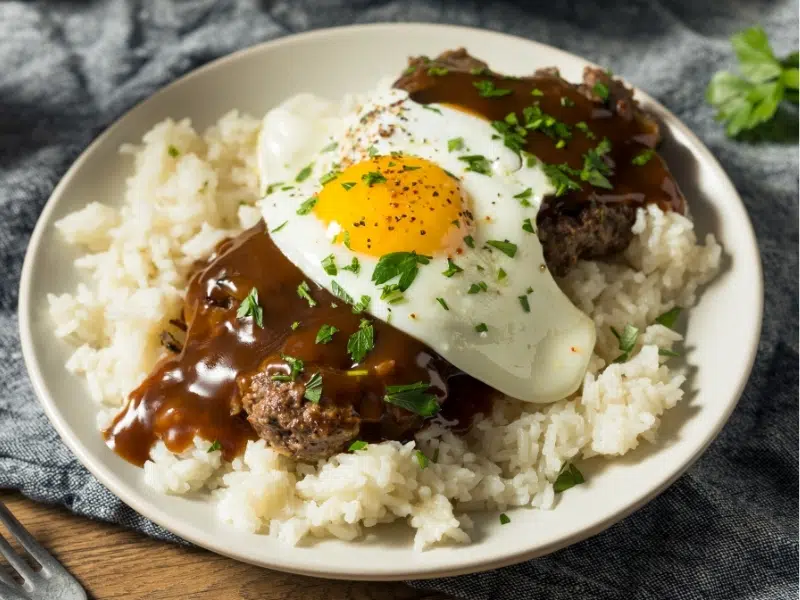
Loco Moco is another beloved comfort food, particularly for breakfast. It features a bed of white rice topped with a hamburger patty, a fried egg, and a generous helping of brown gravy. It’s a filling, savory dish that you can find at many local diners and cafes in Honolulu.
4. Shave Ice
Hawaiian shave ice is a refreshing treat, especially popular during Honolulu’s warm weather. It’s made by finely shaving ice and topping it with flavored syrups. You can also add toppings like sweetened condensed milk, azuki beans, or ice cream. Matsumoto Shave Ice on the North Shore is one of the most famous spots, but you’ll find shave ice stands all over Honolulu as well.
5. Saimin
Saimin is a noodle soup that was developed in Hawaii, influenced by Japanese ramen, Chinese mein, and Filipino pancit. It features soft wheat noodles in a savory broth, topped with ingredients like char siu pork, green onions, fish cake, and sometimes even Spam. It’s a comforting, affordable meal commonly enjoyed for lunch or dinner. A local favorite is Hana No Ma in Honolulu.
6. Kalua Pork
Kalua pork is a Hawaiian specialty traditionally made by slow-cooking a whole pig in an underground oven called an imu. The pork is typically seasoned with salt and sometimes liquid smoke, resulting in tender, smoky meat. It’s a key ingredient in dishes like kalua pork sliders, or it can be served as part of a plate lunch. You can find kalua pork at many local eateries and luaus around Honolulu.
7. Malasadas
A malasada is a Portuguese donut that’s deep-fried, fluffy, and coated in sugar. It’s often filled with custard, chocolate, or other sweet fillings, though the traditional version is just plain, hot, and sugary. Leonard’s Bakery in Honolulu is the most famous place to try these delicious treats.
8. Haupia
Haupia is a traditional Hawaiian coconut pudding that’s sweet, creamy, and often served at luaus or as a dessert in Hawaiian restaurants. It’s typically served chilled in small cups or used as a filling for pies, cakes, and other pastries. Haupia is a refreshing and light way to finish off a meal.
Must Visit Attractions in Honolulu
The Cathedral of St. Andrew
The Cathedral of St. Andrew is a stunning example of Gothic Revival architecture in the heart of Honolulu. This Anglican cathedral, built in the 19th century, is one of the oldest churches in Hawaii. It serves as the spiritual home for the Episcopal Diocese of Hawaii and is renowned for its beautiful stained glass windows and peaceful ambiance.
Capitol Modern
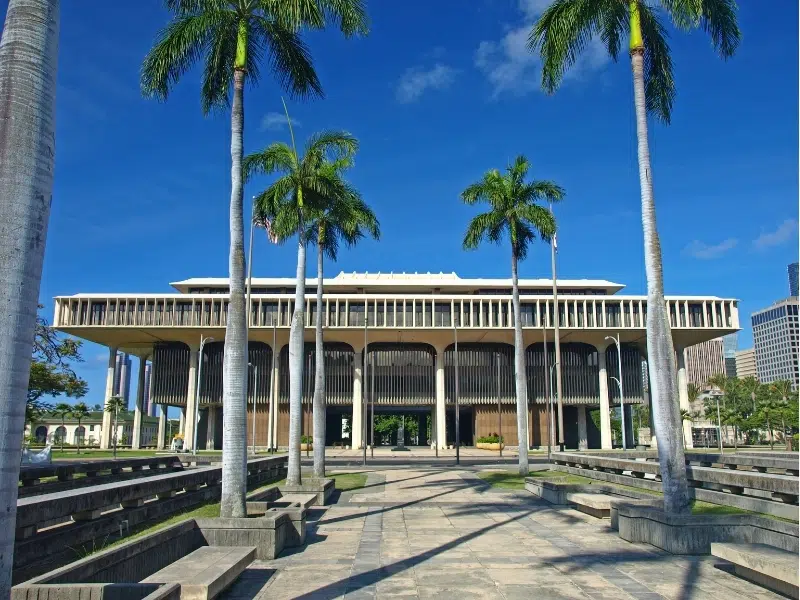
The Capitol Modern refers to the Hawaii State Capitol complex, designed in the mid-20th century with a distinctive modernist style. The building’s design is symbolic, with its open, circular rotunda representing the people of Hawaii and its “columns” resembling trees. This architectural masterpiece serves as the seat of the state government and is open to the public for guided tours, where visitors can learn about Hawaii’s legislative processes.
Hawaii State Capitol
The Hawaii State Capitol is a modern architectural gem that stands in contrast to traditional statehouses across the U.S. Its design is inspired by Hawaiian culture and natural elements. Opened in 1969, the Capitol features a central rotunda and 40 columns that symbolize the 40 members of the Hawaii State Senate. It also boasts an open-air design to reflect Hawaii’s tropical environment.
Iolani Palace
Iolani Palace is a historic landmark that was once the royal residence of the Hawaiian monarchy. Located in downtown Honolulu, it was the official residence of Hawaii’s last two monarchs, King Kalakaua and Queen Liliuokalani. This grand palace is a rare example of Hawaiian royal architecture and now serves as a museum where visitors can learn about Hawaii’s royal history and culture.
Honolulu City Hall
Honolulu City Hall, also known as Honolulu Hale, is an impressive building that houses the city’s municipal offices. Built in the early 20th century in the Spanish Revival style, the building features a beautiful courtyard with a distinctive clock tower. It is a key part of Honolulu’s government district and is known for its iconic architecture and serene gardens.
Kawaiahaʻo Church
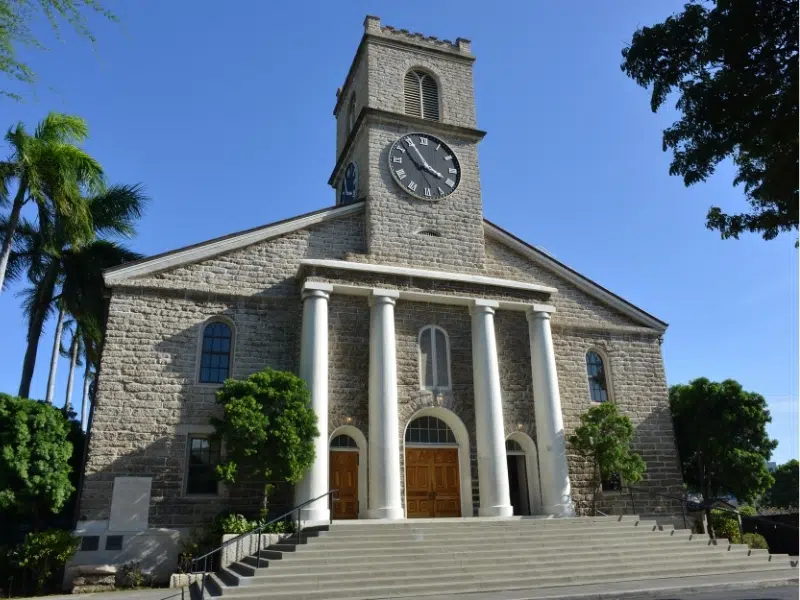
Kawaiahaʻo Church is a historic Hawaiian church, often referred to as the “Westminster Abbey of Hawaii.” Built in 1842, the church is made from coral blocks and is a fine example of early Hawaiian Christian architecture. It is the site where Hawaiian monarchs were often crowned and is still an active place of worship today. The church is known for its beautiful interior and peaceful setting.
King Kamehameha Statue
The King Kamehameha Statue, located in front of the Hawaii State Capitol, honors King Kamehameha I, who united the Hawaiian Islands in the late 18th century. This iconic statue, crafted in Italy, depicts the king in regal armor with a raised hand, symbolizing his leadership and power. It’s a popular photo spot and a significant cultural symbol for the people of Hawaii.
Aliʻiolani Hale
Aliʻiolani Hale is an elegant building that once served as the royal palace of King Kamehameha V. Today, it houses the Hawaii State Supreme Court and is recognized for its beautiful architecture. The building is a blend of Western and Hawaiian styles and is located near Iolani Palace. The iconic statue of King Kamehameha I stands in front of Aliʻiolani Hale, adding to its historic significance.
Hula Dancer Statue
The Hula Dancer Statue, located at the entrance to the Honolulu International Airport, celebrates one of Hawaii’s most iconic cultural traditions—hula dancing. The statue depicts a graceful hula dancer in mid-performance, representing the spirit of Hawaiian music and dance. It’s a welcoming symbol for visitors arriving in Honolulu and reflects the island’s deep connection to its Polynesian roots.
Aloha Tower
The Aloha Tower, once the tallest building in Hawaii, is an iconic structure that has welcomed visitors arriving in Honolulu by sea since 1926. Located at the Honolulu Harbor, this clock tower stands 184 feet tall and was originally used as a lighthouse. Today, it’s a historical landmark offering stunning views of the harbor and surrounding city. Visitors can explore its observation deck and enjoy a sense of old-world charm combined with modern Honolulu.
This walking tour will take you through the heart of Honolulu, allowing you to experience the city’s rich history, stunning architecture, and cultural significance.
Explore Honolulu with World City Trail
Embark on an unforgettable journey through the enchanting city of Honolulu with World City Trail. Our interactive walking tour combines the thrill of exploration with the rich history and culture of this beatiful city.
Key Features:
Interactive gameplay: Solve engaging puzzles and challenges as you explore the city.
Iconic landmarks: Discover famous attractions.
Hidden gems: Uncover lesser-known spots.
Cultural insights: Learn about Honolulu’s fascinating history.
Flexibility: Explore at your own pace and create your own itinerary.