
Table of Contents
Leipzig is a vibrant city in eastern Germany, known for its rich cultural history and modern dynamic atmosphere. Often referred to as the “City of Heroes” for its role in the peaceful revolution that led to the fall of the Berlin Wall, it has a thriving arts scene, highlighted by its music and classical traditions, notably as the home of composer Johann Sebastian Bach. Today, Leipzig is a growing hub for business, education, and technology, with its beautiful architecture, lively cultural events, and green spaces making it an attractive destination for both residents and tourists.
Key features of Leipzig
- Cultural Heritage: Leipzig has a rich history in music and the arts. It was home to famous composers like Johann Sebastian Bach and Richard Wagner, and is known for its classical music scene, including the renowned Leipzig Gewandhaus Orchestra.
- Historical Significance: The city played a crucial role in German history, particularly in the fall of the Berlin Wall. The 1989 Monday Demonstrations in Leipzig were pivotal in the peaceful revolution that led to the reunification of Germany.
- University and Education: Leipzig is home to one of Germany’s oldest universities, the University of Leipzig, founded in 1409, which has been a center of learning and intellectual growth for centuries.
- Architectural Diversity: The city boasts a mix of architectural styles, from medieval buildings like the St. Thomas Church (where Bach worked), to modern structures like the City-Hochhaus and the futuristic Leipziger Messe trade fair complex.
- Green Spaces: Known for its abundance of parks and green areas, Leipzig is often called a “green city.” The city’s extensive parks, such as the Clara Zetkin Park and Leipzig Riverside Forest, offer residents and visitors ample space for outdoor activities.
- Economy and Innovation: Over the past few decades, Leipzig has become a hub for business and technology, with growing industries in logistics, IT, and renewable energy. The city has also emerged as a key location for startups and innovation.
- Leipzig Zoo: The Leipzig Zoo is one of the oldest and most significant zoos in Germany. Its “Zoologischer Garten Leipzig” is known for its commitment to animal conservation and modern exhibits like the “Gondwanaland” rainforest hall.
- Vibrant Arts and Music Scene: Leipzig is a major center for contemporary art and theater, with a wide range of galleries, performance spaces, and festivals such as the Leipzig Book Fair and the Wave-Gotik-Treffen (a large Gothic culture festival).
- Public Transport: The city has an efficient and well-connected public transportation system, including trams, buses, and trains, making it easy to navigate and explore.
- Food and Drink: Leipzig is known for its traditional Saxon cuisine, including dishes like Leipziger Allerlei (a vegetable and fish dish) and Sachsenschmaus. The city is also home to a growing craft beer scene and cafés serving local delicacies.

Fun Facts about Leipzig
- The “City of Books”: Leipzig is known as Germany’s “City of Books.” It has a long literary tradition and hosts one of the largest book fairs in the world, the Leipzig Book Fair, which has been held annually since 1660.
- A Monument to Peace: The Monument to the Battle of the Nations (Völkerschlachtdenkmal) is one of the largest monuments in Europe. It commemorates the 1813 Battle of Leipzig, where Napoleon was defeated by a coalition of European forces.
- The Leipzig Unicorn: The city’s symbol is the unicorn, a mythical creature that appears on the city’s coat of arms. It represents purity and strength, and you can spot it in various places around the city.
- A Hotspot for the Music Scene: Leipzig was home to famous composers like Johann Sebastian Bach, who worked at the St. Thomas Church for many years, and Felix Mendelssohn. The city still celebrates its rich musical heritage, with the Bach Festival and the Leipzig Gewandhaus Orchestra.
- The Oldest Coffeehouse in Germany: Leipzig is home to Auerbachs Keller, a historic café that dates back to 1525. It’s famously featured in Goethe’s Faust, where the devil and Faust have a conversation in the cellar.
- Vibrant Skateboarding Culture: Leipzig is one of the best places in Europe for skateboarding. The city is known for its extensive network of skate parks, and the annual Leipzig Skate Marathon attracts skateboarders from all over the world.
- World’s Largest Indoor Rainforest: The Gondwanaland exhibit at the Leipzig Zoo houses one of the largest indoor rainforests in the world. It’s a lush, tropical environment with over 100 species of plants and animals.
- An Unexpected Tech Hub: Though it’s historically known for its arts and culture, Leipzig has become a growing technology and startup hub, especially in the fields of IT, logistics, and renewable energy, attracting young entrepreneurs.
- Candlelight and Coffee: Leipzigers love their coffee and cakes, and many of the cafés have a warm, inviting atmosphere, perfect for a cozy afternoon. The tradition of afternoon coffee and cake is central to local culture.
- Vibrant Street Art Scene: Leipzig is home to an exciting and dynamic street art scene, especially in areas like Plagwitz, where colorful murals and graffiti line the streets. It’s considered one of the best cities in Germany for street art.
Local legends about Leipzig
- The Devil’s Pact at Auerbachs Keller: One of the most famous legends associated with Leipzig involves Auerbachs Keller, a historic cellar that Goethe immortalized in his play Faust. The story goes that the devil, disguised as a man, made a pact with Faust, an ambitious scholar. Faust sold his soul in exchange for unlimited knowledge and worldly pleasures. According to the legend, Faust and the devil meet in the cellar where they engage in a drunken, mischievous conversation, and the devil shows Faust the pleasures of life. The cellar still exists today, attracting visitors interested in the legend and Goethe’s work.
- The Leipzig Unicorn: Another famous local myth involves the Leipzig Unicorn, which is the city’s heraldic symbol. The legend claims that the unicorn symbolizes purity and strength. The unicorn was believed to have magical powers and would protect the city from harm. According to some versions of the story, the creature could only be tamed by a virgin and had the ability to detect poison. The unicorn remains a key symbol, appearing in many places around the city, including the city’s coat of arms and in various statues.
- The Ghost of St. Thomas Church: St. Thomas Church (Thomaskirche) is home to the tomb of Johann Sebastian Bach, and is central to a ghost story. According to legend, Bach’s spirit haunts the church, sometimes heard playing music late at night. It’s said that when the organ plays, Bach’s ghost can be seen walking down the church aisle. The ghostly sightings have been reported by musicians and clergy members who claim to feel his presence during special musical events or services.
- The Leipzig “Red Bear”: One local legend revolves around the story of a red bear that allegedly roamed the streets of Leipzig centuries ago. It’s said that this bear was a guardian spirit of the city, protecting it from invaders. According to the myth, the bear would appear during times of great danger or war and vanish when peace was restored. The “Red Bear” was believed to be a divine protector, and many believed that its appearance foretold a victory for the city.
- A lesser-known but intriguing legend is that of the Devil’s Bridge, which was supposedly located near the old city walls. According to the tale, the devil promised to build a bridge over the Elster River if the people of Leipzig would sell their souls to him. The devil completed the bridge overnight, but in the morning, the people outwitted him and tricked him into accepting a contract that did not include their souls. As a result, the devil is said to have vanished, but the bridge was never completed, leaving only the legend behind.
- The Witch Trials: Like many cities in medieval Europe, Leipzig was involved in the witch hunts that swept through the region. One legend involves the Witch’s House (Hexenhaus), located near the city. According to the myth, a woman accused of witchcraft lived in this house and was put on trial by the local authorities. It’s said that before her execution, she cursed the town, and her spirit haunted the area for centuries. People still report strange occurrences around the site of her house, including unexplainable noises and eerie shadows.
- The Ghost of Leipzig’s Old Town Hall: The Old Town Hall (Altes Rathaus), one of Leipzig’s oldest buildings, is said to be haunted by the ghost of a former mayor. Legend has it that the mayor made a deal with a wealthy merchant, but upon betrayal, the merchant died under mysterious circumstances. The ghost of the mayor is said to still roam the building, seeking redemption or a way to resolve the unfinished business.
What about the history of Leipzig?
The history of Leipzig spans over a thousand years, with the city evolving from a small settlement into a vibrant cultural and economic hub. Here’s an overview of the key historical moments that shaped Leipzig:
Early History and Foundation (9th–12th Century)
Leipzig’s origins can be traced back to the 9th century, when it was a small settlement known as “Lipsk”, derived from the Slavic word for “lime tree.”
Medieval Leipzig (12th–15th Century)
In 1409, the University of Leipzig was founded, making it one of the oldest universities in Europe. The university attracted scholars from across the continent, significantly contributing to the city’s intellectual and cultural development.
Renaissance and Early Modern Era (16th–18th Century)
In the 16th century, Leipzig became an important center for the Reformation. The city’s residents were among the early followers of Martin Luther, and it became a hotspot for Protestant ideas.
The Battle of Leipzig (1813)
One of the most significant events in Leipzig’s history was the Battle of Leipzig (also known as the Battle of the Nations) in 1813. This decisive battle marked the turning point in the Napoleonic Wars.
Industrial Revolution and Growth (19th Century)
During the 19th century, Leipzig underwent significant industrialization, with the development of the textile industry, as well as the introduction of railroads.
Weimar Republic and Nazi Era (20th Century)
In the early 20th century, Leipzig remained a center of culture, education, and trade, although the Weimar Republic and the rise of Nazism brought political instability.
World War II and the Cold War (Mid-20th Century)
During World War II, Leipzig suffered from heavy bombings, particularly in 1943, which destroyed much of the historic center. After the war, the city became part of East Germany (German Democratic Republic) under Soviet influence. Despite its destruction, Leipzig remained an important industrial and cultural center in East Germany.
Post-Reunification (1990–Present)
Today, Leipzig is known for its thriving cultural scene, with a strong presence in music, theater, and the arts, as well as being a hub for education, science, and business.
Must-Try Food in Leipzig

1. Leipziger Allerlei
This is a classic dish from Leipzig, originally a vegetable and fish stew. It traditionally features a mix of spring vegetables such as carrots, peas, asparagus, and cauliflower, often paired with morel mushrooms and sometimes fish, such as pike or carp. It’s a light, flavorful dish perfect for showcasing the region’s seasonal produce.
2. Sachsenschmaus
A hearty and comforting Saxon dish, Sachsenschmaus is typically a combination of pork (often roast pork or sausages), potatoes, and sauerkraut or red cabbage. It’s a staple of Saxon cuisine and gives a true taste of traditional German comfort food.
3. Leipzig Lerche
Despite the name, Leipzig Lerche doesn’t contain any larks. The dish is actually a type of pastry made with a mixture of meat (usually game like venison), onions, and spices, all wrapped in a dough and baked. This historical dish dates back to the 19th century, and while its origins are tied to the hunting culture, today it’s a beloved regional specialty.
4. Quarkkeulchen
A traditional dessert or snack, Quarkkeulchen are small, sweet potato pancakes made with quark (a type of soft cheese). They’re fried until crispy and golden and are often served with a dusting of powdered sugar or a drizzle of fruit compote, like apple or plum. It’s a favorite treat, especially in the colder months.
5. Eierschecke
Eierschecke is a traditional Saxon cake, known for its three-layer composition. The base is a light, spongy cake, topped with a creamy custard layer and finished with a sweet, slightly tangy topping made from quark and eggs. It’s a rich, indulgent dessert that is perfect with a cup of coffee.
6. Wurst and Sauerkraut
Like much of Germany, Leipzig has a variety of sausages (Wurst), and they’re often enjoyed with sauerkraut or mustard. From bratwurst (grilled sausages) to Leberwurst (liver sausage), you can find different types of wurst throughout the city. A classic dish might include sausages served with mustard, sauerkraut, and hearty German bread.
7. Mutzbraten
A popular dish from Leipzig’s surrounding region, Mutzbraten is a grilled pork roast, often marinated in beer, garlic, and spices before being slowly cooked. The meat is typically served with potatoes and sauerkraut or red cabbage. It’s a flavorful, savory option for meat lovers.
8. Pillnitzer Apfelstrudel
While Apfelstrudel (apple strudel) is popular throughout Germany and Austria, Leipzig has its own version called Pillnitzer Apfelstrudel. It’s made with apples, cinnamon, and sugar, wrapped in thin layers of pastry. It’s a perfect dessert, often enjoyed warm with whipped cream or a scoop of ice cream.
9. Leipzig Beer (Leipziger Gose)
While not food, Leipzig’s traditional Gose beer is a must-try drink. This sour wheat beer has a distinct tart taste, often seasoned with coriander and salt. It’s a refreshing and unique brew, perfect for pairing with local dishes.
10. Böttcherei Soup
A regional soup, Böttcherei is a hearty, rustic dish made with potatoes, sauerkraut, and sausage. It’s often enjoyed as a warm, filling meal, especially during the colder months. The soup reflects the hearty, simple flavors of traditional Saxon cooking.
11. Kaffeekommune Cake
If you’re into coffee culture, Leipzig has an impressive coffee scene, and at cafes like Kaffeekommune, you can enjoy a slice of their delicious cakes along with high-quality coffee. The cakes range from decadent chocolate options to fruit-based treats, all perfect for a sweet afternoon break.
Must Visit Attractions in Leipzig
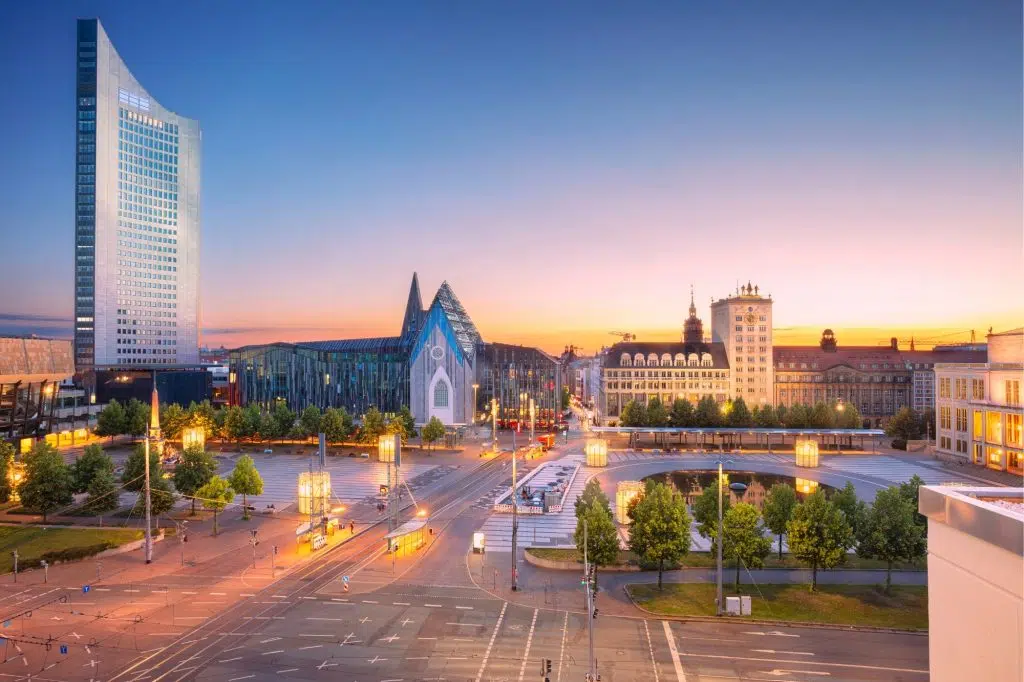
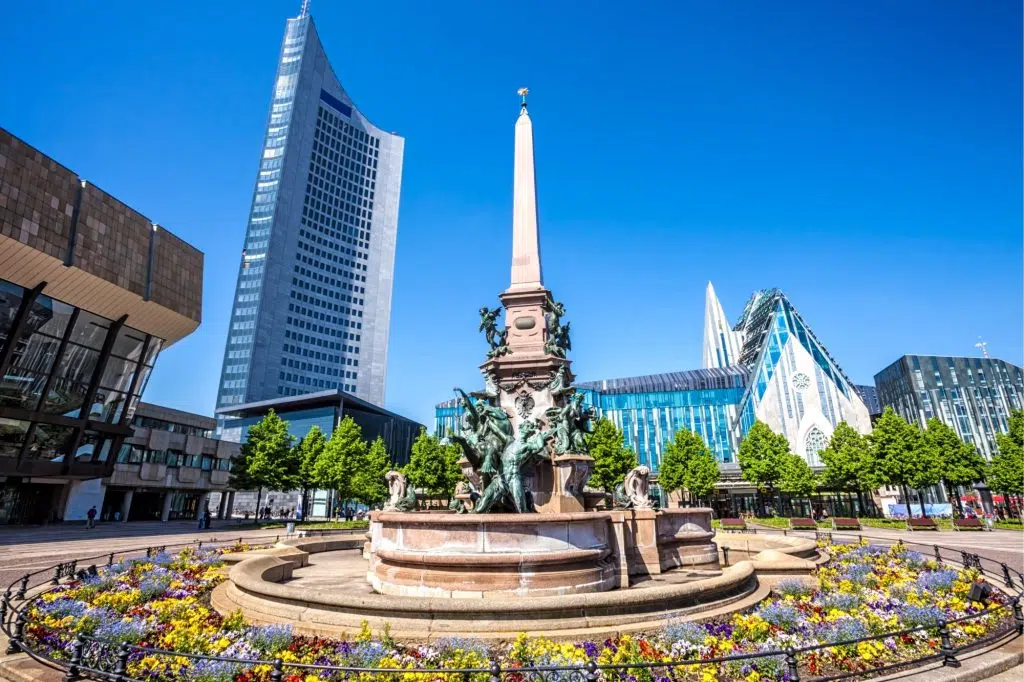
Augustusplatz is one of the city’s largest and most prominent squares, surrounded by stunning architecture, including the Opernhaus Leipzig (Opera House) and the Gewandhaus concert hall. It is a lively hub where you can experience both the old and new sides of Leipzig.
The Krochhochhaus is an iconic building in Leipzig, standing out as one of the first skyscrapers in the city. Built in the 1920s, it was a symbol of modernity at the time and now houses offices and shops, while its rooftop offers an impressive view of the city.
St. Nicholas Church (Nikolaikirche) is one of Leipzig’s most historic churches, known for its role in the peaceful 1989 protests that led to the fall of the Berlin Wall. The church’s beautiful interior and impressive organ make it a must-visit for history and architecture enthusiasts.
The Museum of Fine Arts (Museum der bildenden Künste) houses an extensive collection of European art from the medieval period to the present day. Its striking modern building features works by renowned artists like Van Gogh, Monet, and Dürer, offering a rich cultural experience.
Located at the heart of Leipzig’s Old Town, Marktplatz Leipzig is a vibrant market square surrounded by beautiful historical buildings, including the Old Town Hall and several medieval merchants’ houses. It’s a great place to experience the city’s bustling atmosphere.
The Stadtgeschichtliches Museum Leipzig (City History Museum) in the Altes Rathaus (Old Town Hall) offers a deep dive into Leipzig’s past, from the medieval period through to the present day. The museum’s exhibits cover everything from the city’s medieval trade roots to its role in the peaceful revolution of 1989.
Naschmarkt is a picturesque square known for its lively outdoor market and vibrant atmosphere. Surrounded by beautiful baroque buildings, it’s a wonderful spot to grab a bite to eat, shop for local produce, or simply enjoy the charming surroundings.
Auerbachs Keller is a historic restaurant and cellar, famously featured in Goethe’s Faust. It’s one of the oldest and most famous eateries in Leipzig, offering a taste of traditional German cuisine in a setting steeped in literary history.
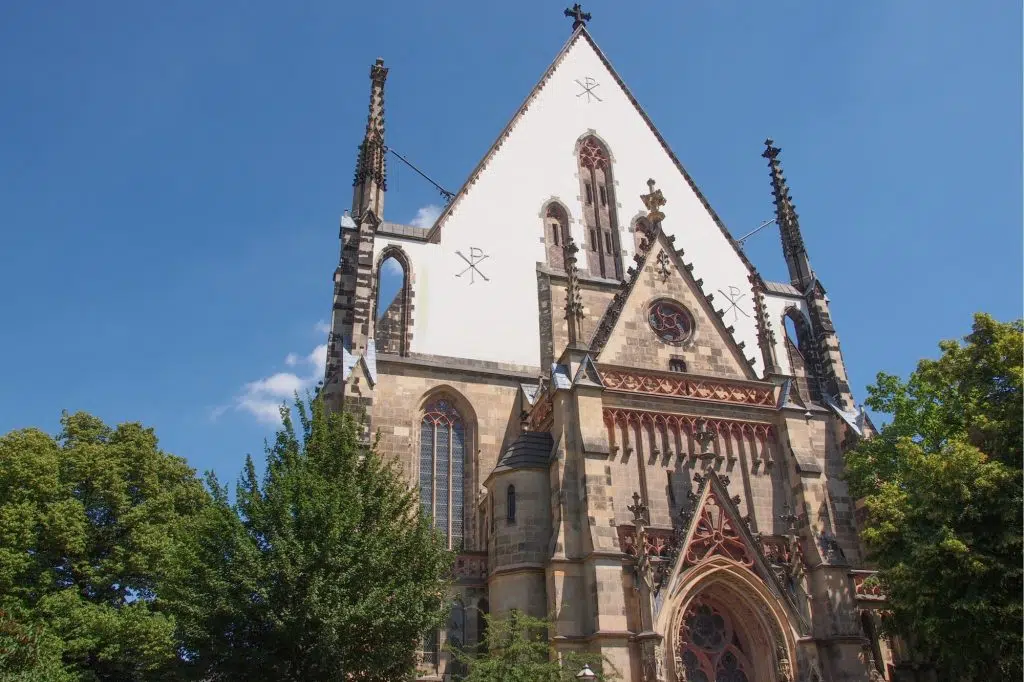
St. Thomas Church (Thomaskirche) is another iconic church in Leipzig, renowned as the final resting place of Johann Sebastian Bach. Visitors can explore the church, attend performances by the famous Thomanerchor choir, or simply admire its stunning Gothic architecture.
The New Town Hall (Neues Rathaus) is an impressive building showcasing the city’s development in the late 19th and early 20th centuries. Located on the southern edge of Augustusplatz, it’s a beautiful example of neo-Renaissance architecture, with a tall tower offering a panoramic view of Leipzig.
This walking tour will take you through the heart of Leipzig, allowing you to experience the city’s rich history, stunning architecture, and cultural significance.

Explore Leipzig with World City Trail
Embark on an unforgettable journey through the enchanting city of Leipzig with World City Trail. Our interactive walking tour combines the thrill of exploration with the rich history and culture of this beatiful city.
Key Features:
Interactive gameplay: Solve engaging puzzles and challenges as you explore the city.
Iconic landmarks: Discover famous attractions like the Thomaskirche or the Neues Rathaus.
Hidden gems: Uncover lesser-known spots, such as the Auerbachs Keller and the City History Museum.
Cultural insights: Learn about Leipzig’s fascinating history.
Flexibility: Explore at your own pace and create your own itinerary.
Learn more fun facts about Leipzig!
Book your Leipzig adventure today and experience the magic of this beautiful city.
Further reading on Wikipedia: Auerbachs Keller