
Table of Contents
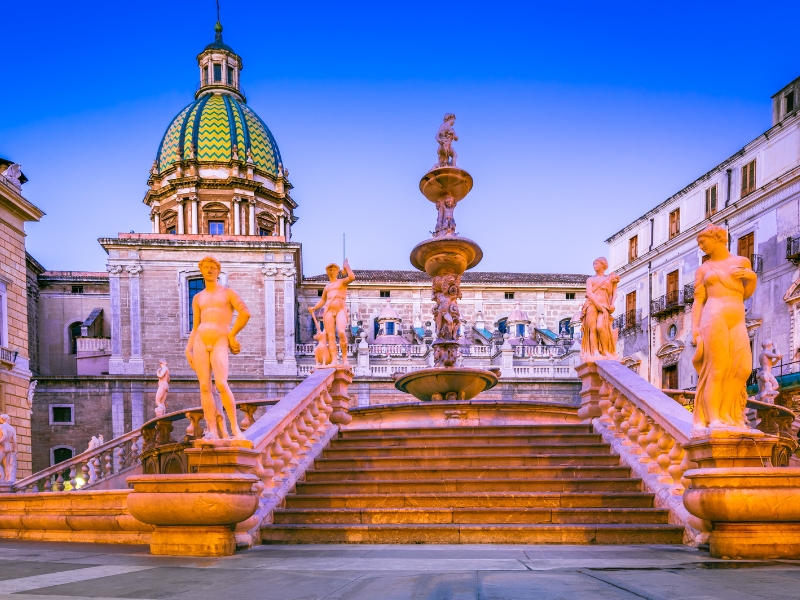
Nestled in the heart of Piazza Pretoria, the Fontana Pretoria is one of Palermo’s most famous landmarks and an extraordinary example of Renaissance art. Known for its striking beauty, intricate design, and fascinating history, the fountain has earned the nickname “Fountain of Shame” (Fontana della Vergogna) due to the controversy it sparked upon its unveiling.
A Renaissance Masterpiece
The Fontana Pretoria was originally designed in 1554 by Francesco Camilliani, a prominent Florentine sculptor. Initially created for a villa in Florence, the fountain was later purchased by Palermo’s city council in 1573. It was disassembled, transported to Sicily, and reconstructed in its current location in Piazza Pretoria, near the Palermo Cathedral and Piazza Bellini.
Upon its installation, some adjustments were made to fit the fountain into the irregular shape of the piazza. Despite these modifications, the fountain remains a stunning work of art, blending Florentine elegance with the vibrant character of Palermo.
An Intricate Design of Mythical Splendor
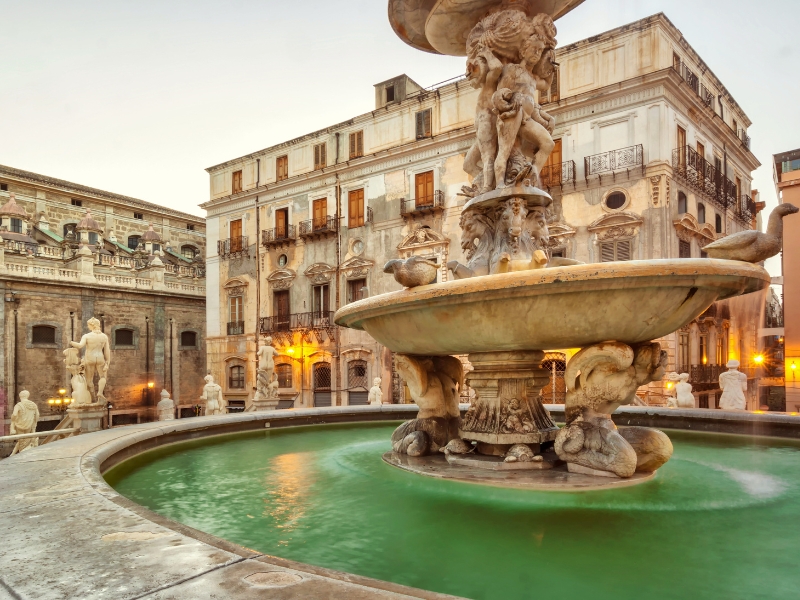
The Fontana Pretoria is an extraordinary composition of tiers, statues, and flowing water. The central structure features three concentric circular basins, with water cascading gracefully from the top to the bottom. Surrounding these basins are a series of exquisitely sculpted figures.
- Statues of Deities and Nymphs: The fountain is adorned with 48 marble statues, including depictions of classical mythological gods and goddesses, nymphs, and animal heads. These figures represent themes of abundance, nature, and divinity, showcasing Camilliani’s mastery in capturing human emotion and movement.
- Allegorical Figures: Alongside mythological characters, the fountain includes allegorical representations of the Twelve Olympian gods, such as Zeus, Apollo, and Poseidon. Their serene and elegant expressions contrast with the playful nymphs and satyrs, creating a dynamic interplay of forms and themes.
- Animals and Masked Faces: The inclusion of animal heads, grotesque masks, and decorative motifs adds depth and variety to the fountain’s intricate design.
The “Fountain of Shame”
The nickname “Fountain of Shame” emerged shortly after its unveiling in Palermo. This was due to the nudity of the statues, which scandalized the more conservative members of Sicilian society at the time. The unclothed figures were seen as provocative and inappropriate for a public space, particularly one situated near religious buildings such as the Church of San Giuseppe dei Teatini.
Legend has it that local nuns and priests, appalled by the fountain’s nudity, attempted to cover or remove the statues. However, the fountain ultimately remained untouched and gradually became an accepted symbol of the city’s artistic heritage.
A Symbol of Palermo’s Identity
Today, the Fontana Pretoria is celebrated as one of Palermo’s most iconic attractions. Its central location in Piazza Pretoria makes it a focal point for visitors exploring the historic center. Surrounded by impressive landmarks, including the Palazzo Pretorio (City Hall), the Church of Santa Caterina, and the Church of San Giuseppe dei Teatini, the fountain offers a breathtaking setting that captures the essence of Palermo’s artistic and architectural splendor.
- Photography and Sightseeing: The Fontana Pretoria’s statues, with their graceful lines and dramatic expressions, provide endless opportunities for photography and artistic inspiration. Visitors often marvel at the play of sunlight on the white marble, which enhances the fountain’s ethereal beauty.
- Evening Atmosphere: Illuminated at night, the fountain takes on a magical quality, drawing locals and tourists alike to admire its timeless elegance in the glow of the city lights.
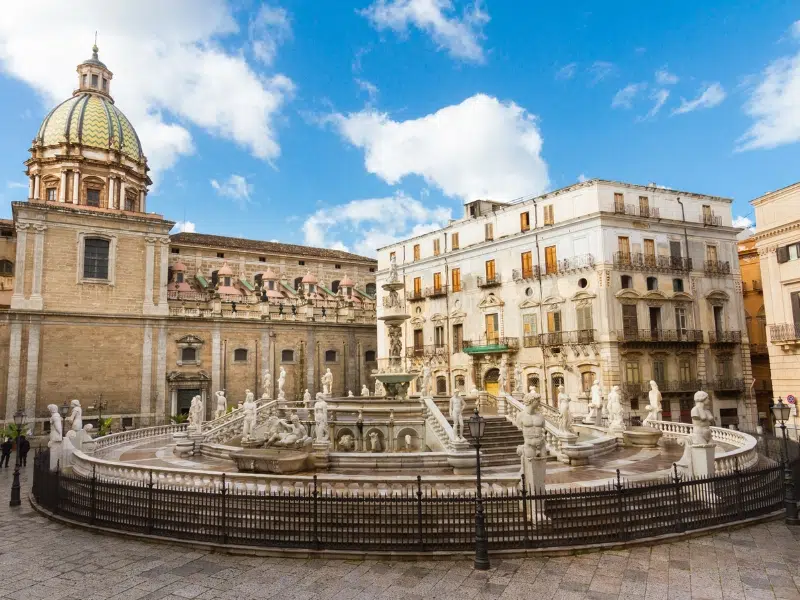
Fontana Pretoria is part of Palermo scavenger hunt and walking tour!
Embark on an unforgettable journey through the enchanting city of Palermo with World City Trail. Our interactive walking tour combines the thrill of exploration with the rich history and culture of this beautiful city.
Key Features:
Interactive gameplay: Solve engaging puzzles and challenges as you explore the city.
Hidden gems: Uncover lesser-known spots.
Cultural insights: Learn about the city’s fascinating history.
Flexibility: Explore at your own pace and create your own itinerary.
Family friendly activity and a great way to explore the city!
Further reading on Wikipedia: Palermo