

Table of Contents
The Saint Mary of the Admiral (Chiesa di Santa Maria dell’Ammiraglio) is a remarkable example of the Arab-Norman architectural style, blending Islamic, Byzantine, and Christian influences into a singular, harmonious structure. This church stands as a testament to the unique cultural and historical crossroads that Palermo once represented.
A Rich History
The origins of Saint Mary of the Admiral trace back to 1143, when it was founded by George of Antioch, the admiral of the Norman King Roger II of Sicily. This was a period of great political and cultural consolidation in Sicily, with Roger II seeking to unite the diverse peoples of the island under his rule. The church was originally built to honor the Virgin Mary and serve as a place of worship for the sailors of Palermo.
While the church Saint Mary of the Admiral was founded in the 12th century, it underwent significant alterations in the 15th century under the patronage of the Martorana family, from which it gained its popular name. The church’s fascinating history encompasses several periods, including its role as a convent, a symbol of the power of the Norman kings, and a place of profound religious significance.
A Stunning Blend of Architecture
The Saint Mary of the Admiral’s design is an extraordinary synthesis of architectural styles. It is one of the finest examples of the Arab-Norman style, a unique fusion of Christian and Islamic design elements that emerged during the rule of the Norman kings in Sicily.
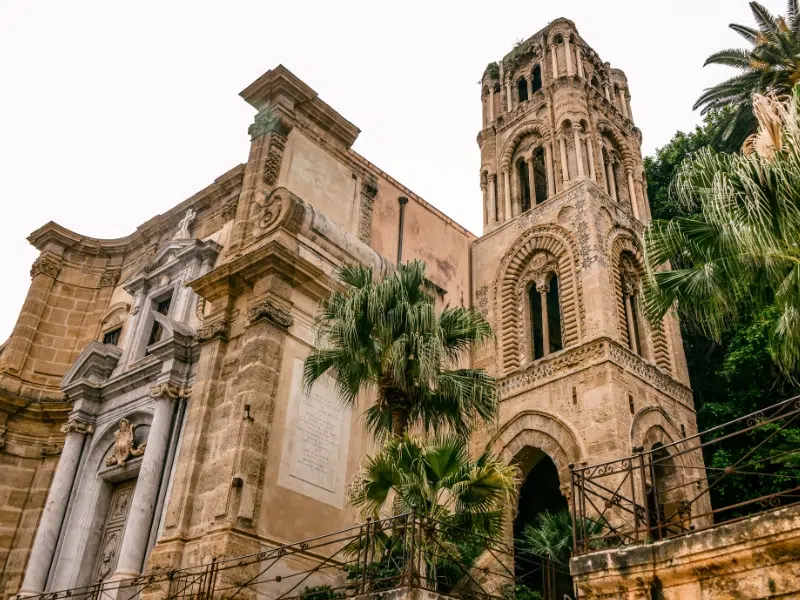
- Exterior: The church’s exterior is relatively modest, with a simple façade of brick and stone, reflecting the restraint typical of Norman architecture. The entrance is marked by a finely detailed stone portal, with decorative carvings that echo both Byzantine and Arabic traditions.
- The Dome: The most striking feature of the exterior is the church’s dome, which stands proudly above the structure. The dome is adorned with Islamic-inspired decorative motifs, further blending the island’s rich cultural heritage.
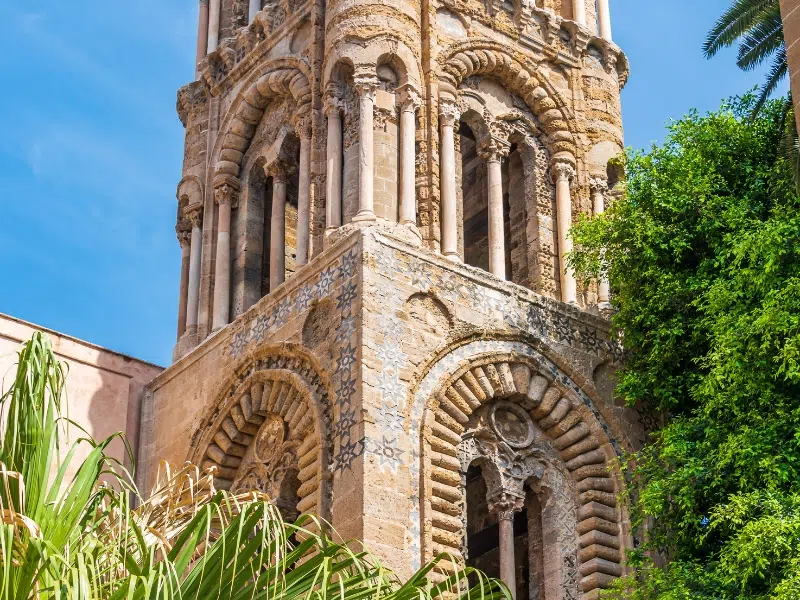
- Bell Tower: The church’s bell tower is another key feature, offering panoramic views of the surrounding area. The tower’s design is reminiscent of Norman military architecture, giving the church a fortress-like appearance, reflecting the power of the rulers at the time.
A Glorious Interior: Mosaics and Frescoes
Upon entering the Saint Mary of the Admiral, visitors are immediately struck by the stunning interior. The interior is characterized by the rich interplay of colors, textures, and designs, showcasing both Byzantine and Norman influences.
- Mosaics: The most famous and eye-catching feature of Saint Mary of the Admiral is its magnificent Byzantine mosaics, which cover the dome and upper walls of the church. These mosaics depict sacred figures, including scenes from the Life of Christ and the Virgin Mary, as well as saints and angels. The golden background of the mosaics creates a shimmering effect, evoking a sense of divine light. One of the most striking depictions is the image of the Christ Pantocrator in the dome, a powerful and regal representation of Christ that gazes down upon all who enter the church.
- Frescoes: In addition to the mosaics, the church also contains frescoes painted in the 15th century, depicting various saints and biblical scenes. These frescoes contribute to the church’s beauty, adding a layer of rich color and detail that contrasts with the golden mosaics.
- Marble and Decoration: The floors are adorned with intricate marble patterns, typical of the Arab-Norman style, while the chapels contain a mixture of Byzantine and Romanesque elements. The altar area is beautifully decorated with gold, showcasing the church’s spiritual importance.
The Martorana Family and the Church’s Legacy
As mentioned, the Saint Mary of the Admiral is also known as La Martorana after the Martorana family, who significantly funded the church’s restoration in the 15th century. They were a powerful and influential family in Palermo during that period, and their contribution to the church’s construction led to its adoption of the family name.
The Martorana family’s involvement also contributed to the addition of a bell tower and further enhancements to the church’s interior. The family’s connection with the church helped to solidify its status as one of Palermo’s key religious sites.
Saint Mary of the Admiral is part of Palermo scavenger hunt and walking tour!
Embark on an unforgettable journey through the enchanting city of Palermo with World City Trail. Our interactive walking tour combines the thrill of exploration with the rich history and culture of this beautiful city.
Key Features:
Interactive gameplay: Solve engaging puzzles and challenges as you explore the city.
Hidden gems: Uncover lesser-known spots.
Cultural insights: Learn about the city’s fascinating history.
Flexibility: Explore at your own pace and create your own itinerary.
Family friendly activity and a great way to explore the city!
Further reading on Wikipedia: Palermo