
Nestled in the very core of Bucharest, the Lipscani district is more than just the city’s Old Town; it is a vibrant tapestry woven from centuries of commerce, culture, and dramatic transformation. Once the bustling mercantile heart of Wallachia, a period of decline saw its historic buildings fall into disrepair, only to rise again as Bucharest‘s most dynamic hub for nightlife, dining, and cultural exploration. Walking its cobblestone streets today is to embark on a journey through time, revealing the resilient spirit of a city deeply connected to its past.

The Etymology of Trade: “Lipscani” and its Origins
The name “Lipscani” itself is a direct echo of its historical purpose. It derives from the Romanian word “Lipscan,” which referred to merchants who imported goods from Leipzig (Lipsca in archaic Romanian), a major trade fair city in Saxony, Germany. These merchants, often from Transylvania or Moldavia, brought fine textiles, books, and various commodities from Western Europe into Wallachia, making this area the primary commercial artery of Bucharest.
The district’s active commercial life began to flourish in the 17th and 18th centuries, reaching its zenith in the 19th century. It became a melting pot of cultures and trades, with streets named after the specific guilds that operated there: Blănari, Șelari, Gabroveni, and Smârdan. This era saw the construction of countless inns (hanuri), workshops, and merchants’ houses, creating a dense, vibrant urban fabric.
Architectural Layers and Periods of Grandeur
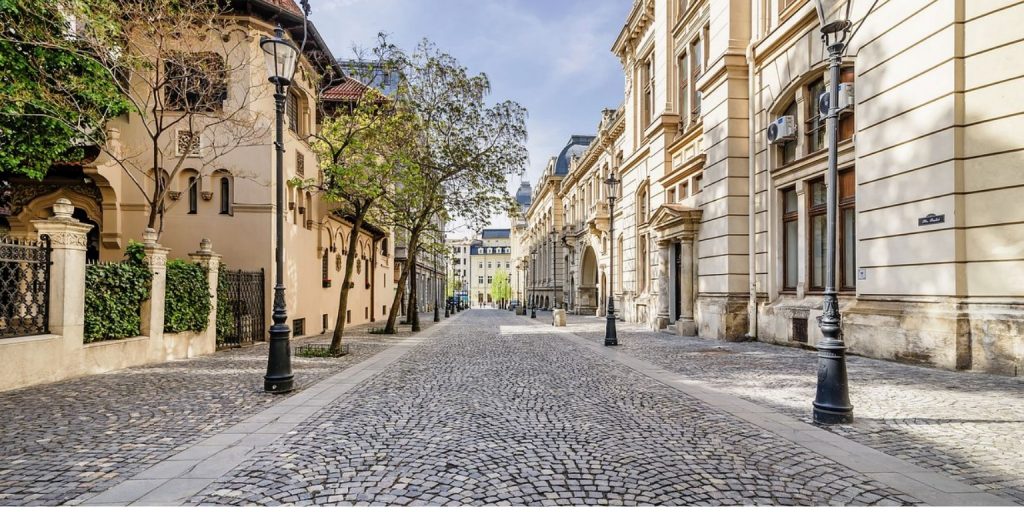
The architecture of Lipscani tells a story of successive historical periods. While the earliest structures were typically two-story buildings with workshops on the ground floor and residences above, many were later rebuilt or embellished. The dominant architectural style is a mix of neo-classical and neo-baroque, reflecting the influences of Western European trends that swept through Bucharest, particularly after the mid-19th century. Grand facades, ornate details, and spacious courtyards characterized many of the merchant houses and inns.
Notable structures that survive from this period include the Manuc’s Inn, built in 1808, one of the oldest and best-preserved inns in Bucharest, and the Old Princely Court (Curtea Veche) and its adjacent Old Court Church, dating back to the 15th and 16th centuries, the oldest standing church in Bucharest. These remnants highlight Lipscani’s long continuous occupation and its role as the administrative and commercial core of the city’s early development.
Decline and Dramatic Rebirth
The 20th century, particularly the communist era, brought significant challenges to the Lipscani district. Many buildings fell into disrepair, neglected by a regime focused on grand, utilitarian projects. While some parts were controversially demolished to make way for new developments, much of Lipscani survived, albeit in a state of advanced decay. After the fall of communism in 1989, the district remained largely dilapidated for over a decade, known more for its ruinous charm than its vibrancy.
However, from the early 2000s onwards, a remarkable process of revitalization began. Fueled by private investment and a growing appreciation for its historical value, buildings were painstakingly restored, often revealing hidden architectural details. This transformation saw Lipscani re-emerge as Bucharest’s primary entertainment and cultural district.
Lipscani Today: A Blend of Old and New
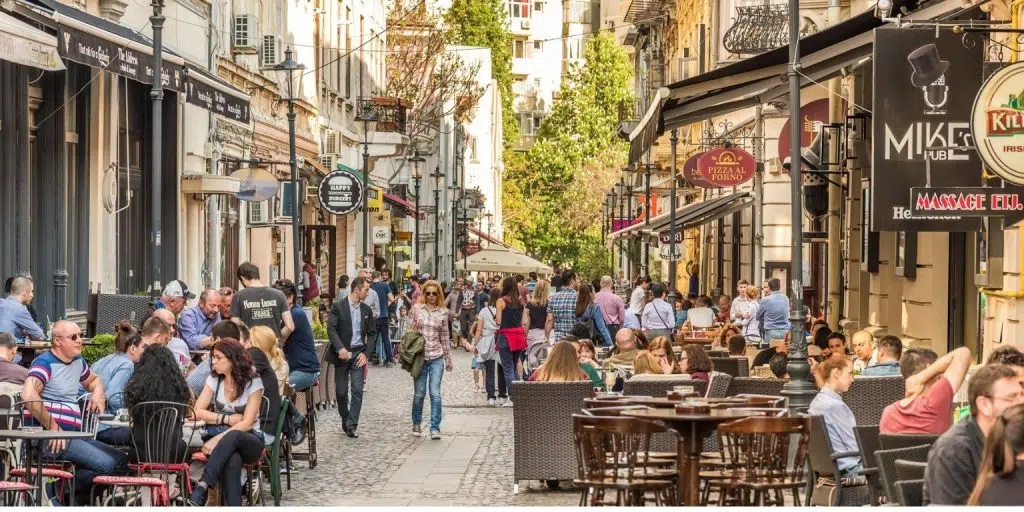
Today, the Lipscani District is the beating heart of Bucharest’s nightlife, a bustling pedestrian zone alive from morning till late night. Its narrow, cobblestone streets are now home to:
- Restaurants and Cafes: Offering everything from traditional Romanian cuisine to international flavors.
- Bars and Clubs: Ranging from cozy pubs to lively dance clubs, catering to all tastes.
- Boutique Shops: Selling souvenirs, handcrafted goods, and contemporary fashion.
- Art Galleries and Bookstores: Contributing to its cultural vibrancy.
Despite the modern influx, Lipscani District proudly retains its historical character. Visitors can still wander past the ancient walls of the Old Princely Court, admire the architectural details of renovated buildings, and feel the echoes of centuries of trade and daily life. The Lipscani district, with its roots as a commercial hub in the 17th-19th centuries, its most iconic inn built in 1808, and its dramatic revitalization beginning in the early 2000s, stands as a testament to Bucharest’s ability to reinvent itself while honoring its profound and fascinating past. It is an indispensable stop for anyone looking to experience the city’s unique blend of history, culture, and contemporary energy.