
Nestled within the enchanting, winding streets of Český Krumlov’s UNESCO World Heritage old town, the Torture Museum (Muzeum útrpného práva) offers a chilling, yet historically evocative, glimpse into the brutal realities of medieval justice. Far from glorifying the instruments of pain, this museum aims to educate visitors about the dark side of legal systems during the Middle Ages, presenting a stark reminder of humanity’s capacity for cruelty in the name of truth and order. It is a sobering, albeit popular, stop for those exploring the rich, multi-layered history of this picturesque Bohemian town.
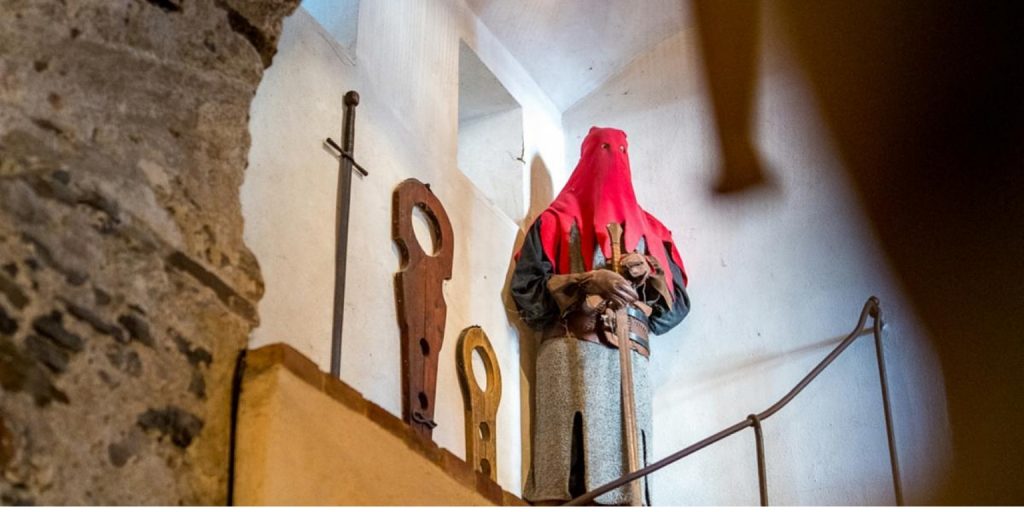
Unveiling the Mechanisms of Pain: A Modern Exposition
The Torture Museum in Český Krumlov is a relatively modern attraction, established to cater to the significant tourist interest in medieval history and its more macabre aspects. While the exact opening date can be elusive, it emerged as part of the town’s broader efforts to capitalize on its historical charm in the post-communist era, likely in the late 1990s or early 2000s. It is strategically located within the labyrinthine cellars beneath the town’s historic buildings, its subterranean setting adding to the eerie atmosphere.
The museum’s primary focus is to showcase over 100 authentic and reconstructed instruments of torture and interrogation used throughout Europe from the late Middle Ages to the early modern period. It presents these devices not just as isolated objects, but often accompanied by detailed explanatory texts, illustrations, and sometimes wax figures depicting their supposed use. This aims to provide context and demonstrate the methods by which confessions were extracted, punishments meted out, and order maintained in a less enlightened era.
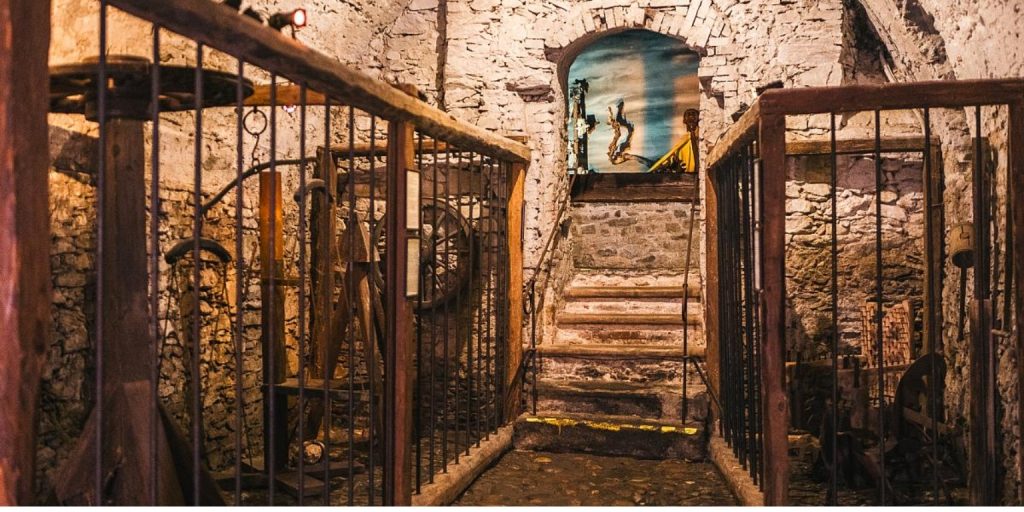
A Collection of Unsettling Relics
Walking through the dimly lit, vaulted chambers of the Torture Museum in Český Krumlov is an immersive, if unsettling, experience. Visitors encounter a wide array of devices, some instantly recognizable from historical accounts or popular culture, others more obscure:
- The Rack: A classic instrument designed to dislocate joints and stretch the body.
- Iron Maidens: Though largely a popular myth as a common medieval torture device, the museum often features a representation due to its iconic status.
- Stretching Benches and Tables: Used for various forms of physical torment.
- Pillories and Stocks: Devices for public humiliation and restraint.
- Thumb Screws and Leg Vices: Instruments for crushing extremities.
- Chairs of Interrogation: Often studded with spikes or heated.
- The Heretic’s Fork: A device designed to prevent sleep.
- Scold’s Bridles and Cages: Used for societal control, particularly for women accused of gossip or nagging.
Beyond the physical instruments, the museum often includes sections detailing methods of execution, such as various forms of hanging, beheading, and burning, alongside explanations of judicial processes, witch trials, and the role of confession in medieval legal systems. Sound effects, like groans and eerie music, are often employed to enhance the immersive (and unsettling) atmosphere, a common feature in such niche museums.
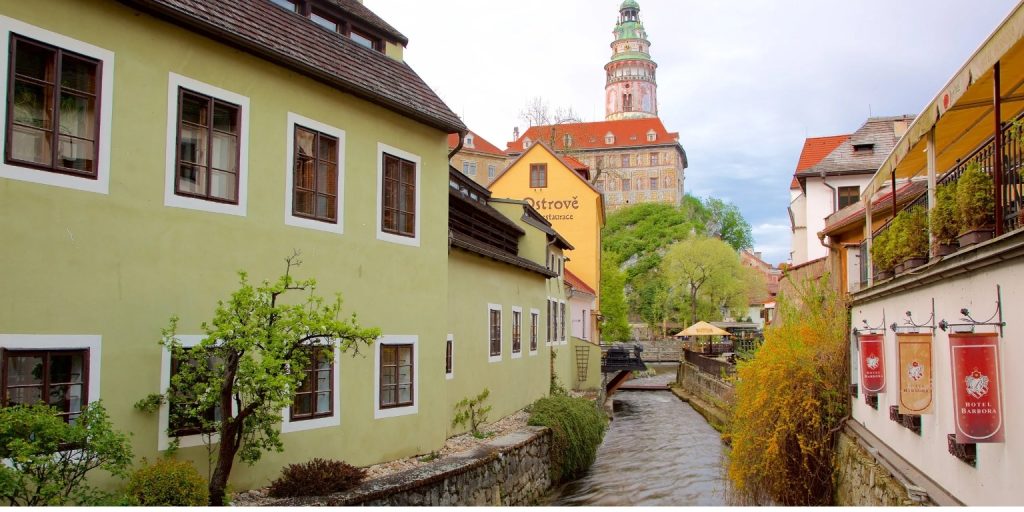
Historical Context in a Medieval Town
Český Krumlov itself, with its medieval castle and well-preserved townscape, provides a compelling backdrop for a museum exploring the Inquisition and torture. The region of Bohemia, like much of Europe, experienced periods of intense religious and political strife, during which such methods were certainly employed by both secular authorities and the Church. While the museum doesn’t focus exclusively on Český Krumlov’s specific judicial history, it places the instruments within the broader context of European medieval law enforcement.
It implicitly highlights how these brutal practices were considered legitimate tools for maintaining social order, suppressing dissent, and rooting out perceived heresy or criminality in a time vastly different from our own. The museum serves as a chilling reminder of the absence of modern human rights concepts and due process.
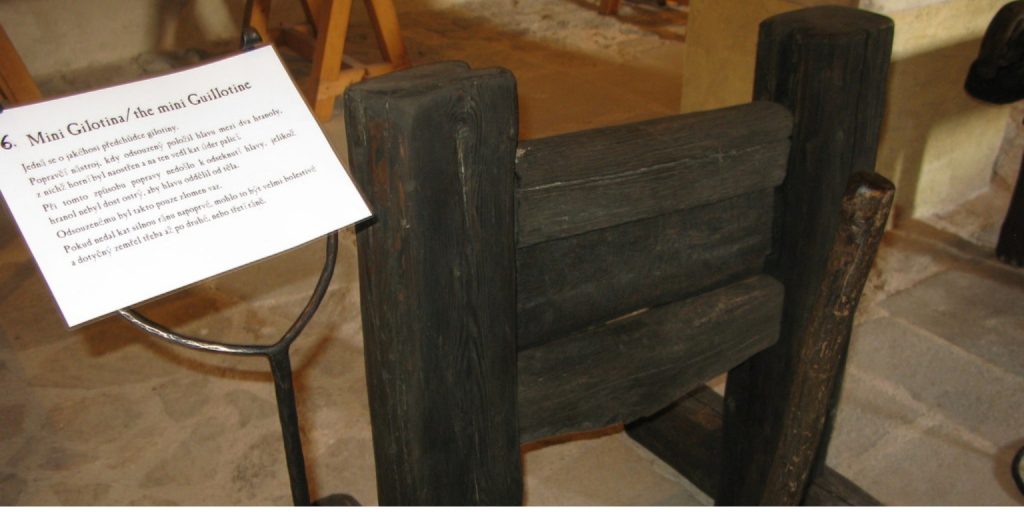
Education or Exploitation? A Point of Discussion
Like many “torture museums” globally, the Torture Museum in Český Krumlov occasionally faces questions regarding its balance between historical education and morbid fascination. Critics sometimes argue that such museums can sensationalize suffering or lack sufficient scholarly depth. However, proponents emphasize their role in illustrating a grim but real part of human history, prompting reflection on justice, power, and the importance of safeguarding human dignity.
Ultimately, the Torture Museum in Český Krumlov, established in the late 1990s/early 2000s, offers a compelling, if disturbing, experience for those interested in the darker aspects of medieval European history. It stands as a unique, tangible link to the harsh realities of justice in a bygone era, providing a stark contrast to the fairy-tale charm of Český Krumlov’s surface.