
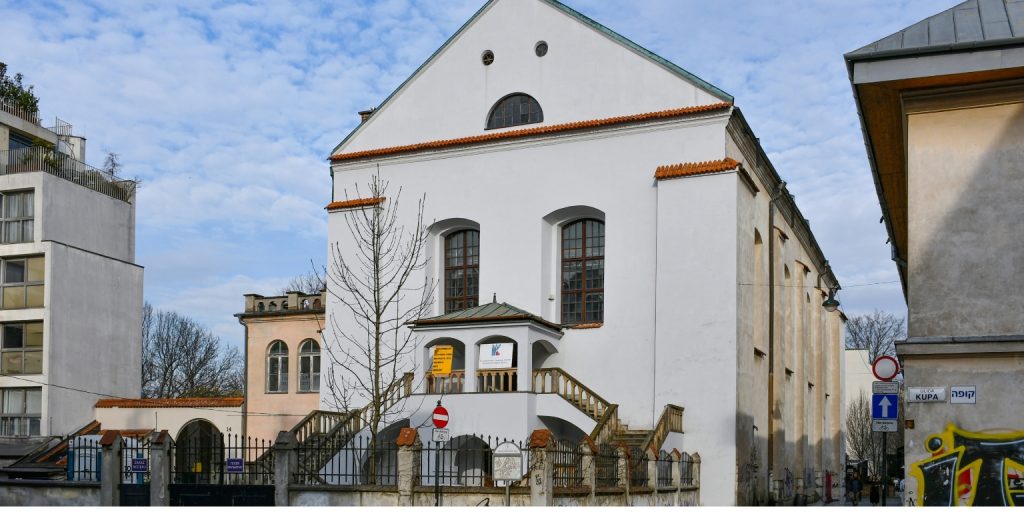
In the historic heart of Kazimierz, Krakow’s former Jewish Quarter, stands the magnificent Synagogue of Isaac Jakubowicz. Also widely known as the Izaak Synagogue, or simply Isaac Synagogue, this impressive edifice is not only the largest and arguably one of the most beautiful synagogues in Krakow but also a powerful testament to the city’s rich Jewish heritage, its periods of flourishing, and its tragic destruction. Visiting the Synagogue of Isaac Jakubowicz in Krakow offers a profound encounter with centuries of Jewish life and resilience.
A Grand Commission from “Isaac the Rich”
The Synagogue of Isaac Jakubowicz was built between 1638 and 1644. It was commissioned and financed by Isaac Jakubowicz (also known as Izaak Jakubowicz or “Isaac the Rich”), a highly influential and affluent Jewish merchant, financier, and banker to King Władysław IV Vasa. Jakubowicz was a prominent Elder of the Jewish Community (kahal) in Kazimierz for much of his life, a testament to his standing and influence. The synagogue was designed by the renowned Italian architect Francesco Olivierri (sometimes attributed to Giovanni Battista Trevano), who brought the burgeoning Baroque style to the traditional Jewish district.
The construction of such a grand synagogue, especially by a Jewish patron, faced initial opposition from some Catholic Church officials. There were concerns about its prominent location and beauty, with one parish priest even arguing that its presence on a street where Christians lived would be problematic. However, Jakubowicz, with his wealth and connections to the King and Bishop, eventually secured the necessary permissions, allowing the completion of this architectural masterpiece. A popular legend, reflecting Jakubowicz’s rise from poverty to immense wealth, tells of him discovering a treasure after a dream, which enabled him to build the synagogue and establish his banking empire.
Architectural Splendor and Enduring Beauty
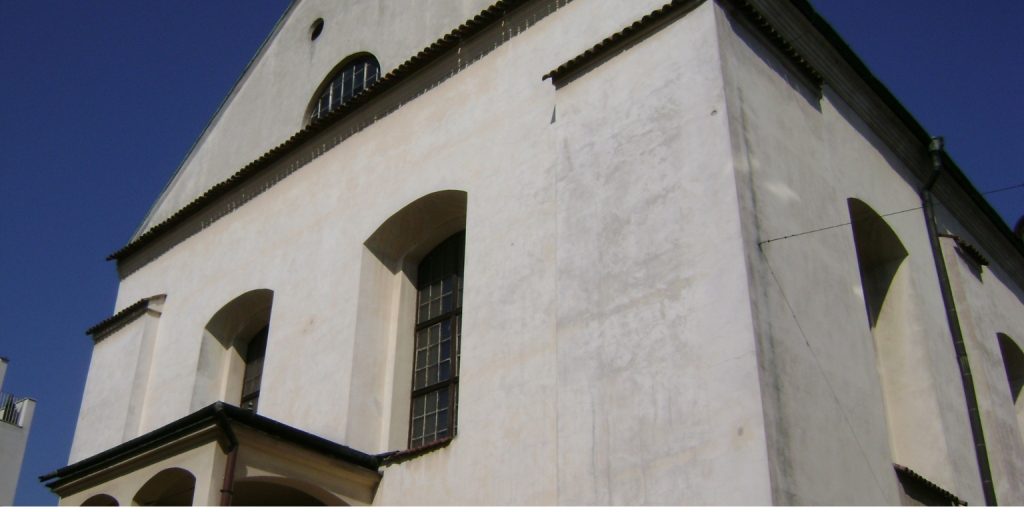
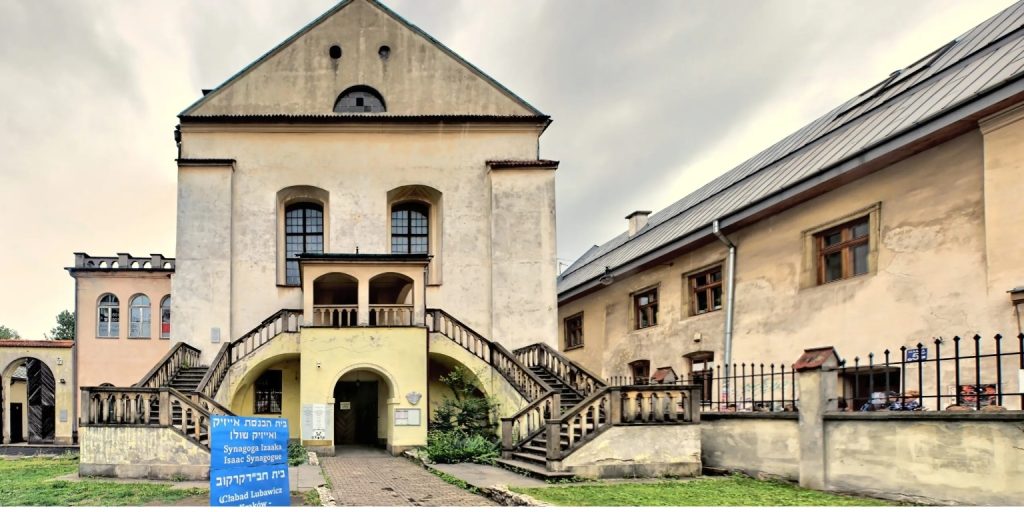
The Synagogue of Isaac Jakubowicz in Krakow is celebrated for its imposing Baroque architectural style, a departure from the more traditional, often fortified, synagogues of earlier periods. Its monumental exterior, while relatively austere, features raised semicircular windows and a grand Baroque portal on Izaaka Street.
The interior, however, is where its true splendor lies. The main prayer hall is a vast, rectangular space, topped by a soaring barrel vault ceiling, approximately 14 meters (46 feet) high. This vault is adorned with intricate Renaissance-style stucco work, featuring painted frames, wreaths, and garlands. The walls of both the main prayer hall and the women’s section (located on a second-floor gallery, separated by an arcade) are embellished with painted liturgical texts and ornate decorative motifs. These 17th-century murals, partially revealed during post-war conservation efforts, offer a rare glimpse into the synagogue’s original beauty. The eastern wall notably preserves the image of a seven-branched menorah.
Before World War II, the synagogue boasted a widely admired, elaborate wooden Baroque Aron Kodesh (Torah ark), a central feature that was sadly destroyed during the Nazi occupation.
A History of Devastation and Revival
Like almost all Jewish sites in Poland, the Synagogue of Isaac Jakubowicz suffered immense devastation during World War II. During the Nazi occupation, the interior and furnishings, including the Bimah (the raised platform for Torah reading) and the Aron Kodesh, were systematically plundered and destroyed. The building itself was repurposed, serving as a theatrical workshop (where renowned Polish artist Tadeusz Kantor reportedly worked as a set painter), then as a warehouse, and later a sculpture and monument conservation workshop, and even a prop room for a theatre company.
After the war, with the Jewish community of Krakow decimated by the Holocaust, the synagogue remained largely disused and in a state of disrepair for decades. It suffered further damage from a fire in 1981. However, with the fall of communism in Poland in 1989, the building was finally returned to the Jewish community. Extensive renovation works commenced, restoring much of its former splendor.
Current Status and Significance
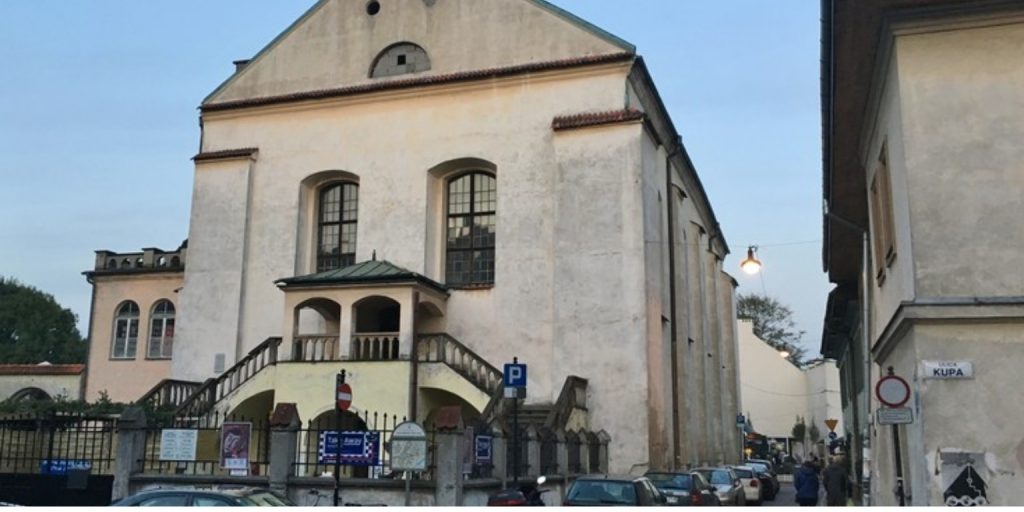
Today, the Synagogue of Isaac Jakubowicz in Krakow, located at Kupa Street 18 (or sometimes cited as 16 Kupa Street), serves a dual role. It is once again an active Orthodox Jewish synagogue, used by the Chabad-Lubavitch community for religious services. Simultaneously, it functions as a vibrant cultural and exhibition space, hosting various events, concerts, and educational projects dedicated to the history and culture of Kazimierz’s Jewish population. Documentaries about the district’s past are often screened here.
The Synagogue of Isaac Jakubowicz in Krakow, built by Isaac Jakubowicz in 1644 and designed by Francesco Olivierri, stands as a magnificent example of Baroque synagogue architecture. Its survival through centuries of tumult and its remarkable restoration make it a profoundly important landmark, offering a window into the enduring legacy of Jewish life and culture in Krakow.