
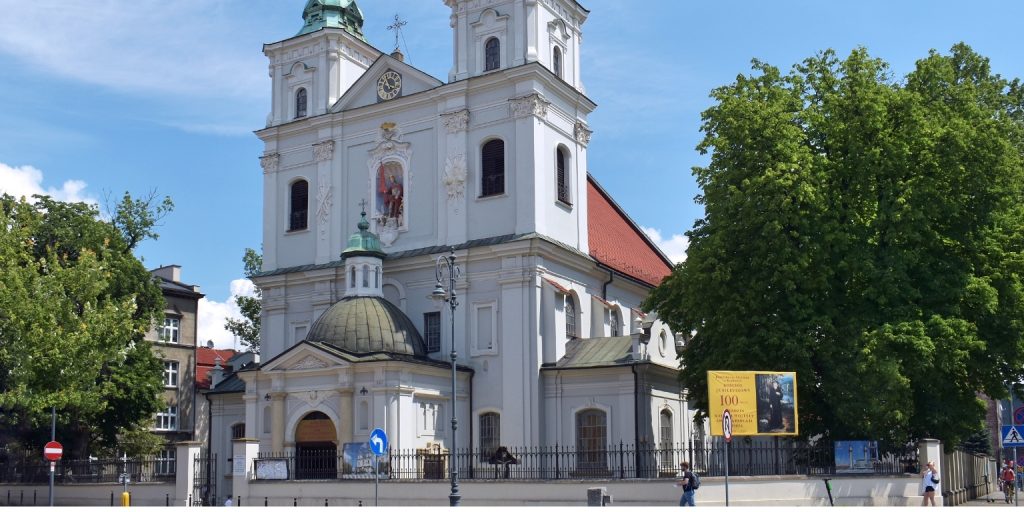
Standing proudly at the northern end of Krakow’s historic Royal Road, just beyond the formidable Florian Gate, the Church of Saint Florian (Kościół św. Floriana) is far more than just a parish church. It is a venerable landmark steeped in centuries of Polish history, intimately connected with royal processions, academic life, and the enduring faith of Krakow’s citizens. A visit to the Church of Saint Florian in Krakow offers a captivating journey through the city’s past, revealing layers of architectural evolution and profound cultural significance.
A Medieval Foundation with Royal Connections
The history of the Church of Saint Florian dates back to the 12th century. The first wooden church on this site was established around 1185 by Bishop Gedko, who brought the relics of Saint Florian, a Roman legionary martyr and patron saint against fire, to Krakow. This act was instrumental in establishing the site’s sacred importance.
The current stone structure began to take shape in the 13th century, built in a Romanesque style. Its strategic location was paramount: it stood just outside the city walls, at the very beginning of the Royal Road (Droga Królewska), the grand thoroughfare that led from the city’s northern entrance (the Florian Gate) through the Main Market Square (Rynek Główny) to Wawel Castle, the seat of Polish kings. For centuries, every new monarch entering Krakow for their coronation would ceremoniously stop at the Church of Saint Florian, process through its doors to receive a blessing, and then continue their journey to Wawel. This tradition cemented its status as a vital part of Polish royal protocol and national identity.

Architectural Evolution: From Romanesque to Baroque Splendor
Over its long history, the Church of Saint Florian in Krakow has undergone numerous transformations, reflecting changing architectural tastes and responding to the ravages of war and fire. While its origins are Romanesque, subsequent rebuilds and additions have endowed it with a rich tapestry of styles, predominantly Gothic and Baroque.
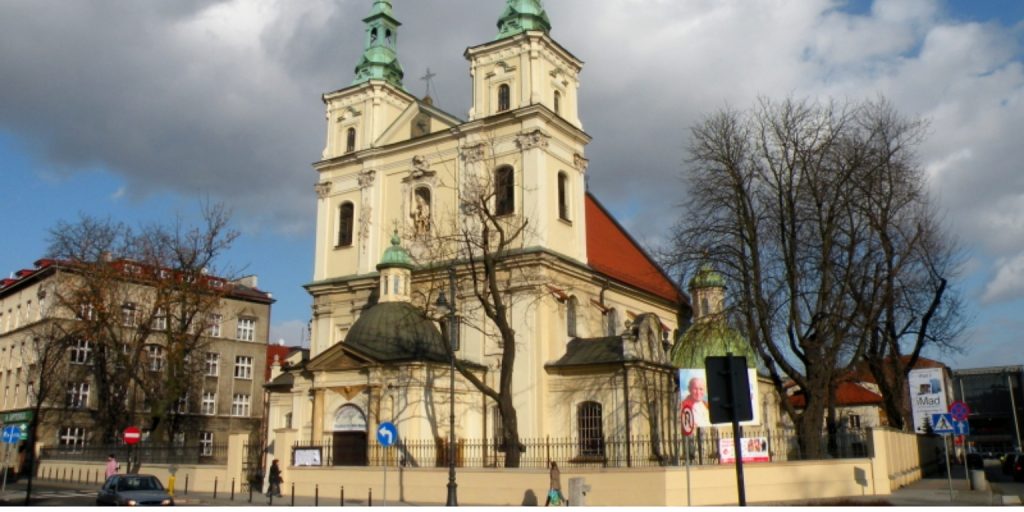
Major reconstructions occurred after the Mongol invasions in the 13th century and following a devastating fire in 1528, which significantly damaged much of Krakow. The church then acquired more prominent Gothic features, including its high naves and the characteristic pointed arches. The most significant Baroque transformations took place in the 17th and 18th centuries, particularly after the Swedish Deluge (1655-1660), when the church was largely rebuilt. The grand facade, with its twin towers and ornate decoration, exemplifies the mature Baroque style. The interiors were similarly adorned with magnificent altars, frescoes, and sculptures, creating a lavish and inspiring space for worship.
A Beacon for Academia and Community
Beyond its royal connections, the Church of Saint Florian has also played a crucial role in Krakow’s academic life. From the 15th century, it served as the parish church for the nearby Jagiellonian University, whose students and professors resided in the immediate vicinity. This close relationship fostered a vibrant intellectual and spiritual community around the church, contributing to Krakow’s reputation as a center of learning.
Moreover, the church is particularly significant in the life of Karol Wojtyła, who would later become Pope John Paul II. From 1949 to 1951, he served as a vicar at the Church of Saint Florian, teaching catechism and engaging deeply with the local youth community. A plaque commemorating his service can be found outside the church, highlighting this profound personal connection to one of the 20th century’s most influential figures.
Modern Day Significance
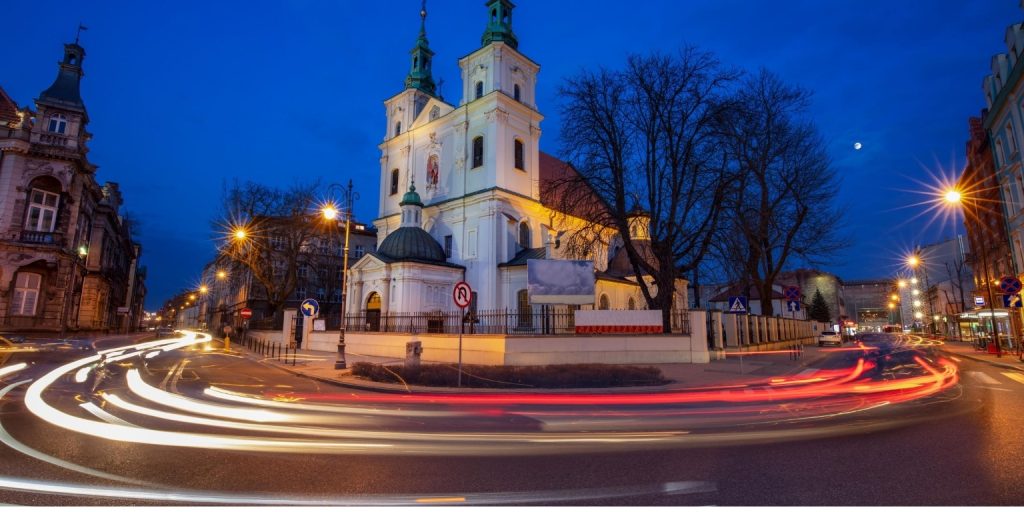
Today, the Church of Saint Florian in Krakow, located at Warszawska 1, remains an active and beloved Roman Catholic parish church. It continues to draw pilgrims, locals, and tourists alike, eager to admire its architectural beauty, trace the footsteps of kings, and feel the presence of centuries of faith. Its prominent position, marking the definitive northern entry to Krakow’s historical core, makes it an unmissable landmark for anyone exploring the city.
The Church of Saint Florian in Krakow, founded in the 12th century and shaped by Romanesque, Gothic, and particularly Baroque influences, stands as a majestic testament to Krakow’s royal heritage, its academic traditions, and the enduring faith of its people. Its strategic location at the start of the Royal Road and its fascinating history make it an indispensable site for understanding the soul of this ancient Polish city.