
In the enchanting Hanseatic city of Lübeck, a unique piece of folklore is literally set in stone. Adjacent to the magnificent St. Mary’s Church (Marienkirche), a large, rough-hewn boulder known as the “Devil’s Stone” (Teufelsstein) lies embedded in the ground. Marked by what are said to be the devil’s own claw prints, and now accompanied by a bronze statue of a cheeky, smiling devil, this intriguing landmark tells a centuries-old tale of divine ambition, human cunning, and a pact with the underworld that shaped Lübeck’s iconic skyline. A visit to the Devil’s Stone in Lübeck offers a whimsical glimpse into the city’s rich legends.
The Legend: A Bargain Struck for Souls
The legend of the Devil’s Stone is deeply intertwined with the construction of St. Mary’s Church, a monumental Brick Gothic masterpiece that began in 1250. As the story goes, when the industrious citizens of Lübeck were laying the foundations for their grand new church, the Devil himself appeared, curious about the enormous undertaking. Knowing of Satan’s aversion to places of worship, the terrified builders quickly concocted a clever lie. They told him they weren’t constructing a church, but rather the largest wine house (Ratsweinkeller or tavern) the world had ever seen – a place where countless souls would be easily lured to sin and damnation.
Delighted by this prospect, the Devil eagerly offered his formidable strength to speed up the construction. With his immense power, the walls of the basilica rose at an astonishing rate. However, as the building neared completion, the Devil began to notice certain architectural details – the rising spires, the absence of wine barrels, the clear signs of a sacred edifice – and realized he had been duped. Enraged by the trickery, he tore a massive boulder from the ground with his clawed hands, intending to hurl it at the nearly finished church and shatter it into pieces.
Just as he was about to unleash his destructive fury, a quick-witted worker, desperate to save their magnificent church, cried out, “Hold! We will build a tavern, just for you, right next to the church!” Pacified by this renewed promise of souls, the Devil dropped the stone precisely where he stood. The boulder landed with such force that it burrowed into the earth, leaving behind the distinct marks of his claws, visible to this day. The workers kept their word, and the Ratskeller zu Lübeck, the city’s famous wine cellar and restaurant, was indeed built directly opposite St. Mary’s Church, fulfilling the Devil’s end of the bargain.
A Tangible Piece of Folklore
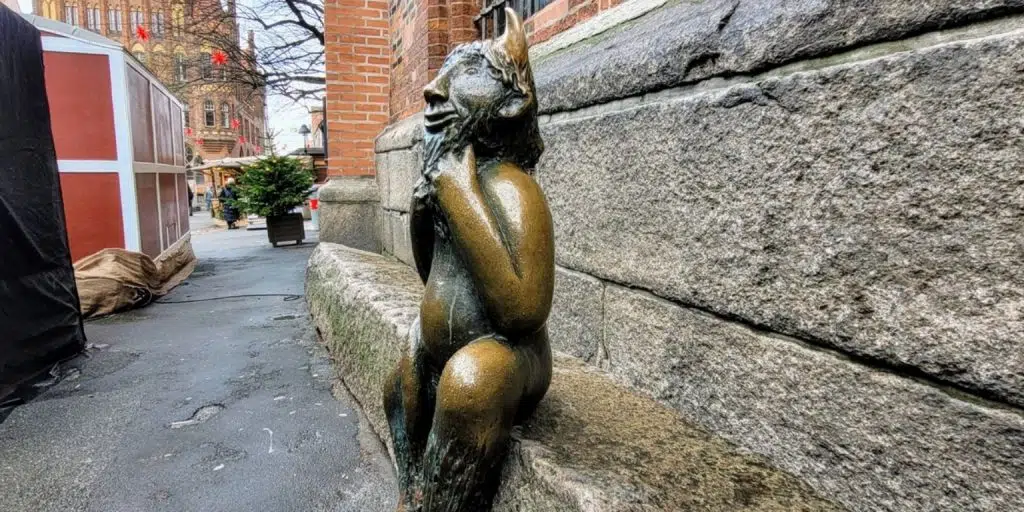
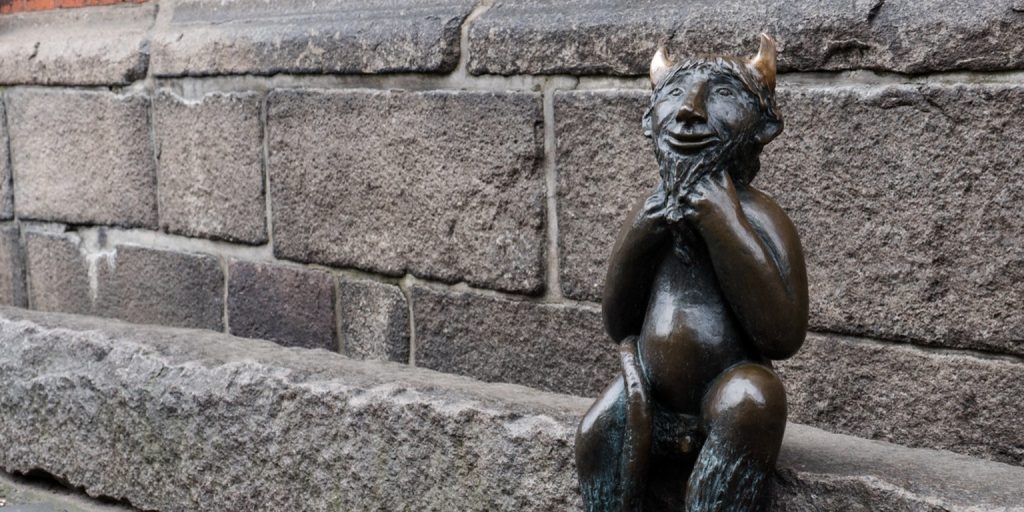
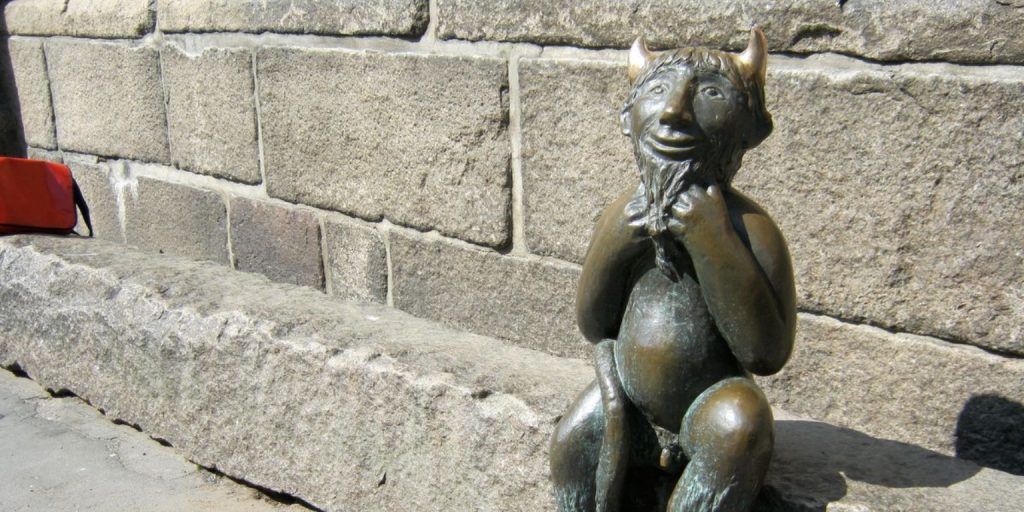
The Devil’s Stone in Lübeck is not merely a figment of folklore; it is a physical, glacial erratic boulder that lies on the ground on the south side of St. Mary’s Church (Marienkirchhof), near the western facade. In 1999, to further embrace and celebrate this beloved local legend, a bronze statue of the Devil was placed atop the stone. Sculpted by Rolf Goerler, this rendition of Satan is depicted with a knowing, somewhat mischievous smile, appearing content that his side of the ancient bargain has been honored.
The stone itself, often appearing weathered and ancient, invites visitors to touch it and examine the alleged claw marks, adding a tactile dimension to the legendary tale. It provides a unique counterpoint to the towering sacred architecture of St. Mary’s, blending the sacred with the profane in a distinctly Lübeckian manner.
Significance to Lübeck’s Heritage
The Devil’s Stone serves as a charming and accessible piece of Lübeck’s rich cultural heritage. It highlights the city’s long history, its architectural marvels, and the vibrant storytelling tradition that has been passed down through generations. For tourists, it’s a popular photo opportunity and an easy way to engage with the city’s unique character beyond its UNESCO World Heritage status and stunning Brick Gothic buildings. It exemplifies how local legends often intertwine with major historical constructions, giving them a colorful, mythical dimension.
The Devil’s Stone in Lübeck, with its captivating legend of a tricked demon and a promised tavern, stands as a delightful and enduring symbol of the city’s wit and resilience. Located prominently beside the majestic St. Mary’s Church, this boulder and its smiling bronze companion continue to charm visitors, ensuring that the tale of the Devil’s unintentional contribution to Lübeck’s grandeur lives on.