
In the historic heart of Oxford, a city synonymous with academia and ancient traditions, stands a landmark that revolutionized the very concept of a museum. The University Ashmolean Museum in Oxford, founded in 1683, holds the distinction of being Britain’s first public museum and the world’s first university museum. It is not merely a static collection of objects, but a dynamic institution that tells the story of human creativity across millennia and cultures. From ancient civilizations to modern masterpieces, the Ashmolean is a treasure trove that invites visitors to embark on an extraordinary journey through time.
A Cabinet of Curiosities Becomes a Public Treasure
The story of the Ashmolean begins not with a grand vision, but with a curious collection. In the 17th century, the Tradescant family, famed gardeners and collectors, amassed a vast array of botanical, zoological, and ethnographic “rarities” in their museum, known as “The Ark.” This collection, a true cabinet of curiosities, was eventually inherited by Elias Ashmole, a prominent antiquarian and alchemist. In 1683, Ashmole gifted this remarkable assortment to the University of Oxford, with the express condition that it be housed in a building that was open to the public.
This was a groundbreaking concept. At a time when museums were private collections accessible only to the wealthy and educated elite, Ashmole’s vision made art and knowledge available to everyone. The original Ashmolean building on Broad Street (now the History of Science Museum) was a revolutionary space, a center for scientific study, lectures, and public display. The foundational principle remains the same today: that knowledge of humanity, spanning different cultures and times, is vital for a thriving society.
A Global Journey Through Art and Archaeology
The University Ashmolean Museum houses a breathtakingly diverse collection, organized across four major departments: Antiquities, Eastern Art, Western Art, and the Heberden Coin Room. Its galleries take visitors on a global tour, from the ancient world to the present day.
Among the Ashmolean Museum’s many treasures are objects of immense historical and artistic significance. The Alfred Jewel, a magnificent Anglo-Saxon piece of craftsmanship, is a powerful link to King Alfred the Great. The Egyptian and Sudanese galleries hold one of the most important collections of pre-dynastic sculpture and ceramics outside Cairo, including well-preserved mummies. For lovers of fine art, the Ashmolean possesses the world’s greatest collection of drawings by Raphael, offering an intimate look at the genius of the Renaissance master.
The museum’s collections also include works by Michelangelo, Leonardo da Vinci, and J.M.W. Turner, as well as objects from ancient Greece and Rome, Mesopotamia, and Islamic civilizations. The collections are constantly evolving, with new acquisitions and temporary exhibitions ensuring there is always something new to discover.

Architecture, Innovation, and Accessibility
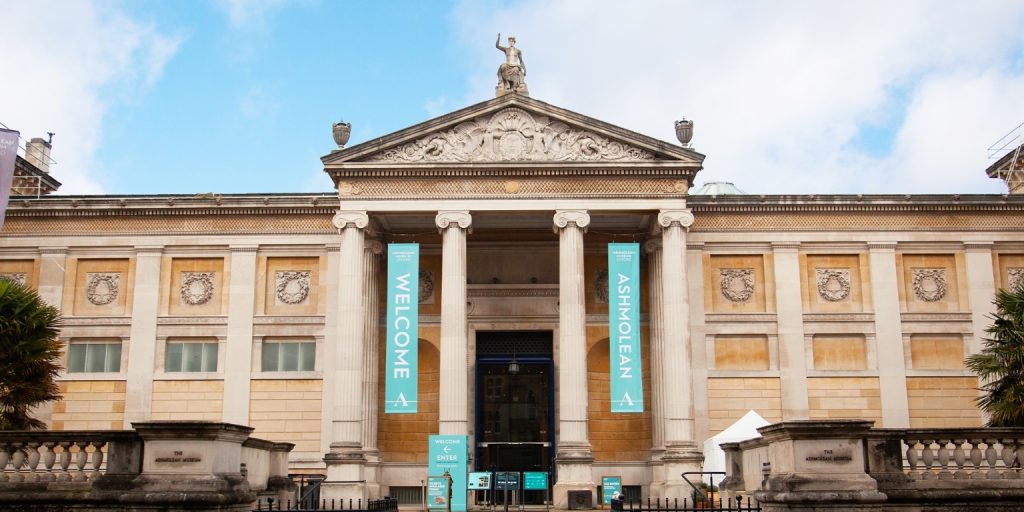
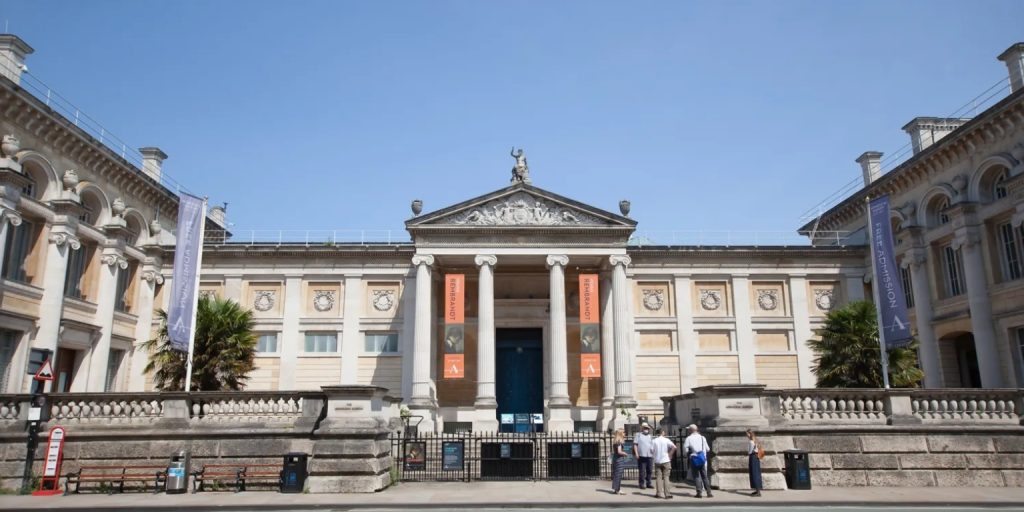
The current building of the University Ashmolean Museum, a grand neoclassical structure on Beaumont Street, was built in 1845. It was the result of the need for more space to house the burgeoning collections. A major refurbishment, completed in 2009, brought the museum into the 21st century. The renovation, designed by architect Rick Mather, created a stunning, modern interior with new galleries, a rooftop restaurant, and state-of-the-art facilities.
This transformation was not just aesthetic; it was about accessibility. Today, the Ashmolean is fully accessible to all visitors, with ramps, lifts, and free admission to its permanent collections. While special exhibitions may be ticketed, the doors of the main museum are open to everyone, a nod to Elias Ashmole’s original vision.
The Ashmolean is not just a place to see history—it is a place to engage with it. It stands as a vital link between the academic rigor of the university and the intellectual curiosity of the wider world, a true testament to the power of art and artifacts to connect us to our shared human story.