
Within the soaring Gothic nave of the Saint-Pierre-et-Saint-Paul Cathedral in Nantes, a singular work of art captures the imagination of every visitor. While the cathedral itself is a testament to centuries of faith and French craftsmanship, it is a specific detail on one of its most important monuments that truly stands out: a double-faced statue that serves as a profound allegory of wisdom and time. This remarkable sculpture, representing the cardinal virtue of Prudence, is a centerpiece of the magnificent Tomb of Francis II, Duke of Brittany, and a masterpiece of early French Renaissance art.
A Tomb of Imperial Grandeur
To find the statue, one must seek out the majestic Tomb of Francis II and his second wife, Marguerite de Foix, located in the southern transept of the cathedral. This monumental work was commissioned by their daughter, the legendary Anne of Brittany, who would go on to become Queen of France. Executed in exquisite Carrara marble between 1502 and 1507, the tomb was designed by Jean Perréal and masterfully sculpted by the great artist Michel Colombe and his workshop. It is widely considered to be one of the finest funerary monuments in Europe, combining the refined detail of the late Gothic style with the emerging aesthetics of the Renaissance.
The tomb is a grand sarcophagus upon which the life-sized recumbent effigies, or gisants, of the Duke and Duchess rest in eternal prayer. At each of the four corners stand imposing statues representing the four cardinal virtues: Justice, Courage, Temperance, and, most famously, Prudence. Each of these figures is a work of art in itself, but the statue of Prudence holds a unique and powerful symbolism that draws the eye and sparks deep reflection.
The Two Faces of Prudence
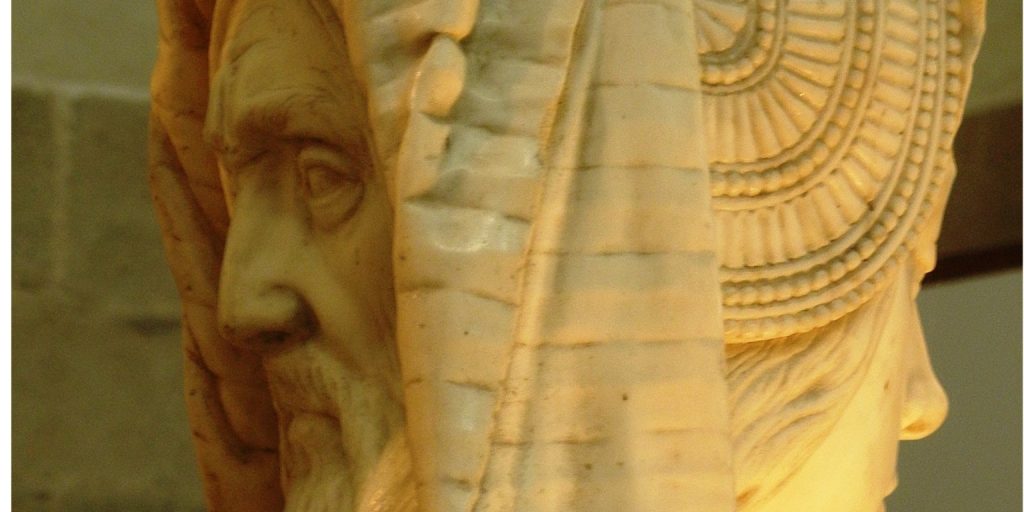
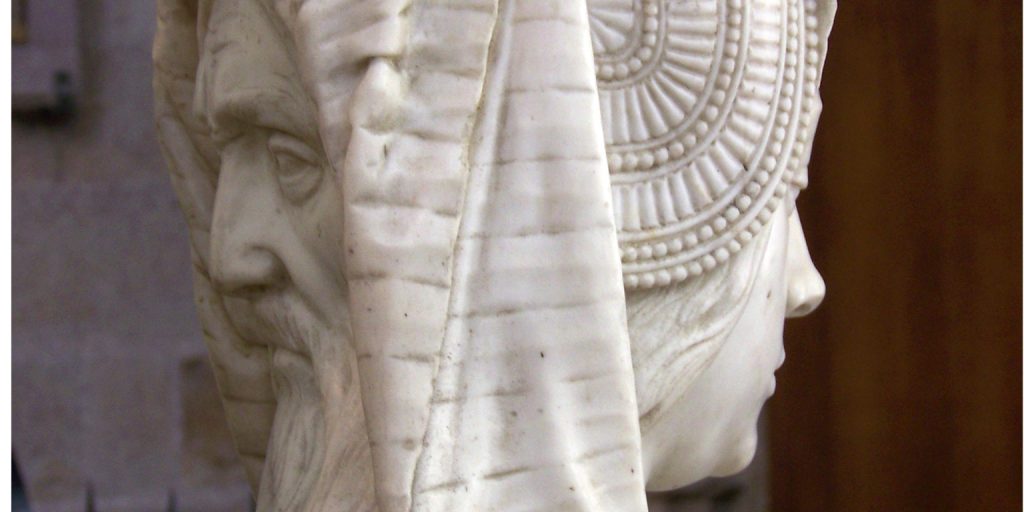
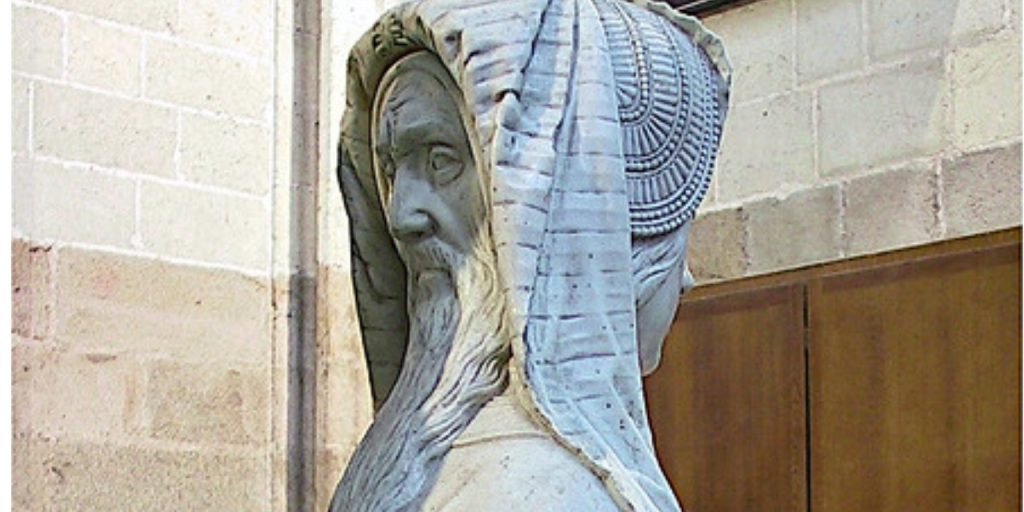
The Double-Faced Statue is the allegorical personification of Prudence. She is depicted as a beautiful young woman, gazing forward with a calm and discerning expression. In her left hand, she holds a mirror, a classic symbol of self-knowledge and truth, while at her feet, a snake slithers—a biblical symbol of cautious wisdom (“Be ye therefore wise as serpents”).
What makes this statue truly exceptional, however, is the second face. Peering out from the back of her head, hidden beneath her veil, is the deeply wrinkled, bearded face of an old man. This masterful and surprising detail is the key to understanding the virtue she represents. The young woman looks to the future, representing foresight and sound judgment, while the old man, with his face turned to the past, embodies experience and the wisdom gained from reflection.
This duality perfectly encapsulates the Renaissance ideal of a prudent ruler, who must make decisions with both a clear vision for the future and a deep respect for the lessons of history. It is a powerful message for the powerful, and a deeply moving piece of art for all who contemplate it.
A Legacy of Survival
The Tomb of Francis II and its double-faced statue have had a tumultuous history, mirroring the political upheavals of France. Originally located in the chapel of the Carmelites, the tomb was dismantled and hidden during the French Revolution to save it from the widespread destruction of religious monuments. It was later meticulously reassembled and moved to its present place in the cathedral in 1817.
Today, the Double-Faced Statue continues to stand as a highlight of the city’s cultural heritage, drawing thousands of visitors each year to marvel at its intricate detail and its timeless message. It is a monument that not only honors the memory of a duke but also serves as a beautiful and enduring meditation on the nature of wisdom itself. A visit to the Saint-Pierre-et-Saint-Paul Cathedral is incomplete without spending time to ponder this unique and enigmatic work, a true masterpiece of early French Renaissance sculpture.
Further reading on Wikipedia: Tomb of Francis II, Duke of Brittany