
Bear Park is not just a park. The bear’s association with Bern dates back to the city’s founding. According to a popular legend, in 1191, Duke Berchtold V of Zähringen, the city’s founder, vowed to name his new settlement after the first animal he killed during a hunt in the surrounding forest. That animal was a bear, and thus, the city was named Bern. Whether entirely true or not, the bear has been the central figure on the city’s coat of arms and flag for centuries, appearing as early as the 13th century. This historic link is celebrated and maintained to this day through the tradition of keeping live bears.
The first documented record of bears being kept in Bern dates to 1513, when Bernese soldiers returned from the Battle of Novara with a live bear as a trophy of war. For centuries, bears were kept in various enclosures throughout the city, including a public pit at the aptly named Bärenplatz (Bear Plaza). In 1857, the bears were moved to their current, more permanent location at the eastern edge of the Old Town, next to the Nydegg Bridge. This became the famous Bärengraben, a traditional, open-air pit that for over 150 years served as a major tourist draw.
From Pit to Park: A Modern Transformation
By the late 20th century, the traditional concrete pit, despite renovations, was increasingly seen as an outdated and inadequate habitat for the bears. Concerns from animal welfare advocates and changing public sentiment led to a major transformation project. In 2009, the BärenPark (Bear Park) was officially opened, marking a new chapter in the history of Bern’s bears.
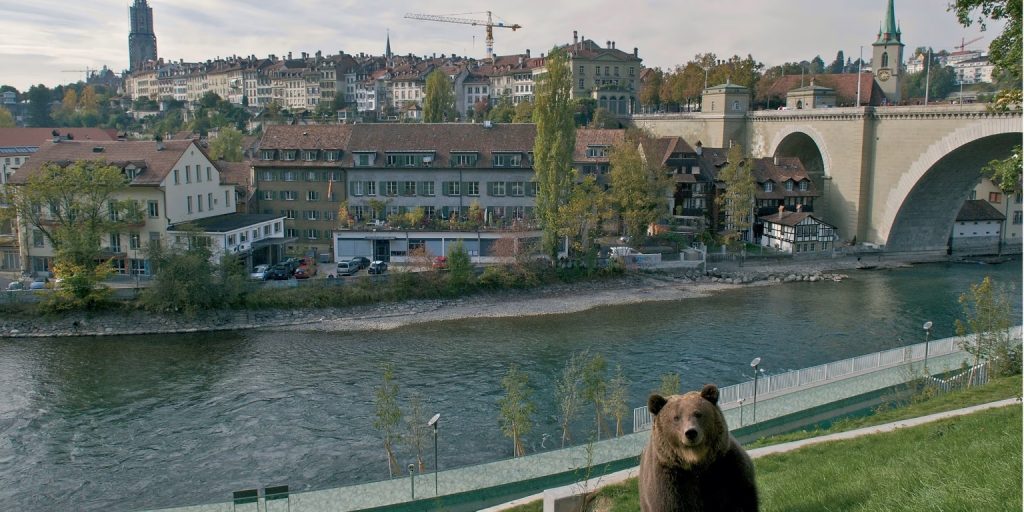
The new park is a vast, 6,000-square-meter enclosure that spans the hillside from the old pit down to the banks of the Aare River. It is a state-of-the-art facility designed to mimic the bears’ natural habitat, complete with trees, shrubs, caves, and a large pool where they can swim and play. The original Bear Park, a federally recognized cultural heritage site of national significance, was integrated into the new park and now serves as a part of the extended habitat. The bears can freely roam between the historic pit and the new, expansive park via a tunnel, offering them significantly more space and a richer environment.

Visiting the BärenPark Today
Today, the Bear Park is a prime example of modern urban wildlife management and a top tourist attraction. Visitors can observe the bears—currently home to a family of brown bears—from various viewing platforms and a pedestrian lift that provides easy access for all, including those with mobility challenges. The park is open year-round and admission is free, allowing anyone to stop by and watch the bears forage, nap in the sun, or take a cooling dip in the Aare River.
The park not only serves as a home for the bears but also as an educational center. Informational displays throughout the park detail the history of Bern’s bears and highlight the importance of conservation. It’s a place where history, culture, and nature intersect, offering a unique and memorable experience in the heart of the city. The Bear Pit, now a vital part of the much-improved BärenPark, continues to honor the enduring symbol of Bern while ensuring the well-being of its beloved residents.