
Table of Contents
Located within the Palazzo Reale (Royal Palace) in Palermo, the Cappella Palatina is an extraordinary chapel renowned for its breathtaking mosaics and its remarkable blend of artistic styles. Commissioned by King Roger II in 1132, this sacred space stands as a symbol of the rich cultural and religious fusion that defined Norman Sicily.
The Story Behind the Chapel
The Cappella Palatina was commissioned as the royal chapel of the Norman kings, emphasizing their authority and divine right to rule. Its creation coincided with Sicily’s golden age, a time when the island was a melting pot of cultures, and the art of governance embraced contributions from diverse traditions. The chapel’s unique architectural and artistic features reflect the harmonious coexistence of Byzantine, Islamic, and Western Christian influences.
A Mesmerizing Interior
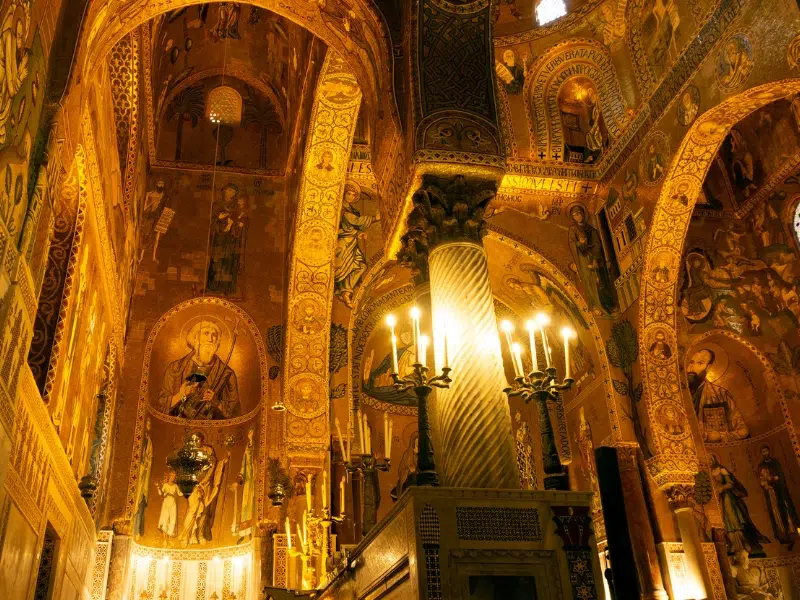
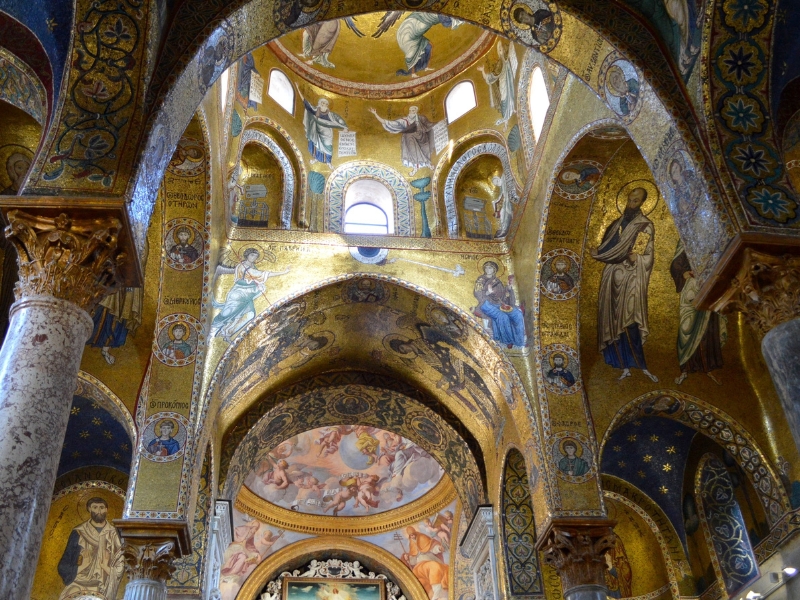
Stepping into the Cappella Palatina is like entering a world of gold and light. The walls, dome, and apses are adorned with Byzantine mosaics, created by master artisans. These mosaics depict key biblical stories, including scenes from the Old and New Testaments. The figures of saints, angels, and apostles are rendered in meticulous detail, their expressions capturing both majesty and spirituality.
The centerpiece of the chapel is the depiction of Christ Pantocrator in the central dome. Surrounded by angels and prophets, this iconic image exudes serenity and power, embodying the divine authority of Christ. Beneath the mosaics, the lower sections of the walls feature marble panels and inlays, creating a harmonious contrast to the golden splendor above.
Architectural Marvel
The chapel’s architecture is a brilliant representation of the Arab-Norman style, which developed as a result of the cultural exchange during Norman rule. The pointed arches, Islamic calligraphy, and Byzantine mosaics blend seamlessly with Romanesque structural elements, reflecting the multicultural environment of 12th-century Sicily.
The floor of the chapel is a mosaic of marble tiles, arranged in intricate geometric patterns. The ambo (pulpit), altar, and bishop’s throne are richly decorated, combining marble and mosaic work to emphasize their religious and ceremonial importance.
One of the most extraordinary features of the Cappella Palatina is its muqarnas ceiling, a hallmark of Islamic art. The ceiling’s intricate carvings form honeycomb-like stalactites, painted with scenes of daily life, animals, and geometric patterns. This wooden masterpiece, crafted by Arab artisans, demonstrates the integration of Islamic artistry into the chapel’s design, creating a truly unique visual experience.
Visiting the Cappella Palatina
As one of Palermo’s most famous attractions and a UNESCO World Heritage Site, the Cappella Palatina is a must-visit destination. Its intimate size, combined with its extraordinary artistic and historical significance, ensures that visitors leave with a sense of awe and wonder. Guided tours provide deeper insights into its history, design, and symbolism, making every visit a memorable journey into Sicily’s past.
The Cappella Palatina remains one of the finest examples of medieval art and architecture, offering a glimpse into a time when Palermo stood at the crossroads of civilizations.

Cappella Palatina is part of Palermo scavenger hunt and walking tour!
Embark on an unforgettable journey through the enchanting city of Palermo with World City Trail. Our interactive walking tour combines the thrill of exploration with the rich history and culture of this beautiful city.
Key Features:
Interactive gameplay: Solve engaging puzzles and challenges as you explore the city.
Hidden gems: Uncover lesser-known spots.
Cultural insights: Learn about the city’s fascinating history.
Flexibility: Explore at your own pace and create your own itinerary.
Family friendly activity and a great way to explore the city!
Further reading on Wikipedia: Palermo