
Table of Contents
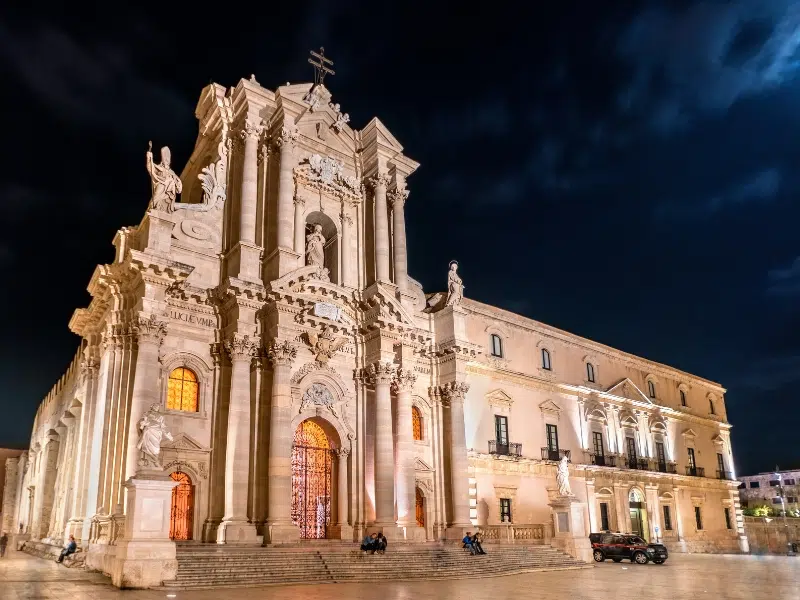
The Syracuse Cathedral (Duomo di Siracusa) is not just a place of worship—it is a living monument to the city’s incredible past, a seamless blend of Greek, Byzantine, Norman, and Baroque influences that narrate the story of Syracuse’s transformation over the centuries. Located at the heart of Ortigia, this awe-inspiring structure is a testament to resilience, adaptation, and artistic mastery, making it one of the most extraordinary cathedrals in Sicily.
From Temple to Basilica
The roots of the Syracuse Cathedral trace back to the 5th century BC, when it was originally built as a Doric temple dedicated to Athena by the ancient Greeks. The temple, commissioned by Tyrant Gelon after his victory at the Battle of Himera, stood as a grand tribute to the goddess of wisdom, its towering columns visible from the sea as a beacon of power and devotion.
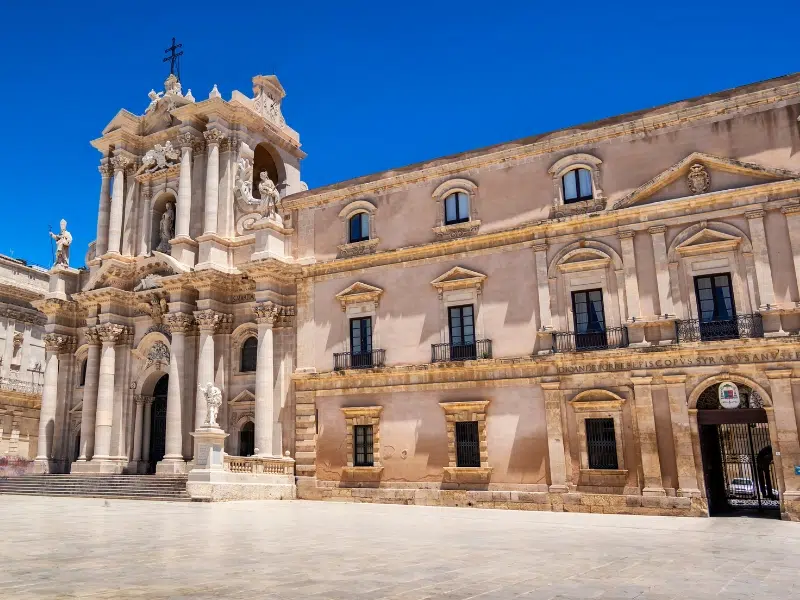
During the 7th century AD, as Christianity spread across the region, the temple was repurposed into a Christian basilica. Rather than demolishing the existing structure, the early builders incorporated the original Doric columns into the church’s walls, symbolizing the transition from pagan worship to Christianity. Today, visitors can still see these massive columns embedded within the cathedral’s side walls, a striking reminder of its ancient origins.
A Tapestry of Architectural Styles
Over the centuries, the Syracuse Cathedral evolved, each era leaving its artistic imprint on the building. The Byzantines added intricate mosaics and fortified the structure, while the Normans in the 11th century reinforced it further with defensive elements, transforming it into a fortress-like church.
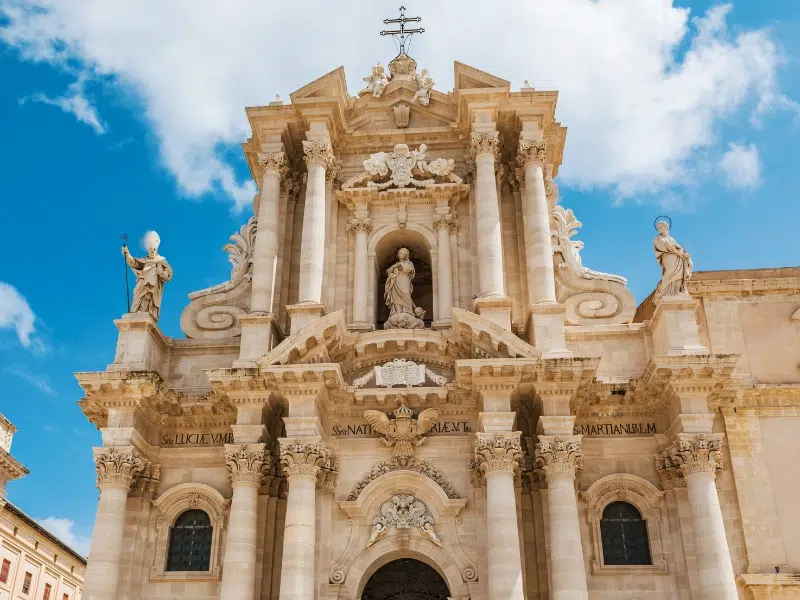
The most striking transformation came in the 18th century, after a devastating earthquake in 1693 prompted a grand Baroque renovation. Architect Andrea Palma designed the stunning Baroque façade, a masterpiece of dramatic curves, elaborate statues, and intricate details, embodying the artistic splendor of the Sicilian Baroque period. The result is an architectural tapestry where ancient Greek solemnity meets Baroque theatricality, creating a cathedral unlike any other in Italy.
A Place of Worship and Community
Beyond its historical and architectural significance, the Syracuse Cathedral remains an active center of faith and community. It serves as a gathering place for religious ceremonies, cultural events, and local celebrations, deeply intertwined with the life of Ortigia’s residents.
Every year, the cathedral hosts festivals honoring Santa Lucia, the patron saint of Syracuse, whose relics are housed within the church. The devotion to Santa Lucia, celebrated with grand processions and candlelit vigils, further cements the cathedral’s role as the city’s spiritual heart.
A Symbol of Resilience and Adaptation
Throughout its long history, the Syracuse Cathedral has withstood earthquakes, invasions, and shifts in religious traditions, yet it remains a pillar of Syracuse’s identity. The ability of the building to adapt and transform over time reflects the resilience of the city itself, which has thrived under Greek, Roman, Byzantine, Arab, and Norman rule.
The very fact that 5th-century BC Greek columns stand side by side with Baroque embellishments and medieval elements tells a story of survival, reinvention, and cultural fusion. The cathedral is not just a relic of the past—it is a celebration of Syracuse’s enduring spirit.
Syracuse Cathedral is part of Syracuse scavenger hunt and walking tour!
Embark on an unforgettable journey through the enchanting city of Syracuse with World City Trail. Our interactive walking tour combines the thrill of exploration with the rich history and culture of this beautiful city.
Key Features:
Interactive gameplay: Solve engaging puzzles and challenges as you explore the city.
Hidden gems: Uncover lesser-known spots.
Cultural insights: Learn about the city’s fascinating history.
Flexibility: Explore at your own pace and create your own itinerary.
Family friendly activity and a great way to explore the city!
Further reading on Wikipedia: Syracuse, Sicily