
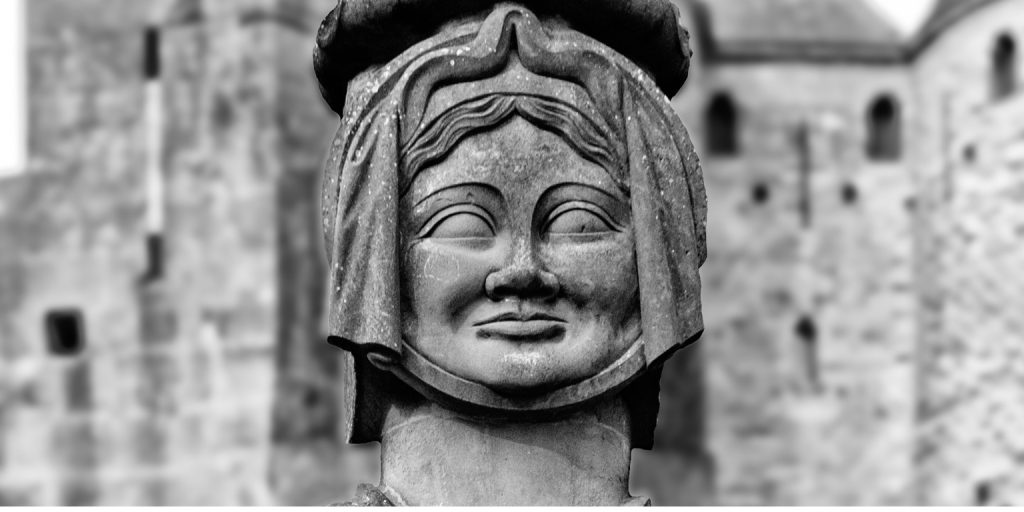
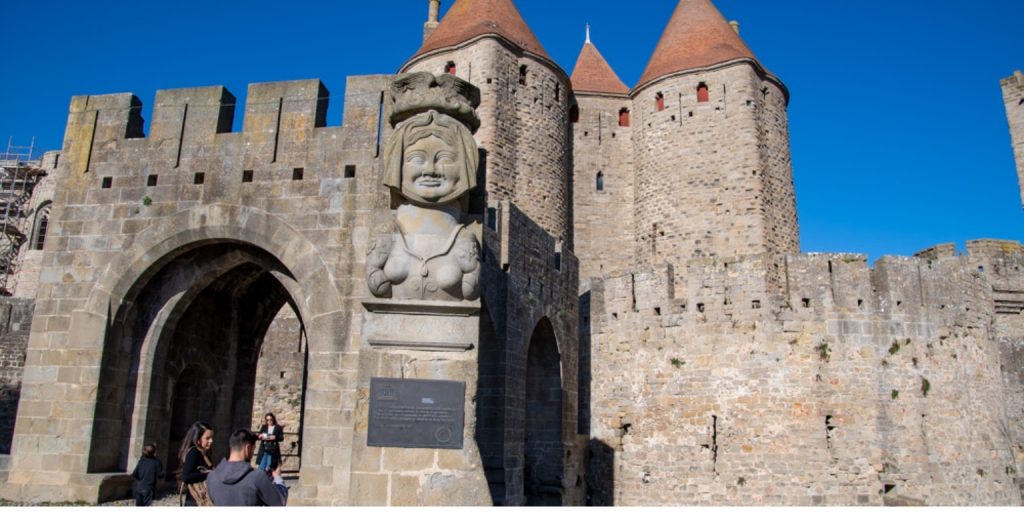
Perched majestically in the Languedoc region of Southern France, the medieval fortified city of Carcassonne is a breathtaking UNESCO World Heritage site, renowned for its double-walled ramparts and formidable towers. As visitors pass through the impressive Narbonnaise Gate, they are greeted by a striking bust of Dame Carcas, a legendary figure whose name is inextricably linked to the very origin of Carcassonne. While her story is steeped in folklore rather than documented fact, the tale of Dame Carcas embodies the city’s spirit of resilience and cunning.
The Legend Unfolds: A Siege and a Clever Ruse
The legend of Dame Carcas is an etiological story, meaning it explains the origin of the city’s name. It is typically set in the 8th century, during the tumultuous period of wars between the Christian Franks and the Muslim Saracens, who had established a foothold in parts of Southern France and the Iberian Peninsula.
According to the most popular version of the tale: The city of Carcassonne was under Saracen rule, led by King Balaak. His fortress faced a relentless siege by the vast Frankish army, commanded by none other than Charlemagne. The siege reportedly dragged on for five long years, pushing the city’s inhabitants to the brink of starvation. King Balaak eventually died during the prolonged conflict, leaving his courageous wife, Dame Carcas, to assume command of the city’s defense.
As supplies dwindled to a dire minimum – supposedly just one pig and a single sack of wheat – Dame Carcas devised a desperate, yet brilliant, ruse. She ordered the last pig to be fed the remaining wheat, fattening it up as much as possible. Then, in a dramatic gesture of defiance, she had the pig thrown over the city walls, directly into the Frankish camp. Upon impact, the pig’s belly burst open, revealing the wheat within.
When Charlemagne’s soldiers witnessed this, they were utterly bewildered. Believing that the inhabitants of Carcassonne had such abundant provisions that they could afford to waste precious livestock by feeding pigs with wheat and then discarding them, Charlemagne’s army concluded that the siege was futile and the city could withstand them indefinitely. Demoralized, the Frankish forces decided to lift the siege and withdraw.
Overjoyed by her success, Dame Carcas ordered all the bells of the city to be rung in celebration. As the bells pealed, one of Charlemagne’s officers allegedly exclaimed, “Carcas sonne!” (meaning “Carcas rings!” in French). This phrase, so the legend goes, became the name of the city: Carcassonne.
Fact Versus Fiction: The Historical Reality
While the legend of Dame Carcas is a captivating narrative and a powerful symbol, historians largely agree that it is a folk story rather than a historically accurate account. Several historical discrepancies challenge its veracity:
- Charlemagne’s Involvement: Historical records indicate that it was Charlemagne’s father, Pepin the Short, who actually besieged and conquered Carcassonne from the Saracens in 759 AD. Charlemagne would have been too young at the time, or not yet on the throne.
- City’s Name Origin: The name “Carcassonne” predates the 8th century. The site was known as “Carsaco” by the Romans in the 1st century BC, and its name evolved over time through various linguistic influences, not from a single event involving a ringing bell.
- Common Folklore Motif: The “trick with the last animal” is a common motif in siege folklore across many cultures, often attributed to various historical figures. One early example is the Greek Bias of Priene in the 6th century BCE, who used fattened mules to fool besiegers.
The legend of Dame Carcas likely emerged and was formalized in the 16th century, a period when many local foundational myths were being written down, perhaps to inspire patriotism or to explain place names. The well-known statue of Dame Carcas at the entrance to the Narbonnaise Gate is a 16th-century work (though the one seen today is a replica, the original is housed in the Château Comtal).

Enduring Symbolism and Modern Presence
Despite its mythical origins, the story of Dame Carcas resonates deeply with the spirit of Carcassonne. It symbolizes resilience, cleverness, and the courage of those who defended the seemingly impregnable fortress against overwhelming odds. She has become an iconic figure representing the city’s enduring strength and its rich, albeit sometimes embellished, history.
Today, the statue of Dame Carcas greets visitors as they enter the Cité, serving as a tangible link to this beloved legend. Her story is retold in tourist guides, local plays, and by guides, ensuring that the tale of the resourceful princess and the plump pig continues to charm and educate those who explore the magnificent walls of Carcassonne.