
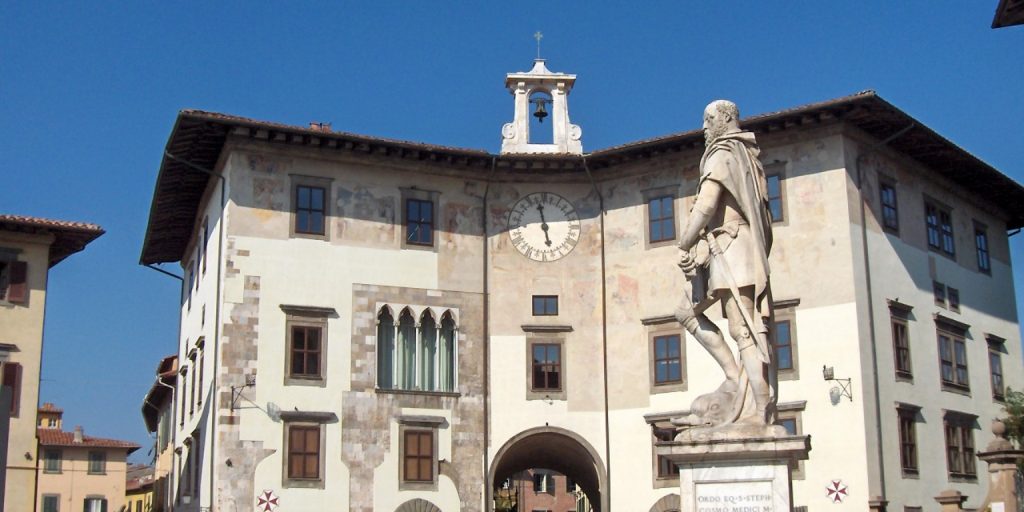
The current form of the Palazzo dell’Orologio in Pisa is the result of a brilliant piece of architectural ingenuity. The building was designed by the celebrated Renaissance artist and architect Giorgio Vasari in the late 16th century. Vasari’s task was to unify two existing medieval structures into one cohesive palace. The first was the old Palazzo del Capitano, a tower house that served as the seat of the city’s magistrates, showcasing typical medieval architectural elements such as sturdy stone walls and narrow windows. The second was the notorious Torre della Muda, also known as the ‘Tower of Hunger,’ which has its own dark history that reflects the tumultuous nature of medieval Pisa.
Some more History
This tower is the subject of one of the most chilling episodes in Italian history, immortalized by Dante Alighieri in the 33rd Canto of his Inferno. The tower was where Count Ugolino della Gherardesca, a Pisan nobleman accused of treason, was imprisoned in 1289 with his sons and grandsons. According to Dante’s powerful verses, they were locked in the tower and left to starve to death, a tragedy that has resonated through the ages, influencing art, literature, and even modern media. The tragic legend has haunted the building for centuries, and it is this dark story that gives the palace its haunting allure, attracting visitors who are intrigued by its historical significance.
Vasari’s Vision and the Clock’s Legacy
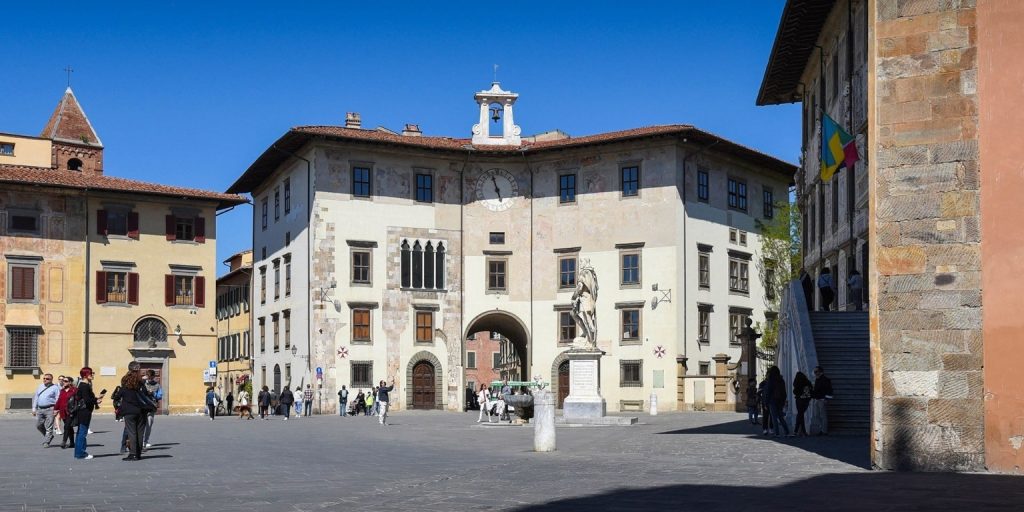
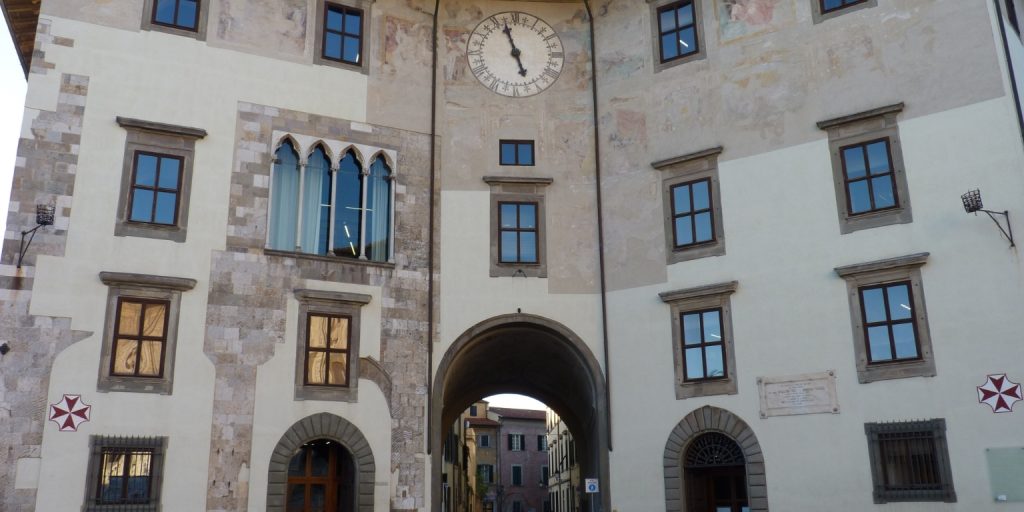
Vasari’s design for the Palazzo dell’Orologio brilliantly incorporates the two medieval towers with a central arch and a graceful facade. His architectural solution was to connect the two old structures with a passageway that gives the palace its unique appearance, perfectly centered by a clock that would later give the building its name. The clock, which was added in 1696, not only served a practical function but also brought the different parts of the building into a cohesive, elegant whole.
While the palace is a symbol of Renaissance architecture, its facade also features elements that reflect its later use and history. During the 20th century, a neo-Gothic window was added, and the building underwent renovations that honored its medieval origins while still maintaining its Vasarian elegance. The original frescos that once decorated its facade have largely faded, but their remnants hint at the beauty that once adorned this historic structure. Today, the palazzo is a public building and houses the library of the Scuola Normale Superiore di Pisa, a prestigious university renowned for its academic excellence and contributions to science and the humanities, making the palazzo a living monument of knowledge.
A Place of Learning and Legend
The Palazzo dell’Orologio serves as a vital link between Pisa’s ancient political struggles and its modern intellectual life. A small museum space within the palace is also dedicated to the tale, exploring its historical context and its immense influence on literature and art throughout the centuries. This connection to the past enriches the visitor’s experience and highlights the important role the palace has played in both history and culture.
While the palace’s interiors are generally not open to the general public, its facade and the view of the Piazza dei Cavalieri offer an immersive experience. The Palazzo dell’Orologio in Pisa is a powerful reminder that history is multilayered; it is a place where a famous tragic legend, a masterpiece of Renaissance architecture, and a modern institution of learning all coexist, telling a story that continues to fascinate and inspire.