
In the heart of Oxford’s historic core stands a building of immense academic and architectural significance: the Sheldonian Theatre. This elegant, classical structure is not merely a venue but the very heartbeat of the University of Oxford’s ceremonial life. As the first major work of the celebrated architect Sir Christopher Wren, it represents a revolutionary moment in English architecture, a departure from the Gothic tradition that had long defined the city. Named for its generous benefactor, this stunning theatre is where every Oxford student begins and ends their academic journey, and where visitors can ascend to witness one of the most breathtaking views in the city.
A Classical Vision from a Renaissance Mind
The Sheldonian Theatre was commissioned by Gilbert Sheldon, who served as Archbishop of Canterbury and was a former Warden of All Souls College. He sought to create a dedicated space for university ceremonies, a function that had previously taken place in the crowded and public University Church of St Mary the Virgin. To design this ambitious project, Sheldon turned to the young but brilliant astronomer and mathematician, Sir Christopher Wren, who would go on to rebuild London after the Great Fire of 1666.
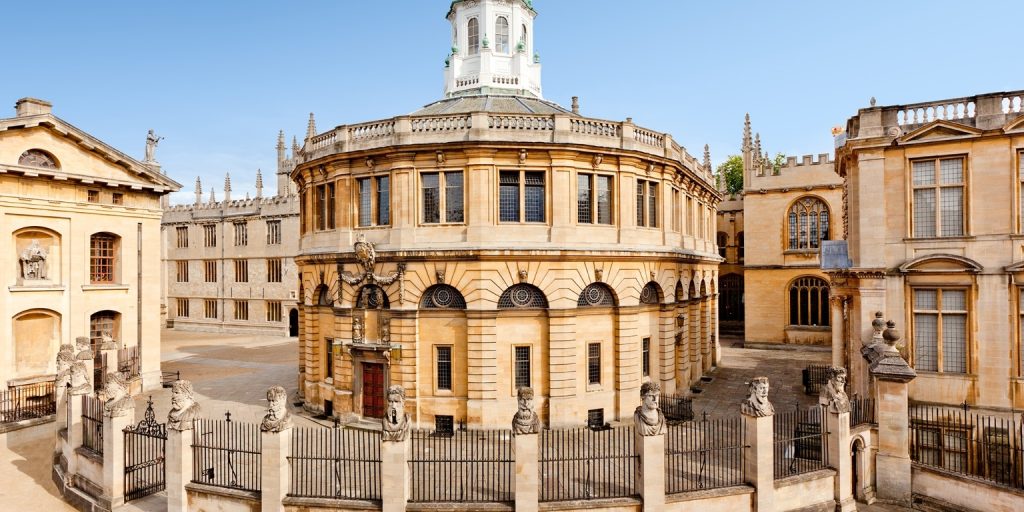
Constructed between 1664 and 1669, the theatre’s design was a radical departure for its time. Wren, inspired by a 16th-century engraving of the ancient Roman Theatre of Marcellus, designed a D-shaped, classical building. However, Roman theatres were open to the sky, a concept unsuited for the English climate. Wren solved this problem with a revolutionary engineering feat: a unique flat roof design that spanned the wide interior without a single supporting pillar, a feat previously thought impossible with timber beams.
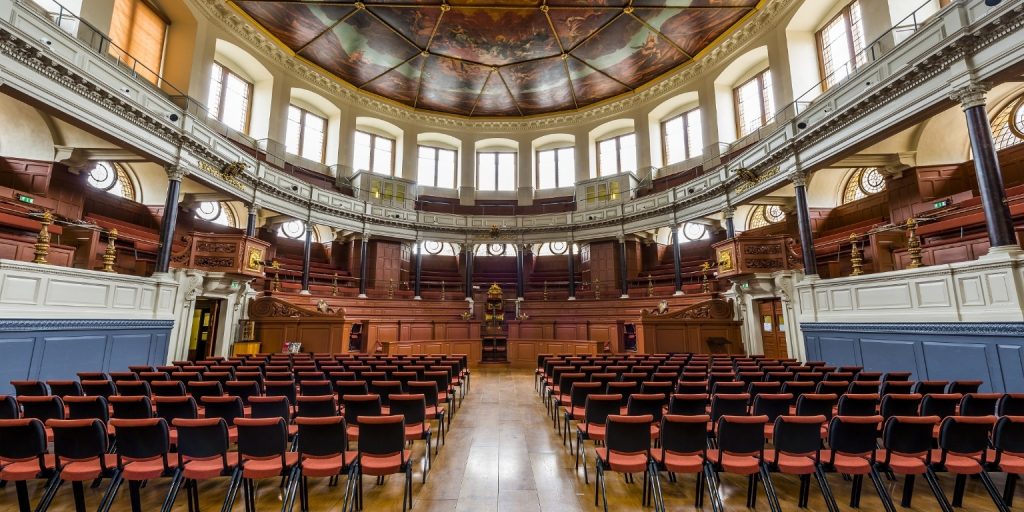
The theatre’s interior is a masterpiece of art and illusion. The ceiling was painted by the royal painter Robert Streater to resemble a Roman awning, open to the sky, with figures representing the triumph of the Arts and Sciences over Ignorance and Envy. This magnificent trompe-l’œil ceiling, with its cherubs and vibrant colors, creates an astonishing sense of depth and grandeur.
The Heart of Oxford University Life
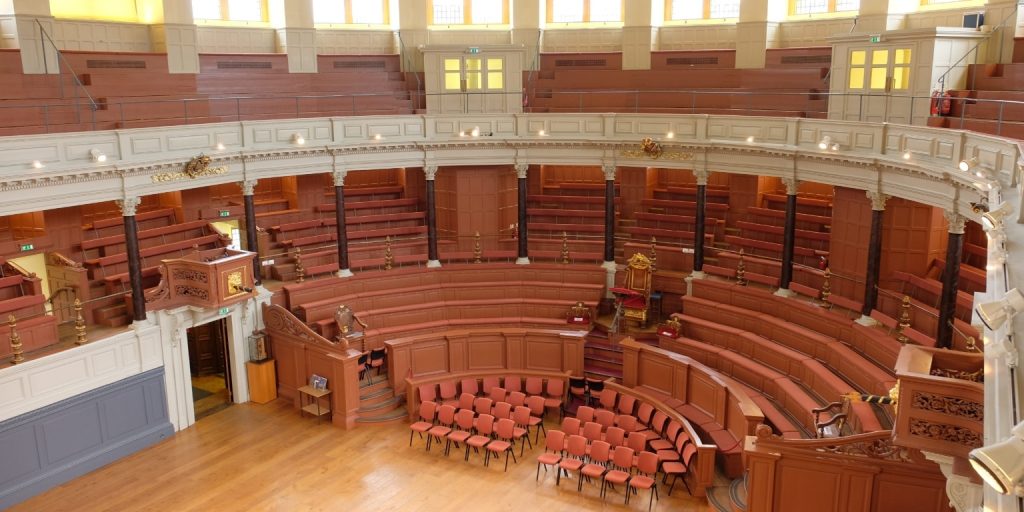
For centuries, the Sheldonian Theatre has served as the central assembly hall for the University of Oxford. It is the site of some of the most cherished and ancient traditions of the academic year. Here, new students are formally welcomed to the university in the matriculation ceremony, an event of solemnity and tradition where they pledge their loyalty to the institution. Years later, those same students return to the Sheldonian for their degree ceremonies, a joyous and momentous occasion where they are officially conferred their degrees.
Beyond these pivotal ceremonies, the theatre is a vibrant cultural hub. Its superb acoustics and elegant setting make it a premier venue for a wide range of events, including classical music concerts, lectures by world-renowned speakers, and prestigious academic events like the annual Encaenia, where honorary degrees are awarded. The busts of Roman emperors that stand on the theatre’s exterior walls seem to gaze upon the centuries of intellectual and ceremonial life that have unfolded within its walls, a silent audience to history.
A View of the Dreaming Spires
While the Sheldonian Theatre is primarily a university building, it is open to the public, inviting visitors to experience its unique atmosphere and architectural genius. For a small fee, you can explore the main auditorium, marvel at the painted ceiling, and climb a narrow staircase to the very top. The ascent culminates in the cupola, a small, octagonal chamber that offers one of the best panoramic views in all of Oxford. From this vantage point, visitors can see the city’s iconic “dreaming spires” up close, a breathtaking vista that includes the Bodleian Library, the Radcliffe Camera, and the surrounding college quadrangles.
The Sheldonian Theatre in Oxford is an indispensable part of the city’s identity. It stands not only as a monument to one of England’s greatest architects but also as a living testament to the enduring power of academic tradition and the pursuit of knowledge. It is a place where history is not just preserved but actively lived, ceremony is a daily occurrence, and the past and present gracefully converge.